

Traveling Around China
Tags
Summary
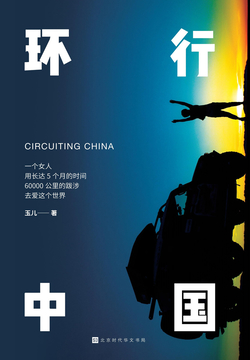
Tibet, Dunhuang, Xiamen, the three provinces of the Northeast... each place provided her with a different space for thought. She uses photography to preserve magnificent scenery and words to record delicate emotions. On this off-road journey, the author saw a self that comes from life and rises above it. She was once a "masculine" woman in pursuit of freedom and thrilling adventure; now she has found her own tenderness and strength, deepened her rational way of thinking about life, found a new world from the shadows of the past, and realized a truth: so-called thrills are merely an appendage of freedom; life should carry fearless courage and ever-accumulating kindness, take the road beneath one's feet lightly, and see one's own heart clearly.
Editor's review
Who it's for
A good fit for
- Readers interested in in-depth travel literature
- Readers who wish to experience China’s regional diversity through words
- Lovers of nonfiction that combines geography and humanistic narrative
- Urban readers seeking relaxation of mind and inspiration for living
Not a good fit for
- Readers expecting rigorous travel guides or the latest practical information
- Readers who prefer fast-paced, plot-driven fiction
Reading tips
- Read in chapter order and follow the rhythm of the author’s journey to go deeper step by step
- Browse alongside a map of China to enhance spatial immersion
- Suitable for reading in segments during leisure time, pausing to savor each chapter
About the publisher
Beijing Times Chinese Press takes classic works and prose miscellanies as an important publishing direction, along with foreign literature, social novels, Eastern philosophy and art books. Its catalogue includes such Chinese classics as Lu Xun's Call to Arms and Wandering, Xiao Hong's The Field of Life and Death, Zhang Dai's Reminiscences of Tao'an, Yuan Mei's Recipes from the Sui Garden and Hong Yingming's Caigentan, as well as foreign classics such as Ryunosuke Akutagawa's Rashomon. Among its translator resources is Wen Jieruo, whose translations provide reliable support for bringing foreign literary works into the Chinese-speaking world. While organizing traditional texts and reissuing classics, the press pays attention to readability and accessibility of editions, enabling ancient prose, notes and philosophical works to reach contemporary readers. Public information is limited; the above is only a brief account of the publishing directions reflected in the books held in the database.
Contents
- 版权信息
- 自序
- 第一章 始发内蒙古 启程
- 迷失的起点
- 被盘问
- 挑战与自我对抗
- 广阔新天地
- 关于内蒙古段
- 第二章 新奇疆界 美丽征途
- 抬头,有星
- 哈萨克族的婚礼
- 喀纳斯的看客
- 新体验
- 塔城
- 彩绘阿克苏
- 留在喀什
- 关于新疆段
- 第三章 活在藏地 生而不悔
- 圣湖玛旁雍错
- 奔跑的孩子
- 浪漫七夕——冈仁波齐的夜
- 行走日喀则
- 拉萨
- 第四章 静谧滇藏 平凡世界
- 西藏江南——林芝
- 滇藏的挑战
- 小小客栈
- 被困“丙察察”
- 梅里雪山
- 临时变线
- 飞来寺里赏人间
- 香格里拉的界限
- 关于西藏段
- 第五章 国之西南 静止的时光
- 行走的意义
- 苍山洱海白云间
- 走,去临沧吃茶
- 西双版纳的节奏
- 边陲之美——在河口
- 四十岁的阿姨
- 关于西南边境
- 带着父母游边境
- 第六章 迎风走东部 搀扶着你的臂膀
- 千里之行
- 再观土楼
- 厦门的热浪袭击
- 普陀山头待日升
- 到我们的世界
- 盐城的“吃蟹”现场
- 爸爸的记事本
- 乘风破浪,相伴
- 雨夜津港
- 第七章 漫长的休整
- 晋中风光
- 时光在敦煌溜走
- 回家
- 七十七天
- 休憩的父母
- 心灵太极,别太急
- 第八章 再会东三省 来年,后会有期
- 盘锦的大冷天儿
- 出发去丹东
- 风中的芦苇
- 禁止通行
- 室外温泉有点暖
- 哈尔滨的梦幻冬夜
- 冰雪乐园
- “团战”呼伦贝尔
- 根河还是银河?
- 狼岛之行
- 零号界碑
- 泼冰的行为艺术
- 特技“雪上飞”
- 脚下的阿尔山
- 二连浩特,又见面了
- 关于东北线路
- 后记
- 名人推荐
FAQ
How is this book different from an ordinary travel guide?
Is the content in the book outdated?
Has the author Yu’er published other works?
Related on WeRead
 环行中国
 中国城市环境卫生行业年度发展研究报告(2016-2017)
 美丽中国的环境行政法展开
 2020年中国资产管理行业发展报告:经济双循环格局下的资产管理行业再定位
 中国地方环境政治:政策与执行之间的距离
Comments
Find this book
This site is an index: you start “Search all sources” in your browser, and the entries it lists all point to third-party sites; please judge their availability yourself.
About the author
Yu'er: publicly available information is limited. At present, only the Chinese byline and one work, Traveling Around China, are known; other details such as nationality, dates of birth and death, and an English name have not been clearly recorded, making it difficult to outline the author's life. From the existing information, this work is classified as prose and miscellaneous writings, with its subject centered on traveling across China, combining travel writing with prose essays. Writing of this kind usually takes personal observations as its thread, recording regional features, urban and rural daily life, and impressions along the way from a moving perspective. The language tends toward the plain and natural, emphasizing experience and observation rather than textual research in the manner of a geographical gazetteer. With only one work held in the collection, Yu'er's writing profile remains incomplete; whether the style is consistent and whether the subject matter continues cannot be supported by more texts. Readers approaching Traveling Around China may see it as a concentrated presentation by an author who measures the land on foot and records what is seen in a prose style. A fuller assessment still awaits more publicly available materials and works.
