

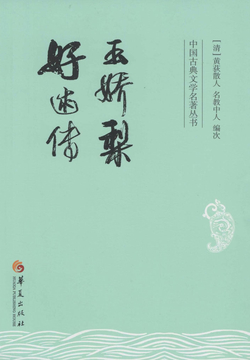
The Two Fair Cousins
Tags
Summary
Editor's review
Who it's for
A good fit for
- Readers who enjoy classical romance and scholar-beauty stories
- Literature lovers curious about late Ming and early Qing popular fiction genres
- Researchers interested in images of women and marriage narratives in premodern China
- Casual readers who prefer intricate plots and happy endings
Not a good fit for
- Readers seeking realistic depth and complex human portrayals
- Beginners not yet at ease with the pace of premodern vernacular narrative
- Readers who expect character relationships framed by modern values
Reading tips
- Familiarize yourself with the basic conventions of scholar-beauty fiction before reading; the genre's features are easier to appreciate that way.
- Watch the details of the two heroines' words and actions, and compare how their temperaments and conduct differ.
- Slow down at poems exchanged in reply and at misunderstandings; these are key devices by which such novels advance the plot.
- After finishing, look into the background of Hegel's mention of the book and consider why it traveled abroad.
Contents
- 版权信息
- 第一回 小才女代父题诗
- 第二回 老御史为儿谋妇
- 第三回 白太常难途托娇女
- 第四回 吴翰林花下遇才人
- 第五回 穷秀才辞婚富贵女
- 第六回 丑郎君强作词赋人
- 第七回 暗更名才子遗珠
- 第八回 悄窥侍郎儿识货
- 第九回 百花亭撇李寻桃
- 第十回 一片石送鸿迎燕
- 第十一回 有腾挪背地求人
- 第十二回 没奈何当场出丑
- 第十三回 苏秀才穷途卖赋
- 第十四回 卢小姐后园赠金
- 第十五回 秋试春闱双得意
- 第十六回 花姨月姊两谈心
- 第十七回 势位逼仓卒去官
- 第十八回 山水游偶然得婿
- 第十九回 错中错各不遂心
- 第二十回 锦上锦大家如愿
FAQ
What is the book's other title?
Who are the main characters, and how does the story end?
Why is it said to have considerable influence abroad?
What is distinctive about the two heroines?
Related on WeRead
Comments
Find this book
This site is an index: you start “Search all sources” in your browser, and the entries it lists all point to third-party sites; please judge their availability yourself.
About the author
Anonymous is not a real personal name but a general Chinese designation for authors whose names are unknown, lost, or unsigned. Neither nationality nor dates of birth and death can be verified, and available public information is limited, so the works attributed to this name are the only basis for description. The collection holds 2,078 works under Anonymous, spanning medicine, classics, historical readings, ancient poetry, classical literature, and philosophy. Representative works include The Yellow Emperor's Inner Canon: Lingshu, Mencius, The Book of Documents, Nineteen Old Poems, Complete Song Ci, and The Peacock Flies Southeast. Most of these works took shape through long transmission and editing, emerging either from collective folk creation or from authors whose names were lost over time. In ancient China, the Book of Songs, the Great Learning, and many popular storybooks and plays were signed Anonymous because their authors could not be traced. Anonymous works cross the classics, histories, philosophical writings, medical texts, and poetry; their subjects are broad, and their styles vary from archaic simplicity to clear naturalness, making them important and influential sources for understanding ancient Chinese thought, medicine, and literature.
