

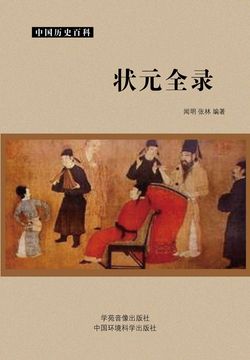
Complete Records of Zhuangyuan
Tags
Summary
Editor's review
Who it's for
A good fit for
- Culture enthusiasts interested in China's imperial examination system and social history
- Beginners in history, education or sociology research
- Readers hoping to understand the "elite selection" mechanisms in traditional culture
- Readers who enjoy viewing grand history through group portraits of individuals
Not a good fit for
- Readers seeking light entertainment or novel-like narrative
- Researchers expecting extreme detail-level textual criticism or purely academic argumentation
Reading tips
- Browse the table of contents first and start with a dynasty or a particular zhuangyuan of interest; linear reading from start to finish is not required
- As you read, compare the zhuangyuan's fortunes with major historical events of the time and consider the link between institutions and individual fate
- The statistical tables and analysis in the appendices deserve special attention; they are key to understanding the book's overall framework
About the publisher
Jointly credited to China Environmental Science Press and Xueyuan Audio-Visual Publishing House, the publications held in this catalog number 243 titles and cover common categories such as architecture, popular science, philosophy, world history, theory, and art. They include works on history and architecture, such as The World History of Architecture: Frozen Music and The Hometown of the Hanging Gardens: Babylon; popular science titles such as 100 Scientific Discoveries That Shook the World and 100 Technological Inventions That Refreshed the World; and works on intellectual and art history, such as The Most Beautiful Flower on Earth: A History of World Thought and The Sublimation of Life and Production: A History of Arts and Crafts. Works by authors including Wen Ming, Peng Pingping, Ge Dan, Qian Shu, and Li Munan form the main author resources. Because public information on the two institutions' complete catalogs and editorial plans is limited, this description presents their publishing direction only on the basis of the books in the catalog: mainly history, popular science, and art history, with some theoretical works, and under the joint imprint a emphasis on knowledge popularization and the humanities and social sciences.
Contents
- 版权信息
- 《中国历史百科》编纂委员会
- 《中国历史百科》编辑部
- 编写说明
- 隋唐五代状元
- 杨纂
- 房玄龄
- 孙伏伽
- 王维
- 李琚
- 贾至
- 崔曙
- 常衮
- 齐映
- 张式
- 杨凭
- 丁泽
- 黎逢
- 杨凝
- 崔元翰
- 张正甫
- 牛锡庶
- 尹枢
- 徐晦
- 武翊黄
- 王源中
- 柳公权
- 孔纬
- 赵观文
- 扈载
- 宋辽金元朝状元
- 宋准
- 王嗣宗
- 王世则
- 程宿
- 王曾
- 张师德
- 蔡齐
- 贾黯
- 冯京
- 章衡
- 刘辉
- 彭汝砺
- 许安世
- 徐铎
- 时彦
- 黄裳
- 沈晦
- 张九成
- 汪应辰
- 邹应龙
- 曾从龙
- 吴潜
- 方逢辰
- 文天祥
- 张俭
- 韩日方
- 胡砺
- 石琚
- 吕忠翰
- 郑子聃
- 徒单镒
- 杨云翼
- 纳兰胡鲁刺
- 王鄂
- 赵承元
- 张起岩
- 泰不华
- 宋本
- 李黼
- 陈祖仁
- 普颜不花
- 明朝状元
- 丁显
- 黄观
- 曾鹤龄
- 曹鼐
- 彭时
- 孙贤
- 罗伦
- 吴宽
- 谢迁
- 伦文叙
- 康海
- 顾鼎臣
- 杨慎
- 唐皋
- 舒芬
- 韩应龙
- 唐汝楫
- 范应期
- 耿继皋
- 赵秉忠
- 张以诚
- 杨守勤
- 黄士俊
- 周延儒
- 钱士升
- 文震孟
- 刘若宰
- 陈于泰
- 魏藻德
- 杨廷鉴
- 清朝状元
- 傅以渐
- 刘子壮
- 邹忠倚
- 史大成
- 孙承恩
- 徐元文
- 马世俊
- 彭定求
- 归允肃
- 沈廷文
- 戴有祺
- 胡任舆
- 汪绎
- 王式丹
- 王云锦
- 王世琛
- 徐陶璋
- 汪应铨
- 邓钟岳
- 陈德华
- 彭启丰
- 于敏中
- 钱维城
- 吴鸿
- 秦大士
- 庄培因
- 蔡以台
- 王杰
- 秦大成
- 张书勋
- 陈初哲
- 黄轩
- 吴锡龄
- 汪如洋
- 史致光
- 胡长龄
- 石韫玉
- 潘世恩
- 赵文楷
- 姚文田
- 顾皋
- 彭浚
- 吴信中
- 洪莹
- 蒋立镛
- 陈继昌
- 戴兰芬
- 林召棠
- 朱昌颐
- 李振钧
- 汪鸣相
- 林鸿年
- 钮福保
- 李承霖
- 龙启瑞
- 萧锦忠
- 张之万
- 陆增祥
- 孙如仅
- 翁同龢
- 孙家鼐
- 钟骏声
- 翁曾源
- 梁耀枢
- 曹鸿勋
- 王仁堪
- 黄思永
- 刘福姚
- 张謇
- 傅善祥
FAQ
Is the content based on real historical sources?
How is it different from the novel *The Scholars* (*Rulin Waishi*)?
Can non-specialist readers understand it?
Related on WeRead





Comments
Find this book
This site is an index: you start “Search all sources” in your browser, and the entries it lists all point to third-party sites; please judge their availability yourself.
About the author
Wen Ming is a prolific author about whom little is publicly available; details such as birth and death dates, nationality, and educational background are not clearly recorded. Judging from the 157 works held in the collection, Wen Ming's writing centers mainly on world history and the popularization of the arts, covering architecture, painting, drama, arts and crafts, intellectual history, and ancient civilizations. Representative works include systematic surveys of architectural history, accounts of the rise and fall of ancient civilizations such as Babylon, and introductions to the development of painting, drama, and craft arts. Overall, Wen Ming's writing tends toward informative, general-audience exposition, presenting artistic and historical themes along clear lines and helping ordinary readers understand the cultural background of these fields.
Zhang Lin is a Chinese author whose works span a notably wide range of subjects, with 107 titles held in the collection. Judging from the available bibliography, his writing covers several fields: social novels and essayistic works such as Galloping Horse, One Person, and Don't Forget Why You Started Because You've Gone Too Far; the compilation of the Fu-Selected Liu Duzhou Medical Case Commentaries series, showing an interest in documenting traditional Chinese medicine; I Confess: Recorded Confessions of Japanese War Criminals, a work of history; and Tang and Song Poetry Anecdotes, aimed at popularizing classical verse. His works are also often classified under foreign literature and social sciences. Public information about Zhang Lin is limited, and his biography, nationality, and dates of birth and death cannot be verified. The range of his output nonetheless suggests a versatile writer who moves between literary creation, historical documentation, and the organization of medical texts, balancing accessible writing with careful compilation of source materials.
