

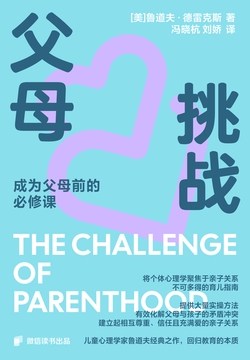
Parents: The Challenge
Tags
Summary
The book leads parents back to the essence of education: raising children with respect and understanding, and winning their trust and cooperation through friendliness and sincerity. It helps every child grow into a sound person in body and mind, and builds closer parent-child relationships.
Editor's review
Who it's for
A good fit for
- Parents currently experiencing parent-child conflict and caught repeatedly in the same discipline dilemmas
- Parents who want to understand the motives behind their child's behavior rather than merely correct the surface
- Practitioners in family education guidance or child psychology
- Readers willing to reflect on their own parenting style and embrace a firm-but-kind approach
Not a good fit for
- Readers seeking immediate discipline techniques and step-by-step results
- Parents unwilling to reflect on their own parenting behavior and wanting only the child to change
- Families whose child is in serious psychological crisis and needs professional clinical intervention
Reading tips
- Pause after each chapter, recall your most recent parent-child conflict, and reanalyze it through the book's lens.
- Keep a notebook to record the moments that hit home and the specific behaviors you want to try adjusting.
- Read alongside a partner or co-parent and discuss regularly the changes you each observe in your child.
- Don't try to absorb all the ideas at once; pick the one that moves you most and practice it for two weeks first.
About the publisher
Shidai Literature Publishing House is a literary publisher known for foreign literature and classic works. Judging from the more than 300 titles in the catalog, its publishing focus is on foreign literature, essays and miscellaneous writings, classic works, and world masterpieces, with attention to translation quality and series-based presentation. Representative books include Yukio Mishima's Spring Snow, Runaway Horses, The Decay of the Angel, and Forbidden Colors in the Zitu Classic Library series, as well as Yasunari Kawabata's Snow Country, Jane Austen's Pride and Prejudice, Lu Xun's essays, and the four-volume The Sea of Fertility. Its translator resources include Chen Dewen, Gao Huiqin, Lu Qiushi, and Ding Kaite, while the authors involved include Yukio Mishima, Yasunari Kawabata, Lu Xun, and Jane Austen. The publisher is characterized by translated literature and reissues of classics, balancing popular reading with cultural accumulation; public information about its complete catalog and publishing plans is limited.
Contents
- 版权信息
- 引言
- CHAPTER 1: 父母面临的处境
- 父母不要给孩子过度的爱
- 父母的焦虑,会投射给孩子
- 父母不要将自己的期望强加在孩子身上
- 对孩子提出合理的要求
- 父母错误的心态和动机,会导致亲子冲突
- 过分要求、贬低孩子,源于父母的自卑感
- 孩子无时无刻都在观察父母
- 养育孩子的观念会代代相传
- 孩子的行为,是对父母行为的回应
- 母亲是孩子一生中最重要的人
- 父亲是孩子人生中力量和权力的代表
- 隔代教育,是不容忽视的问题
- CHAPTER 2: 孩子面临的处境
- 孩子潜意识中的人生计划
- 遗传不能完全决定孩子的最终发展
- 孩子的社会兴趣,决定了他的行为是否得体
- 孩子总与父母对抗,可能是缺乏安全感
- 相信每个孩子都有战胜困难的勇气
- 孩子通过外界的肯定获得安全感
- 让孩子知道“什么是对的,什么是错的”
- 家庭星座,影响孩子的品格发展
- CHAPTER 3: 有效的方式
- A.维持秩序
- 良好的家庭氛围,有助于孩子的健康成长
- 尊重每个家庭成员的权利和义务
- 教孩子遵循规则做事
- 温和而坚定地向孩子提出要求
- 让孩子体验自然后果,培养孩子的秩序感
- B.避免冲突
- 与孩子发生冲突后,不断反思自己
- 教育孩子,要克制过度干涉和冲动
- 教育孩子应该灵活多变
- 让孩子做出积极地改变,激发孩子的兴趣
- 信任孩子,才能更好地与孩子合作
- 善用幽默感,化解与孩子的冲突
- 孩子发脾气,父母要学会主动退出
- C.鼓励
- 孩子的每个细微进步都值得称赞
- 鼓励孩子自己尝试,给予适当的引导和指示
- 信任孩子,认可孩子的价值和重要性
- 用“可以”代替“必须”
- 在激励和赞许中唤醒孩子的主动性
- 理解孩子的行为目的,有助于孩子改进
- 鼓励孩子和同伴友好相处
- D.家庭会议
- CHAPTER 4: 最常见的育儿错误
- 溺爱,无法培养孩子的独立能力
- 缺乏关爱的孩子,长大后很难适应社会
- 过度的感情,让孩子失去自理能力
- 收回感情,孩子会更依赖父母
- 父母的过度焦虑,不利于孩子成长
- 恐吓会导致孩子形成恐惧心理
- 过度监督,影响孩子的自主发展
- 父母的说教,会挫伤孩子的勇气
- 父母的忽视,让孩子感到受伤
- 父母的敦促,让孩子出现逆反心理
- 向孩子索要保证,不能从根本上改变孩子的行为
- 敦促孩子“打起精神来!”,孩子会更加拖延
- 奖励和惩罚,无法激发孩子自主的行为
- 父母让孩子言听计从,阻碍孩子的意志力发展
- 父母越唠叨,孩子越不愿服从
- 父母的吹毛求疵,让孩子灰心丧气
- 一味地贬低孩子,引发孩子的强烈反抗
- 严厉地管教,阻碍孩子找到归属感
- 羞辱孩子,让孩子的内在世界受伤
- 体罚不是教育孩子的有效方式
- CHAPTER 5: 具体的教育措施
- 掌握必备的育儿知识,减少育儿焦虑
- 孩子的最初体验,具有至关重要的意义
- 帮助孩子养成规律的进食习惯
- 冷静地面对宝宝在断奶期的哭闹
- 教孩子独立学习站立和行走
- 给孩子自主如厕的机会,培养良好的秩序感
- 引导孩子自己解决问题
- 教导孩子要温和而坚定
- 陪伴孩子一起玩耍,建立亲密的亲子关系
- 鼓励孩子自力更生,从穿衣服开始
- 说话时放慢语速,让孩子学习正确的发音
- 利用自然后果,帮助孩子养成讲卫生的习惯
- 不哄劝、不威胁,培养孩子良好的饮食习惯
- 帮忙做家务,促进孩子的合作能力
- 平等地对待每个孩子,让孩子感受到爱
- 适时分离,让孩子适应幼儿园生活
- 帮助孩子做好上学的准备
- 客观看待孩子生病,不提供特殊待遇
- 遇到家庭变故,鼓励孩子以积极心态面对
- 提高孩子进入新环境的适应能力
- 鼓励孩子自己战胜困难
- 冷静应对他人对孩子的教育干涉
- 帮助孩子树立正确的道德观
- 性启蒙是自然过程
- 以适合孩子年龄的方式对待他
- 给青春期的孩子更多的理解和尊重
- 父母要逐渐放手,孩子才能学会成长
- CHAPTER 6: 理解孩子
- A.寻求关注
- 行为模式:积极—建设性
- “模范”孩子
- 过度的责任心
- 能说会道
- 行为模式:积极—破坏性
- 自我炫耀
- 可怕的顽童
- “行走的问号”
- “调皮鬼”
- “三分钟热度”
- 行为模式:消极—建设性
- 过度地依赖
- 爱虚荣
- 行为模式:消极—破坏性
- 羞怯
- 依赖和懒散
- 不能专心致志
- 过于自我放纵
- 焦虑和恐惧
- 饮食困难
- 语言障碍
- B.权力之争
- 不听话
- 倔强
- 发脾气
- 坏习惯(吮手指、抠鼻孔、咬指甲)
- 手淫
- 撒谎
- 磨蹭
- C.报复
- 偷窃
- 暴力与残忍
- 尿床
- D.表现出能力不足
- 懒惰
- 愚蠢
- 无能
- “极端”的消极
- E.病态反应
- 神经官能症
- 精神病
- 精神病态人格
- CHAPTER 7: 指导与再调整
- 哭泣
- 恐惧
- 孩子们之间的对抗
- 欺凌
- 小霸王
- 可怕的孩子
- 强迫性神经症
- 智力迟钝
- 假迟钝
- 总结
FAQ
What ages of children is this book suitable for parents of?
Can I understand it without a psychology background?
Do the methods still work with a child who is already rebellious?
Related on WeRead



Comments
Find this book
This site is an index: you start “Search all sources” in your browser, and the entries it lists all point to third-party sites; please judge their availability yourself.
About the author
Rudolf Dreikurs is an author who approaches family and educational issues from a psychological perspective, and his works are often classified in Chinese reading circles under applied psychology, parenting, and social culture. The library holds 10 of his works, with representative titles including Parents: The Challenge, Children: The Challenge, Teachers: The Challenge, Marriage: The Challenge, and The American Family Education Trilogy. The titles often revolve around the word "challenge," pointing to real difficulties in parent-child, teacher-student, and marital relationships. Given the available materials, public information about his life, nationality, and dates of birth and death is limited, so this introduction can only focus on the works themselves: they address how adults can understand children's behavior, adjust parenting methods, and improve family interaction, in accessible language that balances cases and principles, offering lasting reference value for reading on family education.
Yu Bing is a Chinese author of books on family upbringing, education, applied psychology, and learning methods. Public information about the author is limited, and the available details come mainly from six published works, including Parents: The Challenge, Children: The Challenge, Summerhill School, Teachers: The Challenge, and How to Learn. Judging from the titles and their common categories, Yu Bing focuses on interactions between adults and children in family and school settings, and also addresses study methods and examination-related topics. The writing tends toward practical educational books for general readers. Though the number of known works is small, the subjects range across parent-child relationships, teachers' work, and learning strategies, showing a sustained interest in educational practice and applied psychology. Reliable records of the author's biography, nationality, dates, and English name are unavailable, so no speculation is offered here; assessment of style and influence should rest on further public materials and close reading of the works.
