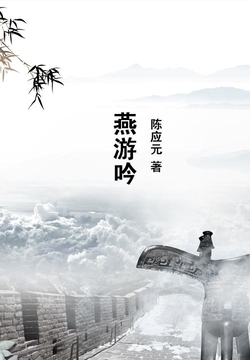
Chants of Travel in Yan cover

Chants of Travel in Yan

Rating 2.0
Word count
5.8K words
Chapters
14

Tags

Summary

Traditional Chinese thought and culture have a long history and are highly original, inventive, and literary. Early forms of thought have distinctive features; religious theology, classical texts of Chinese medicine, ancient military strategy, Confucianism, Daoism, Buddhism, and the Hundred Schools of Thought, feng shui and metaphysics, the Twenty-Four Histories, and local customs and geography are all profound and extensive. This series, "Essence of Classic Chinese Culture: Original Texts," preserves the original appearance of the books and focuses on preserving and transmitting traditional Chinese thought and culture. By reading the literary essence left by ancient sages, readers can cultivate their character and subtly appreciate the classics of Chinese learning.

Editor's review

Yanyou Yin is included in the series "Essence of Classic Chinese Culture: Original Texts" and presents the face of traditional poetic and prose composition by preserving the original appearance of the old text. For ordinary readers, its value lies not in providing a quick course in classical Chinese learning but in giving direct access to the feel, rhythm, and habit of allusion in old-style verse, and in allowing readers to experience how the ancients organized feeling and diction in travel, social exchange, and reflection. The content is suited to slow reading: first read a poem through, identify the rhyme scheme and line patterns, then consult annotations or look up allusions, and finally return to the whole to grasp the direction of feeling. It is better suited as bedside reading or recitation material than as a systematic literary history. If you are willing to linger over words and lines, it can train sensitivity to classical language and provide reference for elegant expression in writing. Note that a collated edition preserving the original appearance makes some demand on the reader's patience with classical Chinese; on a first reading, do not seek complete understanding but focus on building feel for the language and a sense of questions.

Who it's for

A good fit for

  • Ordinary readers who enjoy old-style poetry and the recitation tradition and are willing to read slowly and closely
  • Those who need to build a feel for classical language and seek elegant expression for writing
  • Enthusiasts of Chinese classics who wish to encounter traditional poetry and prose through recitation
  • Readers who prefer short texts for bedside reading

Not a good fit for

  • Beginners seeking a systematic literary-historical framework and detailed exposition
  • Those lacking patience for classical Chinese who expect light, story-driven reading
  • Readers who need sentence-by-sentence modern vernacular translation alongside the text

Reading tips

  1. Read only one or two poems at a time; first recite aloud, then consult annotations to understand the literal meaning.
  2. Mark allusions when you encounter them and look them up together after finishing the whole piece, so as not to interrupt the emotional flow.
  3. Keep a notebook and record recurring images and wording to build a feel for classical language.
  4. After reading, retell the gist in your own words to test whether you have truly understood the meaning of the lines.

Contents

  1. 版权信息
  2. 文华殿召对
  3. 庚午入觐刘五云先生赠诗以宠其行依韵奉和
  4. 庚午仲冬二日贱辰刘五云先生赠诗二律依韵奉和
  5. 庚午除夕以入觐至长安偕次儿守岁次王百谷韵
  6. 辛未元日早朝学舞呼嵩
  7. 长安立春次王百谷韵
  8. 春寒用陈白云韵
  9. 二月十七日大雪宿富庄驿
  10. 二月十八日过阜城大雪见中翰郑冲频壁间和杨使君沙民种石田四律依韵再和
  11. 刘半舫光禄与余倾盖莫逆长安入计竟不得一面怅然有作
  12. 辛未入觐抵都值同邑叶豫楠谒选奥西容县令赋赠
  13. 长安辱太常卿沈芳杨先生招饮赋谢
  14. 燕游草跋

FAQ

Can I read this book without any foundation in classical Chinese?
You can try, but you need to adjust your expectations. It is advisable to begin with short pieces and use annotations and reference works to resolve difficulties with words and phrases, seeking first a smooth general sense rather than investigating every character. If you have no experience at all in reading classical Chinese, you can first read some selections with vernacular translation and annotation as a transition, then return to the original text to experience its original appearance.
Is this book suitable for reading straight through from beginning to end?
It is better suited to selective and repeated reading. Old-style verse is short and dense in meaning, and reading straight through easily leads to fatigue and poor digestion. You can group pieces by theme or length, read a small amount each time and make notes, and look back after some time; this yields more than reading it all at once.
What tools should I prepare for reading this book?
It is advisable to have a dictionary of commonly used characters in ancient Chinese and a dictionary of allusions, so that rare words and allusions can be checked promptly. If possible, keep a notebook to record questions and recurring images, and sort them out after reading; the results will be more solid.

Related on WeRead

Comments

Find this book

This site is an index: you start “Search all sources” in your browser, and the entries it lists all point to third-party sites; please judge their availability yourself.

About the author

陈应元 Author

Chen Yingyuan — public information about his life, including his nationality and dates, is limited; all that is known is that one work stands under his name, Yanyou Yin (roughly, "Chants from Travels in Yan"), commonly classified under Eastern philosophy. With no reliable biographical records, his specific experiences, intellectual lineage, and the circumstances of the book's composition cannot be firmly established, and readers can only approach his thought through the work itself. The title suggests a combination of travel observations and lyrical reflection, while the Eastern philosophy classification hints at reflections on life, nature, and human character. On the available evidence, it is difficult to assess his influence or the extent of the work's circulation. A deeper understanding of Chen Yingyuan therefore requires returning to the text—reading Yanyou Yin closely for its themes, language, and intellectual orientation—and cautiously reconstructing his style and context from limited documentary clues rather than substituting speculation for fact.

Top rated in the same category