

Jiao Yulu
Tags
Summary
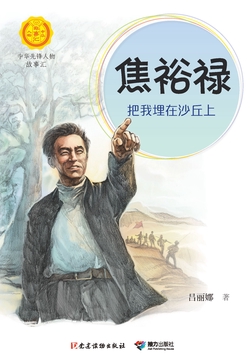
It recounts how Comrade Jiao Yulu, a good Party cadre and a fine public servant of the people, grew from a poor boy into an outstanding leading cadre of our Party. The writing is vivid, bringing to life a man of flesh and blood. Fate made Jiao Yulu endure one hardship after another from childhood, yet the baptism of suffering forged him into a tough man who would not bow to fate. During the War of Resistance Against Japanese Aggression, he threw himself into the revolution and became a Party cadre admired for both his integrity and ability. After the founding of the People's Republic of China, while serving as county Party secretary of Lankao County, he waged an arduous and tenacious struggle against natural disasters and his own illness until the very last moment of his life. In Jiao Yulu's brief yet profoundly meaningful life is embodied the Jiao Yulu spirit of this public servant of the people: closeness to and love for the people, hard struggle, a scientific and truth-seeking approach, the courage to confront difficulties, and selfless dedication.
Editor's review
From an editorial perspective, the book's value is reflected in three dimensions: first, the balance of its narrative angle, which presents Jiao Yulu's working methods as a model cadre while retaining the emotional dimension of him as an ordinary person; second, the accuracy of historical detail, as the author's use of archival materials is rigorous and restrained; third, the contemporary relevance of its interpretation of the spirit, since the work does not merely display deeds but attempts to explore how these spiritual qualities might be transformed in the present.
It is worth noting that the book's records of technical measures such as desert control and saline-alkali land treatment not only have historical documentary value but also embody a governance philosophy of "respecting the laws of nature" that remains instructive for today's grassroots workers. Zhu Sijun employs a writing method that integrates the rigor of reportage with the warmth of biographical literature; this choice of style gives the book both readability and the necessary objective distance.
Among works on similar subjects, the book is distinguished by the steadiness of its narrative rhythm—it does not over-dramatize emotion but allows spiritual strength to emerge naturally through the recreation of specific work scenes. This restrained aesthetic style forms an inner resonance with Jiao Yulu's own pragmatic and low-key manner.
Who it's for
A good fit for
- Policy researchers concerned with grassroots governance and social development
- Readers interested in how the inner world of a model figure takes shape
- Grassroots workers hoping to draw working methods from specific historical cases
- Students interested in exploring the interaction between individuals and institutions in contemporary Chinese history
Not a good fit for
- Readers expecting dramatic plots and narratives of intense conflict
- Casual readers seeking light, entertaining reading experiences
Reading tips
- May be read alongside historical and geographical materials on the Lankao area to build a fuller sense of time and place
- Readers are advised to compare the working methods described in the book with contemporary cases of grassroots governance and note their continuity
- While reading, distinguish between value judgments made in the historical context and their reexamination from today's perspective
About the publisher
Qinghai People's Publishing House is a comprehensive local publisher based in Xining, with publishing areas covering local histories and gazetteers, ethnic history and culture, literature and art, and textbooks and supplementary teaching materials. Judging from the 124 titles in the database, the press has a presence in foreign literature, social culture, history, literature, medicine, and biography. Representative books include Chinese translations of Tagore's poetry collections Gitanjali, Stray Birds, and The Crescent Moon, as well as works on history, culture, and medicine such as The History of Changes in the Yellow River, An Intellectual History of Traditional Chinese Medicine, The Pillar Testament: The Legacy of Songtsen Gampo, and Essentials of the Kalachakra Calendar. Its authors include Rabindranath Tagore, Wei Huan, Cen Zhongmian, Li Jingwei, Zhang Zhibin, Huang Mingxin, Chen Jiujin, and Shangzhuot Sangre, reflecting a publishing profile that combines the translation of foreign literature with the compilation of local historical and cultural works and traditional medical texts.
Contents
- 版权信息
- 北崮山焦家添丁
- 一
- 二
- 三
- 四
- 五年的小学时光
- 一
- 二
- 三
- 在黑暗中挣扎
- 一
- 二
- 三
- 四
- 五
- 大山坑的斗争
- 一
- 二
- 三
- 四
- 五
- 六
- 南下宿迁
- 一
- 二
- 三
- 四
- 回乡参加革命
- 一
- 二
- 三
- 四
- 五
- 六
- 造雷手和侦察兵
- 一
- 二
- 三
- 四
- 五
- 六
- 七
- 淮河大队的宣传员
- 一
- 二
- 三
- 彭店来了位焦队长
- 一
- 二
- 三
- 四
- 五
- 初到大营
- 一
- 二
- 三
- 智斗土匪黄老三
- 一
- 二
- 三
- 四
- 五
- 六
- 七
- 郎才女貌
- 一
- 二
- 三
- 洛阳会战
- 一
- 二
- 三
- 四
- 五
- 六
- 七
- 尉氏县来了个“1.5 书记”
- 一
- 二
- 三
- 四
- 五
- 初入兰考
- 一
- 二
- 三
- 不讲情面的“黑包公”
- 一
- 二
- 三
- 四
- 五
- 人民的勤务员
- 一
- 二
- 三
- 四
- 五
- 六
- 七
- 黄沙情绿色梦
- 一
- 二
- 三
- 四
- 五
- 六
- 七
- 八
- 九
- 向盐碱宣战
- 一
- 二
- 汤汤大水中
- 一
- 二
- 三
- 四
- 回乡探亲
- 一
- 二
- 三
- 四
- 与世长辞
- 一
- 二
- 三
- 四
- 五
- 六
FAQ
What mainly distinguishes this book from other works about Jiao Yulu?
How does Zhu Sijun's writing background shape the book's perspective?
What practical significance does the book have for contemporary readers?
Related on WeRead


Comments
Find this book
This site is an index: you start “Search all sources” in your browser, and the entries it lists all point to third-party sites; please judge their availability yourself.
About the author
Zhu Sijun is an author whose publicly available biographical information remains quite limited: his nationality, dates of birth and death, and educational background are not clearly recorded and await further verification. Judging from the works held in the collection, he has published two books, both biographies of Jiao Yulu and Lei Feng respectively, which fall under the general category of biography. These two figures are highly representative model personalities in contemporary China, and writings about them typically follow the thread of their life stories, emphasizing their moral character and everyday practice in plain, accessible language suitable for general readers. Zhu Sijun's choice of such figures as subjects indicates an interest in biographical writing about role models and in spreading their values; the works may serve youth character education and popular reading. Given the limited information, a full assessment of his overall style and influence is difficult, and readers may form their own impressions from the two works mentioned above.
