

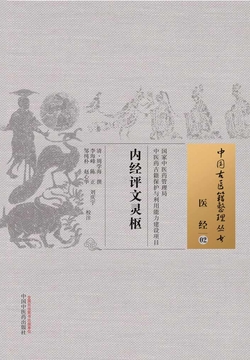
Notes on the Spiritual Pivot
Tags
Summary
Editor's review
Who it's for
A good fit for
- Students at Chinese medicine colleges and dedicated readers of Chinese medical classics who need help understanding the Lingshu text
- Scholars researching Japanese Kampo medicine or the history of Sino-Japanese medical exchange
- Clinicians with some Chinese medicine background who wish to compare the views of different commentators
Not a good fit for
- General readers seeking accessible wellness methods and health knowledge
- Beginners with no foundation in Chinese medical classics who are just starting to learn Chinese medicine
- Readers hoping for modern medical content on disease diagnosis and treatment
Reading tips
- Read alongside the original Lingshu chapter by chapter—read the original first, then the commentary, to understand what is being referred to
- Keep a notebook and record textual-critical entries and your own questions by chapter for easy reference
- Read in comparison with other commentaries on the Huangdi Neijing to appreciate the choices different commentators make
About the publisher
Founded in 1989, Qunyan Publishing House has long been committed to publishing academic and educational books for mid- and high-level readers, and has built up a certain presence in Eastern philosophy, classical literature, and classic works. Representative titles available in the database include Records of the Grand Historian, Dream of the Red Chamber, Selections of Refined Literature, Complete Song Ci, Strange Tales from a Chinese Studio, Record of Daily Knowledge, Taiping Huimin Hejiju Fang, and The Collected Works of Wang Yangming, covering common categories such as ancient poetry, medicine, and examinations. Its author resources include Sima Qian, Cao Xueqin, Xiao Tong, Li Shan, Pu Songling, and Gu Yanwu. The press also offers distinctive series such as the Biographical Series of the China Democratic League and the Historical Documents Series of the China Democratic League, and publishes research on historical documents, biographies, memoirs, and textbooks and academic works by League members. Public information is limited, and its overall publishing scale and complete catalogue require further verification.
Contents
- 版权信息
- 灵枢识
- 卷一
- 九针十二原第一
- 本输篇第二
- 小针解第三
- 邪气脏腑病形篇第四
- 根结篇第五
- 寿夭刚柔篇第六
- 官针篇第七
- 卷二
- 本神篇第八
- 终始篇第九
- 经脉第十
- 卷三
- 经别篇第十一
- 经水篇第十二
- 经筋篇第十三
- 骨度篇第十四
- 五十营篇第十五
- 营气篇第十六
- 脉度篇第十七
- 营卫生会篇第十八
- 四时气篇第十九
- 五邪篇第二十
- 寒热病篇第二十一
- 癫狂篇第二十二
- 热病篇第二十三
- 卷四
- 厥病篇第二十四
- 病本篇第二十五
- 杂病篇第二十六
- 周痹篇第二十七
- 口问第二十八
- 师傅篇第二十九
- 决气篇第三十
- 肠胃篇第三十一
- 平人绝谷篇第三十二
- 海论篇第三十三
- 五乱篇第三十四
- 胀论篇第三十五
- 五癃津液别篇第三十六
- 五阅五使第三十七
- 逆顺肥瘦篇第三十八
- 血络论第三十九
- 阴阳清浊篇第四十
- 阴阳系日月篇第四十一
- 病传篇第四十二
- 淫邪发梦篇第四十三
- 顺气一日分为四时篇第四十四
- 外揣篇第四十五
- 五变篇第四十六
- 本藏篇第四十七
- 卷五
- 禁服篇第四十八
- 五色篇第四十九
- 论勇篇第五十
- 背篇第五十一
- 卫气篇第五十二
- 论痛篇第五十三
- 天年篇第五十四
- 逆顺篇第五十五
- 五味篇第五十六
- 水胀篇第五十七
- 贼风篇第五十八
- 卫气失常篇第五十九
- 玉版篇第六十
- 五禁篇第六十一
- 动输篇第六十二
- 五味论篇第六十三
- 阴阳二十五人篇第六十四
- 五音五味篇第六十五
- 百病始生篇第六十六
- 行针篇第六十七
- 上膈篇第六十八
- 忧恚无言篇第六十九
- 卷六
- 寒热篇第七十
- 邪客篇第七十一
- 通天篇第七十二
- 官能第七十三
- 论疾诊尺篇第七十四
- 刺节真邪篇第七十五
- 卫气行篇第七十六
- 九宫八风篇第七十七
- 九针论第七十八
- 岁露论篇第七十九
- 大惑论篇第八十
- 痈疽篇第八十一
- 跋
FAQ
What is Lingshu Shi mainly about?
Can someone without a Chinese medicine background read this book?
How is this book different from ordinary wellness books?
Related on WeRead


Comments
Find this book
This site is an index: you start “Search all sources” in your browser, and the entries it lists all point to third-party sites; please judge their availability yourself.
About the author
Tanba Motoyasu was a representative practitioner of Kampo medicine in Japan during the Edo period; public sources offer limited information about his exact birth and death years, courtesy names, and teachers. Judging from the four works held in the collection, his writings focus on collating, recovering, and annotating Chinese medical classics, covering the Suwen, Lingshu, Shanghan Lun, and materia medica. Among them, Suwen Shi and Lingshu Shi are notable for meticulous textual criticism and glossing, with attention to variant editions and the choice among commentaries from different dynasties. Shanghan Lun Jiyi gathers earlier annotations on Zhang Zhongjing's text and adds his own views, reflecting an inclusive scholarly style. Yaoxing Tiyao concisely summarizes the properties of commonly used drugs. These works have had some influence on the philology of Chinese medicine and on Sino-Japanese medical exchange, and are still consulted by students of the classics.
