

Tags
Summary
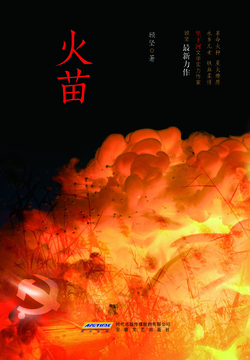
Set in the Jiangnan water towns, it tells how Zhang Zheng, a Communist and battalion commander of the New Fourth Army, while recuperating from wounds in the countryside, actively mobilizes the masses, recruits Party members, and organizes resistance against the Japanese. In the first month of 1942, Zhang Zheng is wounded defending Qilin Town and is secretly taken by Lin Huasheng, an underground Party member operating a pharmacy in town, to convalesce at the home of Du Junshan, a lake-dwelling fisherman by Wugong Dang on the town's outskirts.
During his recovery, Zhang Zheng cultivates anti-Japanese activists among the local people, wins over the gentry, and forms a waterborne militia squadron to counter the Japanese and puppet troops who raid the countryside, protecting the people's property and growing stronger through struggle. Exploiting the terrain of the lakes and marshes, they build dams and plant stakes, make their own "water mines," and cleverly lay Eight-Trigram formations, repeatedly smashing the enemy's mopping-up operations. In the autumn offensive against the Japanese and puppet forces, the waterborne militia squadron joins the county detachment and district brigade in an ambush at Liuyue Tomb, annihilating the Japanese troops fleeing south from Qilin Town.
Editor's review
Who it's for
A good fit for
- Readers with a strong interest in the social landscape of China in the 1980s and 1990s
- Literature lovers who enjoy realism and care about ordinary people's fate and growth
- Young readers in the midst of their own struggles who seek resonance and encouragement
- Devoted readers of Gu Jian who want a full picture of his creative trajectory
Not a good fit for
- Readers seeking strong plotting, fast pacing, and dramatic conflict in suspense or fantasy
- Readers looking for highly experimental avant-garde writing or deep philosophical reflection
Reading tips
- Treat the reading as a 'journey through time'; there is no need to rush the plot—savor the era-specific details and atmosphere woven into the text.
- Pay attention to the subtle shifts in the protagonist's relationships with those around him; this is key to understanding his inner growth and the imprint of the times.
- After finishing, pause to reflect: compare the era depicted with the present and consider what has and has not changed in the essence of 'striving' and 'living'.
About the publisher
Founded in 1984, Anhui Literature and Art Publishing House is a professional literary and art publisher. Its collection of 389 titles spans classic works, essays and miscellaneous writings, Eastern philosophy, folk literature, classical literature and design. Representative books include Lao She's Camel Xiangzi, Laozi's Dao De Jing, Luo Guanzhong's Romance of the Three Kingdoms, and the Shakespeare drama collection featuring Hamlet, King Lear, Macbeth and Othello, with Zhu Shenghao's translations adding luster to the series. Its author resources range from classic Chinese and foreign writers such as Lao She, Laozi, Luo Guanzhong and William Shakespeare to translators and authors including Zhu Shenghao, Li Chensen and Liang Sicheng. The publisher is characterized by its balance of Chinese and foreign literary classics with traditional culture titles, combining scholarly value with popular reading. Public information is limited, and the above is based mainly on the books in the collection.
Contents
- 版权信息
- 楔子
- 第一章 伤员张正
- 一
- 二
- 三
- 四
- 第二章 湖村养伤
- 一
- 二
- 三
- 第三章 德源药房
- 一
- 二
- 三
- 第四章 转移湖荡
- 一
- 二
- 三
- 四
- 第五章 初尝甜头
- 一
- 二
- 三
- 四
- 第六章 铩羽而归
- 一
- 二
- 三
- 四
- 第七章 水上民兵中队
- 一
- 二
- 三
- 第八章 刺探情报
- 一
- 二
- 三
- 四
- 五
- 六
- 七
- 第九章 营救凤华
- 一
- 二
- 三
- 四
- 第十章 处死刘二虎
- 一
- 二
- 三
- 四
- 五
- 第十一章 识破奸细
- 一
- 二
- 三
- 第十二章 蜈蚣荡大捷
- 一
- 二
- 三
- 四
- 五
- 第十三章 处死余四娘
- 一
- 二
- 三
- 四
- 五
- 六
- 第十四章 县委决定
- 一
- 二
- 三
- 四
- 五
- 第十五章 改制水雷
- 一
- 二
- 三
- 四
- 五
- 六
- 七
- 第十六章 备战六丘坟
- 一
- 二
- 三
- 四
- 五
- 第十七章 解放永丰、黎城
- 一
- 二
- 三
- 四
- 第十八章 全歼日寇
- 一
- 二
- 三
- 四
- 五
- 六
- 七
- 第十九章 镇压地主
- 一
- 二
- 三
- 四
- 五
- 六
- 第二十章 梁营攻心
- 一
- 二
- 三
- 第二十一章 全歼匪帮
- 一
- 二
- 三
FAQ
How is *Huo Miao* related to Gu Jian's *Yuan Hong* and his other works, and how does it differ?
Is the book's tone nostalgic and melancholy or uplifting?
Is it suitable for students?
Related on WeRead


Comments
Find this book
This site is an index: you start “Search all sources” in your browser, and the entries it lists all point to third-party sites; please judge their availability yourself.
About the author
Gu Jian is an author about whom limited public information is currently available; only one work by this author, Huomiao (The Flame), is included in the collection. Judging from its common classification, the work falls under the category of war and military fiction, suggesting that its writing may center on military life, wartime experience, or the fates of characters connected with them. Because information such as dates of birth and death, nationality, educational background, and writing career is not recorded, it is difficult at this stage to outline a complete creative trajectory or to confirm whether works other than Huomiao exist. As far as is known, Gu Jian's profile as a writer is mainly reflected through this single work, with a thematic focus on military and war subjects; style and influence await further disclosure before they can be assessed. Readers interested in the author and the work may begin with Huomiao to understand its narrative approach and concerns, and supplement this with public information that may emerge later.
