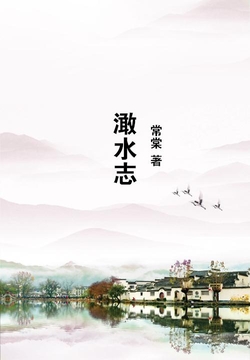
Gazetteer of Ganshui cover

Gazetteer of Ganshui

Rating 4.2
Word count
13K words
Chapters
19

Tags

Summary

It has been said that without the Six Classics one cannot examine the depth of Zhou customs and the abundance or depletion of its people and goods, and that without collected maps and records one cannot know the strategic passes of Qin's mountains and rivers or the strength of its households. Hence this gazetteer of Ganshui cannot be dispensed with. Ganshui is a mere speck of a corner, its soil salty and barren; here are recorded the flowing and standing waters of its hills and springs, the weight and lightness of its taxes, and the far and near of its roads.

Editor's review

Compiled by Chang Tang of the Southern Song, the Ganshui Zhi is a local gazetteer of Ganshui (Ganpu), a single town in Haiyan, Zhejiang, recording its geography, customs, taxes and levies, roads and routes, and related matters. This annotated edition makes available a primary source for the study of society, economy, and local governance in Song-era Jiangnan towns. Its value lies not in literary polish but in its concreteness: by documenting one corner of the realm, it preserves the grassroots detail that official dynastic histories and comprehensive gazetteers tend to omit—how salt marshes delivered their taxes, how trade routes ran or fell into disuse. Readers will gain more by treating it as an archive of a Song township than as a travelogue. The prose is plain and concise, with occasional textual notes; it rewards slow, comparative reading alongside Song gazetteers such as the Xianchun Lin'an Zhi, allowing one to appreciate the gazetteer tradition of 'aiding governance and preserving history.' For anyone today interested in the history of Jiangnan towns, the salt industry, or historical geography, this book is indispensable.

Who it's for

A good fit for

  • University faculty and students researching Jiangnan towns, the salt industry, and local finance in the Song dynasty
  • Local historians and cultural workers concerned with the historical geography and local documents of the Haiyan area in Zhejiang
  • Readers of history and literature who enjoy ancient gazetteers and want to understand grassroots society in the Song
  • Professionals engaged in the collation of ancient books, textual criticism, and gazetteer compilation

Not a good fit for

  • General leisure readers expecting a continuous narrative or literary reading experience
  • Beginning readers without a foundation in Classical Chinese who need modern translation and annotation
  • Readers seeking only quick conclusions about Song history rather than local detail

Reading tips

  1. Begin with the table of contents and prefaces to grasp the gazetteer's categories, then read volume by volume in the order of geography, taxes, and roads.
  2. Keep a Song-era map of Zhejiang and materials on salt-field distribution at hand, comparing as you read to understand the relationship between saline land and tax levies.
  3. Read alongside Song gazetteers such as the Xianchun Lin'an Zhi and the Yunjian Zhi, comparing their structures and the level of detail in their records.
  4. Jot down place names, official titles, and weights-and-measures terms as you go, researching them in batches to avoid constant interruptions.

Contents

  1. 版权信息
  2. 海盐澉水志序
  3. 澉水志上
  4. 地理门
  5. 山门 刻本此下卷之二
  6. 水门 刻木此下卷之三
  7. 廨舍门 刻本此下卷之四
  8. 坊巷门
  9. 坊场门
  10. 军寨门
  11. 亭堂门
  12. 桥梁门
  13. 学校门 刻本此下卷之五
  14. 寺庙门
  15. 古迹门
  16. 物产门 刻本此下卷之六
  17. 澉水志下
  18. 碑记门 刻本此下卷之七
  19. 诗咏门 刻本此下卷之八

FAQ

What does the Ganshui Zhi mainly record?
According to extant materials, the book covers the single locality of Ganshui, recording its mountains and waters, the weight of taxes and levies, distances along roads, households and local products—a typical gazetteer format. It preserves geographic and economic information about grassroots townships in the Song dynasty and can be consulted by those studying Jiangnan towns, the salt industry, and local governance.
Can I read this book without a foundation in Classical Chinese?
The original text is terse and archaic and full of local terminology, so the barrier to direct reading is fairly high. Beginners are advised to start with general works on gazetteer studies or introductions to Song local gazetteers to learn the genre's structure and common vocabulary, then work through the text entry by entry with reference works, consulting citations and explanations in relevant scholarship as needed.
Is this book suitable as an introductory read for understanding Song history?
Not really. It is the gazetteer of a single town, and its records are specific and fragmentary, lacking a general historical framework. If you already have a basic framework of Song history, reading it can fill in grassroots detail; if you are still a beginner, it is better to read general histories and topical surveys first and use gazetteers as material for deeper study.

Related on WeRead

Comments

Find this book

This site is an index: you start “Search all sources” in your browser, and the entries it lists all point to third-party sites; please judge their availability yourself.

About the author

常棠 Author

Chang Tang: public records offer very little information about this author, and details of their life, including their true identity, place of origin, and dates of birth and death, remain difficult to verify. According to the holdings in our database, two works appear under the name Chang Tang: Ganshui Zhi and Ting Tang. Both are classified under philosophical readings and Eastern philosophy, which suggests that the author's focus lies in traditional thought and doctrinal inquiry rather than narrative literature or practical writing. Judging from the titles and classifications, Chang Tang's texts may combine local records and observations with philosophical reflection, showing a strong traditional scholarly character. Given the limited material, a complete picture of the author's style and intellectual development is hard to draw, yet the presence of two works indicates a degree of continuity and relevance within the field of Eastern philosophy.

More by the same author

Top rated in the same category