

Deep Communication
Tags
Summary
Editor's review
From a professional standpoint, the book's strength is its structured analytical framework. The author divides communication into an information layer, an emotional layer, and a relational layer, analyzing each in turn to help readers diagnose weak points in their own communication. The book cites a wealth of psychological and sociological research—nonviolent communication, empathic listening, and related theories—but illustrates it all with accessible cases, avoiding the density and obscurity of academic writing. Notably, the chapters on "power dynamics in communication" and "how to handle communication impasses" reflect the author's deep insight into complex interpersonal situations and offer considerable practical guidance.
However, the book's limitation is that its cases are mostly drawn from domestic workplace and family settings, with relatively limited discussion of broader dimensions such as cross-cultural communication. Overall, this is a solid, sincere self-improvement read; its value lies not in offering instant "scripts" but in inspiring readers to adopt a more deliberate, more self-aware communicative stance. For readers eager to improve relationships and enhance collaborative efficiency, it is a worthwhile reference.
Who it's for
A good fit for
- Professionals hoping to improve workplace relationships and enhance team collaboration efficiency
- People who often feel a barrier in communicating with others and want to break through communication bottlenecks
- Readers interested in applied psychology who want to use theory to improve everyday communication
- Managers, teachers, counselors, and other professionals who need frequent, deep communication
Not a good fit for
- Readers seeking instant, all-purpose communication script templates
- Academic researchers expecting discussion of philosophical or highly theoretical communication theory
Reading tips
- Read the whole book first to build a framework, then closely read the chapters relevant to your most difficult communication scenarios
- Combine the book's exercises with self-reflection or actual practice while reading for better results
- Read alongside classics such as Nonviolent Communication to deepen understanding
About the publisher
Founded in 1984, Heilongjiang Fine Arts Publishing House is a professional art publisher in Heilongjiang Province. Its publishing scope covers art theory, technique textbooks, calligraphy and seal carving, art albums, photography, as well as comic books and children's cartoon readers, with books on art college entrance examination techniques as its signature brand. Its library contains 75 titles, which, in addition to art, also involve applied psychology, foreign literature, modern romance, youth literature, and time-travel fantasy. Representative books include Children's Educational Psychology, Have You Seen a Dragon? The Talking Kind, Maugham's Writing Notes, You're Sweet Even When Silent, Smitten with Him Millions of Times a Day, and White Snow and Green Lotus, while its authors include Alfred Adler, W. Somerset Maugham, Chen Guoxing, Zhang Junxian, Su Xing'an, Senmu Daoyu, Chunbai, and Shiwan Yueguang. Public information is limited, and the above is summarized mainly from the books in the library.
Contents
- 版权信息
- 前言
- 第一章 赞美要发自内心
- 用恰当的语言表达赞美
- 用赞美化解敌意
- 真心地赞美对方
- 赞美的话要说得巧妙
- 对别人的赞美会促进团结
- 倾听是一种赞美与恭维
- 真实的赞扬是拂面清风
- 赞美的新意很重要
- 第二章 表达要有的放矢
- 培养简洁精练的语言风格
- 具备良好的沟通能力
- 要引导对方加入交谈
- 故作姿态的“谦虚”没有必要
- 沉默也是一种表达方式
- 话不能言尽,三分足矣
- 第三章 沟通要轻松幽默
- 幽默促进更好地沟通
- 幽默帮你提升人气
- 幽默蕴涵着宽容和谅解
- 自嘲是幽默的最高境界
- 幽默帮你摆脱窘境
- 第四章 交流要留有余地
- 模糊语言的魅力
- 用“糊涂”的言辞缓解矛盾
- 采取模糊表述,使对方难辨虚实
- “模糊表态”事半功倍
- 采用“模糊语言”巧妙回应
- 不同的语气会有不同的意思
- 说话的过程注意停顿
- 说话要抓重点,直切要害
- 说话要说到点子上
- 祝贺的注意事项
- 储备具有说服力的词汇
- 第五章 开场要讲究方式
- 轻松开局,斟酌好开场白
- 开场白的态度很重要
- 不要让开场白变成白开场
- 留下美好的第一印象
- 恰当的称呼温暖人心
- 找到双方谈话的共同点
- 学会主动与人交往
- 与“重要人物”交流的技巧
- 第六章 说话要把握时机
- 说话的时机非常重要
- 插话要不引起别人厌烦
- 说话点到为止的技巧
- 评价他人要慎重
- 尽量缓冲你的判断结论
- 第七章 交流要懂得礼貌
- 一开口就叫出别人的名字
- 含蓄的言语更能打动人心
- 懂得给别人留情面
- 委婉指出别人的缺点
- 请别人评判自己的意见
- 做人要保持低调
- 不要伤害朋友的自尊心
FAQ
How is this book different from common eloquence or speaking-skills books?
Do the methods in the book apply to online communication (e.g., WeChat, email)?
Is this book suitable for beginners with very weak communication foundations?
Related on WeRead
 深度沟通
 深度沟通(快速掌控谈话)
 共鸣力:卡耐基深度沟通的艺术
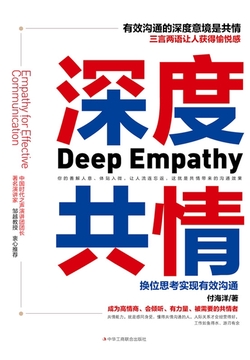 深度共情:换位思考实现有效沟通
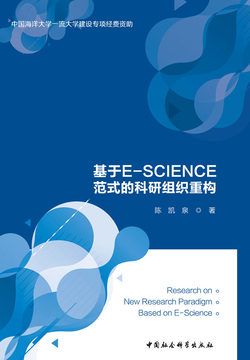 基于E-SCIENCE范式的科研组织重构
 极简面试心法
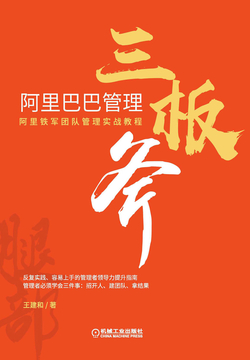 阿里巴巴管理三板斧
 成长型企业销售部实战全指导
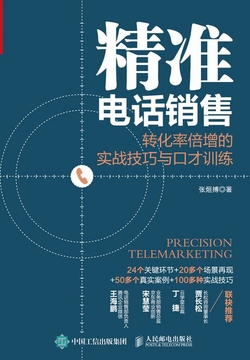 精准电话销售:转化率倍增的实战技巧与口才训练
Comments
Find this book
This site is an index: you start “Search all sources” in your browser, and the entries it lists all point to third-party sites; please judge their availability yourself.
About the author
Public information about Zhao Jie is limited; her nationality, dates of birth and death, and educational background are not clearly documented. Judging from the twelve works held in the library, she is an author with a remarkably broad range of subjects, spanning industrial technology, psychology and communication, inspirational personal growth, and hands-on crafts. In technical titles she addresses mechanical drawing and innovative methods, with writing that leans toward organizing knowledge and practical explanation. In communication and psychology, she focuses on communication skills, emotionally intelligent expression, and interpersonal relationships; her language is accessible, with examples close to everyday life, aimed at ordinary readers who wish to improve their expression and relationships. Overall, Zhao Jie's writing is marked by practicality and readability, and she is skilled at turning specialized knowledge into content that is easy to absorb, suitable for readers of different ages and professional backgrounds to use as needed.
