

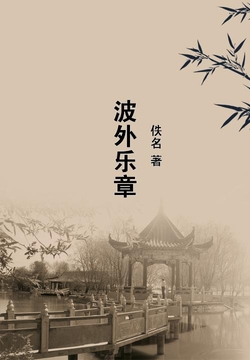
Songs Beyond the Waves
Tags
Summary
Editor's review
Who it's for
A good fit for
- Readers who love classical poetry and understated lyric aesthetics
- Readers who wish to practice slow reading and image association through short ci pieces
- Literature enthusiasts interested in traditional boudoir-longing themes and landscape analogy
- General readers seeking brief aesthetic pauses in fragmented time
Not a good fit for
- Readers who prefer strong plots and complete storylines
- Academic readers expecting biographical research or detailed annotations
- Beginners unfamiliar with classical imagery and literary Chinese
Reading tips
- Read through once without straining for full understanding, then circle color and spatial images line by line to feel the layers of the picture.
- Copy the whole text by hand to experience its rhythm and blank space; do not rush to translate it into plain language.
- Read the lines "railing above, water below" and "palace-yellow mountain brow" in contrast, noting how the gaze moves from near to far.
- After reading, try recording personal associations in two or three sentences—no standard interpretation required.
Contents
- 版权信息
- 波外乐章卷一
- 波外乐章卷二
- 波外乐章卷三
- 波外乐章卷四
FAQ
Is this book suitable for readers with no foundation in classical poetry?
Why recommend copying rather than just reading?
How should one understand the line "where does this longing belong?"
Related on WeRead


Comments
Find this book
This site is an index: you start “Search all sources” in your browser, and the entries it lists all point to third-party sites; please judge their availability yourself.
About the author
Anonymous is not a real personal name but a general Chinese designation for authors whose names are unknown, lost, or unsigned. Neither nationality nor dates of birth and death can be verified, and available public information is limited, so the works attributed to this name are the only basis for description. The collection holds 2,078 works under Anonymous, spanning medicine, classics, historical readings, ancient poetry, classical literature, and philosophy. Representative works include The Yellow Emperor's Inner Canon: Lingshu, Mencius, The Book of Documents, Nineteen Old Poems, Complete Song Ci, and The Peacock Flies Southeast. Most of these works took shape through long transmission and editing, emerging either from collective folk creation or from authors whose names were lost over time. In ancient China, the Book of Songs, the Great Learning, and many popular storybooks and plays were signed Anonymous because their authors could not be traced. Anonymous works cross the classics, histories, philosophical writings, medical texts, and poetry; their subjects are broad, and their styles vary from archaic simplicity to clear naturalness, making them important and influential sources for understanding ancient Chinese thought, medicine, and literature.
