

Questions and Answers on the Lotus Sutra
Tags
Summary
Editor's review
Who it's for
A good fit for
- Beginners interested in the Lotus Sutra who want to grasp its basic concepts first
- Readers in Buddhist scripture reading groups who need discussion outlines and question-and-answer material
- Readers who prefer short, question-and-answer chapters that can be read in brief sessions
Not a good fit for
- Readers expecting systematic academic scholarship or a modern Buddhist studies introduction
- Readers with no experience reading Buddhist texts who need line-by-line vernacular explanation
Reading tips
- First read through all the questions once, mark the technical terms you do not understand, then go back to the relevant chapters of the Lotus Sutra.
- Read only a few questions and answers at a time, jotting down the context of key terms such as "threefold Dharma" and "innumerable meanings."
- When reading with others, have each person summarize one question in their own words, then check the original wording.
- After finishing, write a hundred-character summary in your own words to test whether you have truly understood the logic of the questions and answers.
About the publisher
Nanhai Publication Company is a comprehensive publisher known for its literature and arts titles, covering fields such as classical poetry, martial arts fiction, and folk literature. Judging from the more than 1,600 books in the database, the company has released classical poetic works including the Nineteen Old Poems and the Nine Songs, as well as multiple volumes of Huanzhulouzhu's series The Swordsmen of Mount Shu, along with related writings by authors such as Guan Hanqing, Qu Yuan, Zuo Si, and Wang Zhihuan. Its publishing character lies in balancing the organization of classic texts with the dissemination of popular literature, placing poetry anthologies alongside long martial arts novels and presenting a relatively diverse literary profile. Public information is limited, and further details about its editorial practices and series planning remain to be supplemented.
Contents
- 版权信息
- 法华问答
FAQ
Can I read this book without any background in Buddhist studies?
Does this book need to be read alongside the original Lotus Sutra?
The title says "Questions and Answers"—does it explain the scripture sentence by sentence?
Related on WeRead
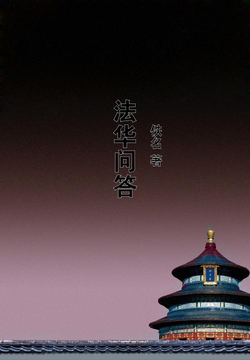 法华问答
 华严经入法界品十八问答
 中华人民共和国禁毒法学习问答
 中华人民共和国民法典学习问答:人格权编·婚姻家庭编·继承编·侵权责任编
 中华人民共和国上市公司法律法规全书(含发行监管问答)(2021年版)
Comments
Find this book
This site is an index: you start “Search all sources” in your browser, and the entries it lists all point to third-party sites; please judge their availability yourself.
About the author
Anonymous is not a real personal name but a general Chinese designation for authors whose names are unknown, lost, or unsigned. Neither nationality nor dates of birth and death can be verified, and available public information is limited, so the works attributed to this name are the only basis for description. The collection holds 2,078 works under Anonymous, spanning medicine, classics, historical readings, ancient poetry, classical literature, and philosophy. Representative works include The Yellow Emperor's Inner Canon: Lingshu, Mencius, The Book of Documents, Nineteen Old Poems, Complete Song Ci, and The Peacock Flies Southeast. Most of these works took shape through long transmission and editing, emerging either from collective folk creation or from authors whose names were lost over time. In ancient China, the Book of Songs, the Great Learning, and many popular storybooks and plays were signed Anonymous because their authors could not be traced. Anonymous works cross the classics, histories, philosophical writings, medical texts, and poetry; their subjects are broad, and their styles vary from archaic simplicity to clear naturalness, making them important and influential sources for understanding ancient Chinese thought, medicine, and literature.
