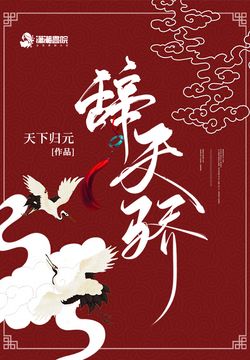
The Proud Genius of the Martial World cover

The Proud Genius of the Martial World

Rating 3.7
Word count
315K words
Chapters
17

Tags

Summary

This book is a late representative work by Liang Yusheng. Set against the historical backdrop of the Song-Jin confrontation, the story revolves around the unique identity and tortuous journey of the protagonist, Tan Yuchong, the "Prodigy of the Martial World." Tan's mother was a granddaughter of the national hero Yue Fei, while his father, Tan Daocheng, was a Jin noble. His ideal was to bring harmony between the two mutually hostile peoples of north and south, but under the specific historical conditions this was impossible to achieve, and it made him both persecuted by the Jin and hated by the Song. Tan traveled south to Lin'an twice, and the martial artists of Jiangnan gradually came to understand his character and integrity. Tan produces the family heirloom—Yue Fei's handwritten "Man Jiang Hong"—and the truth is finally revealed. Later, Tan Yuchong chooses Cuiping Mountain on the Jin-Song border as his place of seclusion, echoing the half-Jin, half-Song blood in his veins. The Tan family's ordeal demonstrates the deep-rooted hatred between the two states, which shatters families, brings the "Prodigy" to the brink of death repeatedly, and destroys the love of the Jiangnan beauty Zhong Lingxiu! Under the sway of fanatical ideology, the idea of "justice" often becomes a tool for killing, and the book offers a historical reflection on this.

Editor's review

Among Liang Yusheng's later works, The Peerless Warrior of the Martial World carries considerable philosophical weight. It does not simplify chivalry into a contest between good and evil; instead, it places the protagonist Tan Yuchong amid the ethnic rift of the Song-Jin confrontation: with half Yue Fei's bloodline and half Jin aristocratic origin, he finds it hard to be accepted no matter which side he stands on. The most moving aspect of the book is not the martial contests but the choices made under the predicament of identity—two journeys south to Lin'an, proving himself with Yue Fei's handwritten Man Jiang Hong, and finally retiring to Cuiping Mountain—all point to a painful reflection on ethnic hatred. Liang Yusheng here continues his elegant style of historical narrative and poetry woven into chivalry, while writing with remarkable clarity on the proposition that "justice," once swept up by fanatical ideology, may degenerate into a tool for killing. Suitable for readers who, after the satisfying vengeance of traditional wuxia, want to think further about the relationship between home and country, ethnic groups, and individual fate. While reading, it is worth noting how Tan Yuchong's situation changes each time his identity is exposed; that is the book's true main thread.

Who it's for

A good fit for

  • Wuxia readers who like Liang Yusheng's works and want a systematic understanding of his later writing
  • Readers of historical fiction interested in the Song-Jin historical background and themes of ethnic relations
  • Literary readers who prefer reflective themes such as identity predicament and choices between home and country
  • Adult readers who want to read wuxia while also seeing historical reflection rather than mere fighting

Not a good fit for

  • Readers seeking fast-paced, wish-fulfillment fiction whose main pleasure is leveling up and fighting monsters
  • Readers who prefer light comedy or pure entertainment and do not want to engage with heavy ethnic issues
  • Young readers who lack basic knowledge of Song-Jin history

Reading tips

  1. Before reading, briefly learn the basic facts of the Song-Jin confrontation and Yue Fei to better understand the protagonist's dilemma.
  2. Note the changes in the attitude of Jiangnan martial artists each time Tan Yuchong travels south to Lin'an; this is where the character's arc lies.
  3. After reading, compare the view of ethnic relations in Liang Yusheng's other works and consider what is distinctive about this book's reflection.
  4. Slow down and savor the passages involving poetry and Man Jiang Hong; they are key to the plot's turning points.

About the publisher

(Hong Kong) Chuanhui Publishing Limited is a publishing house based in Hong Kong, China. Public information about it is limited. Judging from the books in the database, its publishing focus is on wuxia novels, especially electronic editions of works by Liang Yusheng. Titles include such full-length wuxia classics as The Legend of the Condor Heroes-style romances Pingzong Xiaying Lu, Yunhai Yugong Yuan, Baifa Monü Zhuan and Datang Youxia Zhuan, mostly presented in multiple volumes, with both upper and lower volumes and complete editions. Liang Yusheng is its core author, and the category is relatively concentrated, reflecting a systematic arrangement and digital dissemination of classic wuxia texts. Its publishing feature lies in reproducing traditional wuxia novels in e-book form, using Hong Kong ISBNs beginning with 988, so that readers can encounter Liang Yusheng's martial arts world digitally.

Contents

  1. 上册 第一回 鸳鸯同命
  2. 第二回 亲友成仇
  3. 第三回 离奇身世
  4. 第四回 毁家逃难
  5. 第五回 官衙赏花
  6. 第六回 箫心剑气
  7. 第七回 夫人出走
  8. 第八回 大闹寿筵
  9. 下册 第九回 浮萍聚散
  10. 第十回 客途奇遇
  11. 第十一回 曲终人散
  12. 第十二回 西湖风波
  13. 第十三回 含冤莫白
  14. 第十四回 太湖波涛
  15. 第十五回 红颜薄命
  16. 第十六回 变生幽谷
  17. 第十七回 泪洒长江

FAQ

Can I read this book directly without having read other works by Liang Yusheng?
Yes. The story is relatively independent, and its main characters and plot do not depend on earlier works. A general understanding of the historical background of the Song-Jin confrontation is enough to enter the book smoothly. If you want to appreciate the evolution of Liang Yusheng's style, you can also read his early representative works first and then return to the depth of reflection in this book.
Are there many martial arts fight scenes in this book?
The book's focus leans more toward the characters' circumstances and the conflicts between home and country; the martial arts descriptions serve plot development and character portrayal rather than being a selling point of dense fighting. If you expect continuous fierce battles, the pace may feel slow; but if you like reading history and human nature within a martial world story, you will find it substantial.
Why does Tan Yuchong finally choose to live in seclusion on Cuiping Mountain?
Cuiping Mountain lies at the border between Jin and Song, and this choice echoes his mixed Jin and Song bloodline. Under historical conditions in which the killing between north and south is hard to resolve, he can belong fully to neither side, so he settles in an in-between place; this is both helplessness and the book's painful expression of how deep-rooted ethnic hatred is.

Related on WeRead

Comments

Find this book

This site is an index: you start “Search all sources” in your browser, and the entries it lists all point to third-party sites; please judge their availability yourself.

About the author

Liang Yusheng Author · Chinese · 1924–2009

Liang Yusheng (1924–2009), originally named Chen Wentong, was a native of Mengshan, Guangxi. After the victory of the War of Resistance, he entered Lingnan University in Guangzhou and later became an editor of the supplement of the Hong Kong newspaper Ta Kung Pao. In 1954, with The Dragon and Tiger Duel in the Capital, he pioneered the new school of Hong Kong wuxia fiction. He wrote thirty-five works before retiring his pen in 1984. His wuxia novels often draw on history, weaving real dynastic changes with martial-world feuds; his characters combine patriotic concern with romantic attachment, and his elegant prose is interspersed with poetry, giving his work a distinctive scholarly flavor. Representative works include The White-Haired Demoness, Seven Swords from Mount Heaven, The Romance of Pingzong Xiaying, and The Romance of the Cloud Sea and Jade Bow. He is often mentioned alongside Jin Yong as a leading figure of his time. Besides wuxia fiction, he also wrote modern poetry; the library holds 143 of his works.

More by the same author

Top rated in the same category