

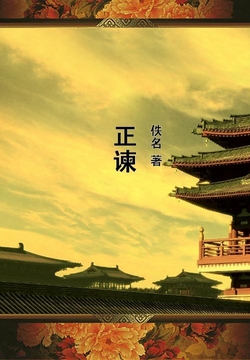
Direct Remonstrance
Tags
Summary
Editor's review
Who it's for
A good fit for
- Readers of history and literature interested in ancient political ethics and the remonstrance system
- Students taking courses in pre-Qin and Han literature or intellectual history
- Researchers who need to cite the concept of "upright remonstrance" in their writing
- Readers who enjoy short classical essays and prefer fragmented reading
Not a good fit for
- General readers expecting a systematic history of remonstrance or stories of figures
- Beginners who need vernacular translation and detailed annotation to understand classical Chinese
- Readers looking for novel-like narrative or light entertainment
Reading tips
- First read the original text of "Zhan Guo Ce: Qi Ce IV," then return to the book's definition and examples of "upright remonstrance."
- Read the passages cited in the book alongside the remonstrance chapter of "Zhenguan Zhengyao" to appreciate differences in expression across eras.
- When taking reading notes, excerpt key sentences and note their sources for later citation in writing.
- There is no need to read straight through; choose the examples section according to interest, one or two items at a time.
About the publisher
"Republic-era Commercial Press Original Editions" refers to original books printed by The Commercial Press during the Republican period, not a separate publishing house. Judging from the 300 titles held in the collection, its publishing focus centers on classical poetry and lyrics, literary appreciation, classic works, military texts, prose and miscellaneous writings, and Eastern philosophy. Representative titles include Wang Guowei's Renjian Cihua, Zhong Rong's Shipin, the lyric collections of Xin Qiji and Liu Yong, Sun Wu's The Art of War, and Lü Buwei's Xianshi Lan. Its author resources are mainly classical writers, together with modern scholars such as Li Jingbang and Guo Huaruo, whose collations and annotations are also represented, giving the list a character centered on original texts while attending to annotation and appreciation. Public information on the precise Republican-era catalog and printings is limited; this overview is based only on the titles held in the collection.
Contents
- 版权信息
- 正文一
- 正文二
- 正文三
FAQ
What is the difference between "upright remonstrance" and "indirect remonstrance"?
Is this book suitable for beginners to read directly?
What is special about the original Republican-era printing?
Related on WeRead
Comments
Find this book
This site is an index: you start “Search all sources” in your browser, and the entries it lists all point to third-party sites; please judge their availability yourself.
About the author
Anonymous is not a real personal name but a general Chinese designation for authors whose names are unknown, lost, or unsigned. Neither nationality nor dates of birth and death can be verified, and available public information is limited, so the works attributed to this name are the only basis for description. The collection holds 2,078 works under Anonymous, spanning medicine, classics, historical readings, ancient poetry, classical literature, and philosophy. Representative works include The Yellow Emperor's Inner Canon: Lingshu, Mencius, The Book of Documents, Nineteen Old Poems, Complete Song Ci, and The Peacock Flies Southeast. Most of these works took shape through long transmission and editing, emerging either from collective folk creation or from authors whose names were lost over time. In ancient China, the Book of Songs, the Great Learning, and many popular storybooks and plays were signed Anonymous because their authors could not be traced. Anonymous works cross the classics, histories, philosophical writings, medical texts, and poetry; their subjects are broad, and their styles vary from archaic simplicity to clear naturalness, making them important and influential sources for understanding ancient Chinese thought, medicine, and literature.
