

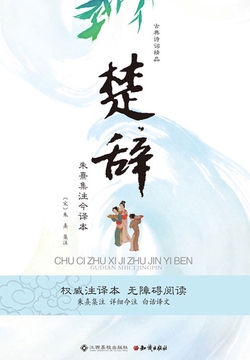
The Songs of Chu: Translation and Annotation
Tags
Summary
Editor's review
Who it's for
A good fit for
- Readers with a deep interest in the sources of classical Chinese literature, especially pre-Qin poetry and mythology
- Literature lovers who wish to systematically study the Chu Ci text through a reliable translation and annotations
- Professionals in Chinese or history teaching or research who need a reference book balancing scholarship and readability
- Modern thinkers seeking spiritual nourishment and aesthetic experience from traditional culture
Not a good fit for
- Readers seeking only plot summaries or quick appreciation of famous lines
- Readers expecting highly popularized presentations such as abundant illustrations or vernacular story adaptations
Reading tips
- First read through Mr. Dong's translation to feel the overall poetic quality and emotional thread, then read the original closely with the annotations
- While reading, it is helpful to consult background materials on Warring States history and Chu culture to better appreciate the deeper implications of the text
- Read core pieces such as "Li Sao," "Nine Songs," and "Nine Pieces" comparatively to appreciate the trajectory of Qu Yuan's emotions and thought
About the publisher
Shanghai Classics Publishing House is a professional publisher centered on the collation of ancient texts and academic research works. Its publishing areas cover historical readings, classical poetry, folk literature, literary appreciation, canonical works, and Eastern philosophy. Its books include Chen Yinke's A Brief Discussion of the Origins of the Sui and Tang Institutions, Xin Qiji's Chronological Annotated Edition of Jiaxuan's Ci (Simplified Edition), Tang Xianzu's The Peony Pavilion, Liu Xie's The Literary Mind and the Carving of Dragons, as well as New Annotations to Three Hundred Tang Poems (Collector's Edition), Annotated Edition of Han Changli's Collected Works (Simplified Edition, 3 volumes), and Youyang Zazu. Its authors include Chen Yinke, Xin Qiji, Tang Xianzu, Liu Xie, Deng Guangming, Hengtang Tuishi, Han Yu, and Ma Qichang. In terms of publishing characteristics, the house emphasizes collation, annotation, and compilation of ancient texts alongside academic research works, and continues to issue simplified and collector's editions that balance scholarship and accessibility. Public information about the publisher's fuller publishing profile is limited.
Contents
- 版权信息
- 前言
- 离骚
- 九歌
- 东皇太一
- 云中君
- 湘君
- 湘夫人
- 大司命
- 少司命
- 东君
- 河伯
- 山鬼
- 国殇
- 礼魂
- 天问
- 九章
- 惜诵
- 涉江
- 哀郢
- 抽思
- 怀沙
- 思美人
- 惜往日
- 橘颂
- 悲回风
- 远游
- 卜居
- 渔父
- 九辩
- 招魂
- 大招
- 附录 《史记·屈原列传》译注
FAQ
What are the main differences between this edition and other annotated editions of Chu Ci (such as Zhu Xi's Chu Ci Ji Zhu and You Guoen's Chu Ci Zhu Shu)?
Is the translation of Chu Ci literal or free? Does it preserve the original rhythm?
Is this book suitable for readers with no foundation in classical Chinese at all?
Related on WeRead





Comments
Find this book
This site is an index: you start “Search all sources” in your browser, and the entries it lists all point to third-party sites; please judge their availability yourself.
About the author
Dong Chuping is a Chinese author about whom little public information is available; details such as his birthplace, dates of birth and death, and educational background remain unclear, and three of his works are held in the collection. Judging from these works, his writing centers on the Chu Ci tradition: he is the author of An Annotated Translation of the Chu Ci and The Complete Illustrated Li Sao, with a duplicate record of the same annotated translation. These works belong to the editing and annotation of classical literature, combining textual explication with literary appreciation, and are often classified under Eastern philosophy and literary appreciation. His annotations focus on explaining the words, phrases, and names of things in Qu Yuan's works, and present the literary character of Li Sao together with illustrations, making the pre-Qin Chu Ci more accessible to general readers. Overall, Dong Chuping is known for his annotated translations and illustrated editions of the Chu Ci, which offer some reference value for the popular reading of this tradition.
