

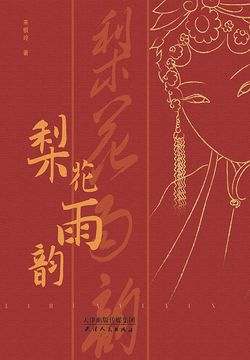
Rhyme of Pear Blossoms and Rain
Tags
Summary
Editor's review
Who it's for
A good fit for
- Readers who love rural literature and lyrical essays
- Readers interested in a delicate feminine writing perspective
- Those seeking inner calm and emotional resonance through reading
- Literature lovers interested in the aesthetics of daily life and the writing of personal memory
Not a good fit for
- Readers seeking strong plot and fast-paced narrative
- Readers who prefer theoretical analysis or serious social-science texts
Reading tips
- Read in a relatively quiet, undisturbed environment to better immerse yourself in the book's atmosphere.
- You need not read from beginning to end in table-of-contents order; open any essay at random and let the words carry you into the particular time and place the author depicts.
- After reading, try recording the personal memories the text triggers in you, creating an intertextual reading experience.
About the publisher
Tianjin People's Publishing House publishes across such fields as classic works, foreign literature, architecture, social culture and social sciences, with 749 relevant titles in the collection. In the areas of classics and scholarship, works such as Wang Guowei's Renjian Cihua and Fei Xiaotong's From the Soil and Fertility and Reproduction reflect a sustained attention to social culture and classic texts of thought. Architectural books are represented by Liang Sicheng's Annotated Yingzao Fashi and A History of Chinese Architecture, showing an emphasis on architectural heritage and building traditions. In foreign literature, translations of Sholokhov's And Quiet Flows the Don and Tolstoy's War and Peace and The Death of Ivan Ilyich, through the work of translators such as Li Gang and Yu Dawei, form a substantial series of translated works. Overall, the press combines classic texts, scholarly works and fine translations, with a publishing character oriented toward humanistic depth and the dissemination of knowledge.
Contents
- 版权信息
- 引子
- 一 皇孙献艺
- 二 梨园始祖
- 三 梨园魁首
- 四 梨花初绽
- 五 梨园弟子
- 六 小部音声
- 七 旗亭画壁
- 八 皇帝献丑
- 九 霓裳故事
- 十 大娘戴竿
- 十一 王维听曲
- 十二 羯鼓解秽
- 十三 李谟破笛
- 十四 沉香亭畔
- 十五 滑稽大师
- 十六 永新止喧
- 十七 何满哀歌
- 十八 公孙剑舞
- 十九 董大胡笳
- 二十 广运得宝
- 二十一 肢解飞升
- 二十二 回归民间
FAQ
What is the theme of this book?
What is the author's writing style?
What makes this book unique compared with similar essay collections?
Related on WeRead
Comments
Find this book
This site is an index: you start “Search all sources” in your browser, and the entries it lists all point to third-party sites; please judge their availability yourself.
About the author
Lai Yinling is an author on whom public information is limited; only two works are confirmed to be in the collection, namely "The Fragrant Scent of Pear Blossoms After Tea and Wine" and "The Charm of Pear Blossom Rain." Judging from the titles and the usual categories, her writing consists mainly of prose and miscellaneous essays, with some historical reading as well, and her subjects tend to revolve around the imagery of pear blossoms, casual daily reflection, and old anecdotes and lore, in a style leaning toward the lyrical and narrative essay. Because no reliable records are available on her dates of birth and death, nationality, education, or professional appointments, this introduction makes no conjecture about them. In the two works at hand, Lai Yinling's writing shows a fairly consistent aesthetic orientation: taking flowers and scenery as a point of departure, it interweaves personal reflection with historical fragments, moves at a relaxed pace, and pays attention to atmosphere, suiting readers who enjoy lyrical prose and light historical reading.
