

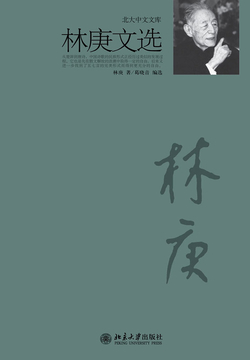
Selected Works of Lin Geng
Tags
Summary
Editor's review
Who it's for
A good fit for
- Students of classical literature seeking representative discussions of Chu Ci and Tang poetry
- Enthusiasts of modern literature and poetry interested in scholarly discussions of modern poetic prosody
- General readers with some literary reading experience who wish to encounter scholarly criticism
- Instructors in Chinese departments who may use the selections as course supplements or discussion materials
Not a good fit for
- Readers with no basic reading experience in classical literature and little exposure to classical Chinese texts
- Learners expecting a systematic textbook-style survey with chapter-by-chapter knowledge summaries
- Readers interested only in modern poetry composition and not in academic essay genres
Reading tips
- Read by research area: begin with Tang poetry or Chu Ci, then move to prosodic explorations
- After each essay, note the author's central questions and argumentative path rather than copying sentences
- Compare with related works you have read to test whether the views fit your own reading of the texts
- When used as a course supplement, read one or two essays at a time alongside class discussion
About the publisher
Peking University Press is a comprehensive university press whose publishing areas cover classical literature, popular science, social culture, world history, Western philosophy, and culture. Its catalogue contains 6,031 titles, with representative books including A Dream of Red Mansions, Relativity: The Special and General Theory (15th Edition) (with Einstein's classic papers on unified field theory and other topics), Elements, Conics, The Aristocratic Families of the Eastern Jin, The Philosophy of Mythology (Volume I), The Philosophy of Mythology (Volume II), and The Origin of Continents and Oceans. Representative authors include Cao Xueqin, Zhou Ruchang, Albert Einstein, Euclid, Apollonius, Tian Yuqing, Schelling, and Xian Gang. The press has developed distinctive strengths in classical Chinese literature and in the translation of Western philosophical classics, while also covering scientific classics and social and cultural studies. As public information is limited, this description is based only on the books in the catalogue and offers no further extrapolation.
Contents
- 版权信息
- 那些日渐清晰的足迹(代序)
- 前言
- 屈原生卒年考
- 摄提与孟陬
- 招魂解
- 《天问》中所见夏王朝的历史传说
- 《天问》中所见上古各民族争霸中原的面影
- 《天问》中有关秦民族的历史传说
- 陈子昂与建安风骨
- 盛唐气象
- 略谈唐诗高潮中的一些标志
- 诗人李白(节选)
- 唐诗的语言
- 诗的活力与诗的新原质
- 《西游记漫话》(节选)
- 从水浒戏看《水浒传》
- “赤壁之战”分析
- 关于新诗形式的问题和建议
- 林庚先生学术年表
FAQ
Is this book suitable for readers without a classical literature background?
Should the sixteen selections be read in order from beginning to end?
Does Lin Geng's identity as a poet help in understanding these essays?
Related on WeRead
Comments
Find this book
This site is an index: you start “Search all sources” in your browser, and the entries it lists all point to third-party sites; please judge their availability yourself.
About the author
Lin Geng is an author about whom relatively limited public information is currently available. The library holds one work by this author, Selections from Lin Geng. Judging from the title and its common classification, the book is grouped among classic works and is likely an anthology of the author's articles or writings, carrying a sense of review and distillation. Because information such as birth and death years, nationality, education, and personal experience has not been confirmed, no speculation is made here about the author's life; only the writing as reflected in the available material is described. In the form of selected writings, Lin Geng's prose seems to balance narration and discussion, striving for clear and concise language and focusing on putting ideas into concrete terms rather than piling up ornate phrases. An anthology of this kind is usually intended for readers who wish to gain a concentrated understanding of the author's thinking and to grasp the main concerns and habits of expression within a limited space. Its influence cannot currently be judged from the library's data, and readers may explore the specific pieces in Selections from Lin Geng to further appreciate the author's choice of subjects and stylistic characteristics.
