

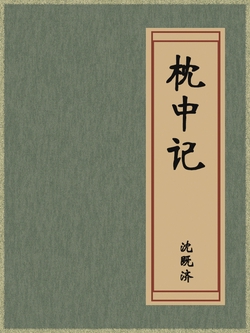
Record from Inside the Pillow
Tags
Summary
Editor's review
Who it's for
A good fit for
- General readers who want to know the source of the "yellow millet dream" allusion
- Literature lovers interested in Tang chuanqi and classical fiction
- Bibliophiles and textual scholars concerned with the physical form of Republican-era publications
- Language teachers who need a short classical Chinese text for classroom use
Not a good fit for
- Readers expecting a long, complete plot and complex character arcs
- Readers not yet comfortable with classical Chinese who do not wish to use annotations
- Readers who only want a modern vernacular retelling and care nothing about the edition's physical form
Reading tips
- Read the story through once, sorting out the four stages: Lu Sheng enters the dream, reaches the height of glory, falls ill and dies, and wakes.
- On a second reading, note the descriptions of official promotions and marriage into great families, and consider the author's ironic target.
- You may compare the later evolution of the "yellow millet dream" in drama and fiction and do some further reading.
- If classical Chinese is difficult, first use a reliable annotated translation to clarify the meaning, then return to the original printed text.
About the publisher
"Republic-era Commercial Press Original Editions" refers to original books printed by The Commercial Press during the Republican period, not a separate publishing house. Judging from the 300 titles held in the collection, its publishing focus centers on classical poetry and lyrics, literary appreciation, classic works, military texts, prose and miscellaneous writings, and Eastern philosophy. Representative titles include Wang Guowei's Renjian Cihua, Zhong Rong's Shipin, the lyric collections of Xin Qiji and Liu Yong, Sun Wu's The Art of War, and Lü Buwei's Xianshi Lan. Its author resources are mainly classical writers, together with modern scholars such as Li Jingbang and Guo Huaruo, whose collations and annotations are also represented, giving the list a character centered on original texts while attending to annotation and appreciation. Public information on the precise Republican-era catalog and printings is limited; this overview is based only on the titles held in the collection.
Contents
- 版权信息
- 枕中記
FAQ
What is the relationship between "The World Inside a Pillow" and the "yellow millet dream"?
What is special about this facsimile of the original Republican-era Commercial Press edition?
Is Lü Weng in the story Lü Dongbin?
It is so short—is it worth reading on its own?
Related on WeRead




Comments
Find this book
This site is an index: you start “Search all sources” in your browser, and the entries it lists all point to third-party sites; please judge their availability yourself.
About the author
Kaiyuan, whose life remains obscure, is known only from limited public sources; his nationality, dates of birth and death, and English name cannot be confirmed. Two works by him are currently included in the collection, both titled Record of a Pillow, and are classified under classical literature and Eastern philosophy. Judging from the titles and categories of these works, Kaiyuan's subject matter carries a strong flavor of traditional narrative and philosophical reflection, readily evoking the classical mode of dream records and parables, in which stories convey observations on the illusory and the real, and on the rise and fall of human fortunes. His style may be described as plain and restrained narration bearing ideas, with speculative meaning embedded in the framework of the tale, so that the works combine literary readability with a lingering philosophical resonance. Owing to the scarcity of materials, the exact character of Kaiyuan and his writings awaits further documentary evidence and should not be hastily judged.
