

Almond
Tags
Summary
Editor's review
Who it's for
A good fit for
- Readers interested in psychology, neuroscience, or unusual mental states
- Literary readers who enjoy strong emotional tension beneath cool narration
- Modern urban readers puzzled by relationships and emotional expression who seek resonance and reflection
- Readers looking for distinctive plots that provoke deep philosophical thought
Not a good fit for
- Readers expecting fast pacing, strong plot conflict, or conventional romance
- Readers sensitive to heavy themes such as violence and psychological trauma
Reading tips
- Read in a relatively quiet setting and follow the protagonist's perspective to experience how emotional words are redefined.
- Notice the multiple symbolic meanings of the "almond": a physical organ and a metaphor for the core of emotion and humanity.
- After reading, consider: if stripped of social conditioning, how much of our supposedly "natural" emotional response truly belongs to the self?
About the publisher
Founded in 1994, Democracy and Construction Press organizes its publishing around economic management, the humanities and history, and united front culture, while also covering foreign literature and classic works. Among the 732 titles in the collection are translations of foreign classics such as The Brothers Karamazov and On War, fantasy literature such as The Lord of the Rings Trilogy: Illustrated Collector's Edition, and modern literary masterpieces including Lao She's Four Generations Under One Roof and Camel Xiangzi · The Problem of Nothing, and Lu Xun's Call to Arms. Translators Geng Jizhi and Wang Jinhua, together with authors such as J. R. R. Tolkien and Carl von Clausewitz, form the resource base for its combination of scholarly translation and general reading. As public information is limited, this description focuses on the publishing profile reflected in the titles held in the collection.
Contents
- 版权信息
- 引子
- 一
- 二
- 三
- 四
- 尾声
- 作者的话
FAQ
Is this book based on a real case?
Is the novel's tone too dark and heavy?
Is this book suitable for teenagers?
Related on WeRead


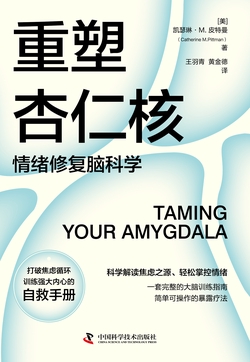
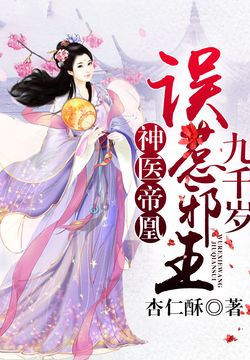
Comments
Find this book
This site is an index: you start “Search all sources” in your browser, and the entries it lists all point to third-party sites; please judge their availability yourself.
About the author
Sun Yuanping is an author about whom limited public information is available; her nationality, dates of birth and death, and educational background have not been clearly recorded. Judging from the two works held in the collection, her writing falls mainly into the categories of foreign literature and social fiction, with Almond as her representative work. Grounded in social reality, this work focuses on the psychology and fate of individuals in complex circumstances, with a delicate and restrained touch that carries a strong contemporary literary flavor. Because relevant introductions are scarce, it is difficult to trace her full creative trajectory, yet the existing works reveal the author's sustained attention to questions of human nature and her careful handling of narrative rhythm and inner lives. Readers who wish to learn more about her may begin with Almond and sense the calm observation and emotional tension in her writing.
Xie Yayu is an author about whom limited public information is currently available. Two of her works are included in the collection, with Almond as her representative title. Judging from the common categories, her writing is classified under foreign literature and social fiction, and its themes tend to involve social reality and the fate of individuals, with a realistic approach. Since basic details such as nationality, dates of birth and death, English name, and personal experience cannot be confirmed, no inference is made here about her life or background. Almond, as her representative work, can be situated within the vein of social fiction, attending to individuals' circumstances and emotions within social relationships and showing a certain concern for reality. Overall, the full picture of Xie Yayu's creative work still depends on the disclosure of more materials; readers may perceive her narrative orientation and the issues she addresses through the available works, and should not overgeneralize about her literary standing or the whole of her style on the basis of limited information.
