

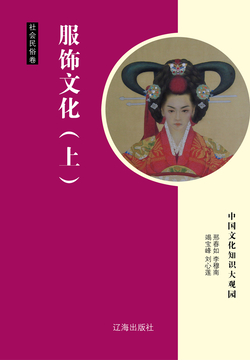
Costume Culture
Tags
Summary
Editor's review
Who it's for
A good fit for
- Humanities enthusiasts interested in the history of costume and material culture
- Art and design students seeking supplementary cultural theory
- Readers hoping to deepen their understanding of traditional Chinese clothing culture
- Thinkers who enjoy discovering historical and social meaning in everyday things
Not a good fit for
- Readers seeking the latest trend styling guides or purely garment-making techniques
- Professional researchers expecting dense academic argumentation and cutting-edge theoretical debate
Reading tips
- Read the chapters in order to first establish a chronological timeline and basic conceptual framework.
- Supplement the book with image searches for the classic garments it mentions (such as the shenyi, qipao, and tailcoat) to enhance visual understanding.
- While reading, consider potential connections between current fashion trends and the historical cases in the book, drawing cross-era comparisons.
About the publisher
Henan University Press operates in the fields of educational publishing and academic publishing, with books covering classical literature, social novels, world classics, folk literature, and foreign literature. Representative works in the catalog include the Chinese classical novels Dream of the Red Chamber, Journey to the West, Romance of the Three Kingdoms, and Water Margin, as well as Chinese and foreign literary classics such as Xiao Hong's The Field of Life and Death, Ernest Hemingway's The Old Man and the Sea, and Jules Verne's Twenty Thousand Leagues Under the Sea. Its author resources include classical writers such as Cao Xueqin, Gao E, Wu Cheng'en, Luo Guanzhong, and Shi Nai'an, along with modern and contemporary authors and translators such as Xiao Hong, Ernest Hemingway, and Zhang Chiheng. Drawing on its university background, the press emphasizes the collation and promotion of classic texts and has built up a certain selection of literary titles. Public information on its specific publishing features and series plans is limited.
Contents
- 版权信息
- 编写说明
- 一、历代服饰
- 服饰文化
- 原始服饰
- 商周服饰
- 秦汉服饰
- 魏晋南北朝服饰
- 唐代服饰
- 五代服饰
- 宋代服饰
- 辽金元服饰
- 二、服饰形式
- 长冠
- 委貌冠
- 通天冠
- 远游冠
- 高山冠
- 进贤冠
- 法冠
- 武冠
- 三、服饰民俗
- 婴儿服饰
- 成年礼服饰
- 定情与订婚服饰
- 婚姻服饰
- 后 记
FAQ
What is this book's Douban rating?
What is the background of author Li Munan?
How does this book differ from books like The History of Chinese Clothing?
Related on WeRead


Comments
Find this book
This site is an index: you start “Search all sources” in your browser, and the entries it lists all point to third-party sites; please judge their availability yourself.
About the author
Li Munan is a Chinese author with a considerable body of work, though public information about him is limited, and details such as his nationality, birth and death years, and personal background are not clearly recorded. Judging from the 262 titles held in the collection, his writing spans several fields, including popular science, inspirational growth, parenting, and fashion. Representative works include Don't Underestimate This Knowledge, Learn Like a Scientist, Bizarre Plants, How Scientists Learn, Think Like a Scientist, Stories of the Growth of Chinese Education Masters, Classic Education Stories from China and Abroad, and The Greatest Technological Inventions. These titles suggest that he excels at turning scientific knowledge, learning methods, and educational stories into accessible reading for young readers and parents concerned with their children's development. Overall, his works focus on popularizing knowledge and inspiring personal growth, with plain language and themes close to everyday reading needs, forming a practical style within science and education books.
