

The Man in the Shadows
Tags
Summary
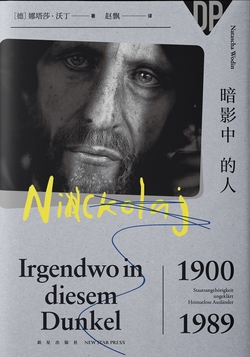
A man who filled her with fear at every moment, her father was born in the Tsarist era and spanned nearly the whole of the twentieth century; his life has always been a mystery to his daughter: Why did he refuse to learn German, when he himself knew only two words, "want" and "don't want"? Why did he say nothing about his first forty years in Russia? Through all the silence, somewhere in the shadows, lies a history of wandering and horror. In trying to find the key to understanding, Natasha draws on her own experience of being homeless and having nowhere to go to write her father's silence, and also the conflict and struggle of a deformed father-daughter relationship.
Editor's review
Who it's for
A good fit for
- Readers interested in the psychology of twentieth-century Eastern European exiles and postwar survivors
- Literary enthusiasts concerned with intergenerational trauma, family memory, and identity
- Readers who appreciate cold, restrained nonfiction writing with historical depth
- Readers who wish to understand Natasha Wodin's work and the context of her "Mariupol Trilogy" more deeply
Not a good fit for
- Readers seeking light entertainment or plot-driven stories
- Readers sensitive to heavy historical subjects and depictions of conflict within families
Reading tips
- It is recommended to read the previous volume, In Search of Marya, first in order to build a complete understanding of the author's family background and writing context.
- While reading, pay attention to how the author builds her father's vast and silent inner world through extremely subtle everyday details.
- The book has a slow pace and extremely high emotional density; it is recommended to read it in segments in a quiet environment, giving yourself space to digest and reflect.
About the publisher
New Star Press focuses on classic works, mystery and detective fiction, science fiction, history, foreign literature and art, and its 602 titles in the library show a balance between popular reading and humanistic depth. Representative books include The Complete Works of Shakespeare: Illustrated Collector's Edition, And Then There Were None, Murder on the Orient Express, The Player of Games, Local Government in Qing China, A Good Man Is Hard to Find and A Collection of Fine Ukiyo-e Prints, spanning classic literature, detective fiction, science fiction, local history and visual art. Its authors and contributors include William Shakespeare, Agatha Christie and Iain M. Banks, as well as translators such as Zhu Shenghao and Su Fuzhong and illustrators such as John Gilbert and George Cruikshank. Known for the detective series Midnight Library and for social-science and humanities titles, the press emphasizes edition design and reading experience; public information is limited, so this profile highlights the publishing features reflected in the library's books.
Contents
- 版权信息
- 一
- 二
- 三
- 四
- 五
- 六
- 七
- 八
- 九
- 十
- 十一
- 十二
- 十三
- 十四
FAQ
What is the connection between The Man in the Shadows and In Search of Marya?
What is the writing style of this book?
Does reading this book require a specific background in historical knowledge?
Related on WeRead





Comments
Find this book
This site is an index: you start “Search all sources” in your browser, and the entries it lists all point to third-party sites; please judge their availability yourself.
About the author
Natasha Wodin—her nationality, birth and death dates, and other biographical details remain limited in publicly available sources. Judging from the three works held in the collection—People in the Shadows, She Came from Mariupol, and Nastya's Tears—her writing centers on documentary literature and world history. She often traces migration, suffering, and memory in twentieth-century Eastern Europe and the Soviet Union through the fates of individuals and families. Moving between archives, oral testimony, and personal experience, her restrained yet meticulous narration grounds grand historical questions in specific people and everyday details, giving her work both documentary value and literary force. For readers interested in Eastern European history, war memory, and family narratives, her books offer a way to understand an era through individual experience and preserve voices easily overlooked by official history.
Zhao Piao is known only from limited public information; details such as background, nationality, and dates of birth and death have not been conclusively recorded. Available materials show that Zhao Piao is the author of the work of documentary literature The Man in the Shadows, the only work by this author held in the collection and regarded as the representative work. In terms of common classification, the book falls under documentary literature, suggesting that the author tends toward narratives grounded in real people and events, with attention to observing and recording lived circumstances. Because introductory and critical materials remain insufficient, a fuller picture of Zhao Piao's writing, the specific features of the style, and the work's social impact cannot yet be assessed more comprehensively. On the available evidence, it can be confirmed that Zhao Piao entered readers' view through documentary writing and that The Man in the Shadows is the representative work currently documented, with further study awaiting the release of more public materials.
