

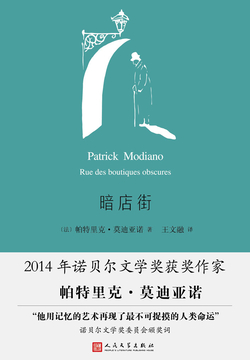
Missing Person
Tags
Summary
Editor's review
Who it's for
A good fit for
- Literary enthusiasts with a strong interest in themes of memory, identity, and history
- Readers who appreciate restrained, poetic narrative style and atmosphere-building
- Those who wish to understand modern and contemporary French literature and representative works by Nobel laureates
- Deep readers who enjoy thinking about and interpreting what they read
Not a good fit for
- Readers seeking fast pacing, strong plot, and a clear ending
- Readers who are uncomfortable with fragmented, nonlinear narration
Reading tips
- Read immersively in a quiet environment, savoring the author's portrayal of atmosphere and detail.
- Pay some attention to recurring images (such as photographs, addresses, cafés) and the interweaving of time and space; these are key to understanding the themes.
- After finishing, consider: if memory is blurred or even absent, how should the "self" be defined? What kind of core is wrapped in the book's detective-like shell?
About the publisher
Shanghai Literature and Art Publishing House takes modern and contemporary Chinese literature and folk literature as important publishing directions, while also covering social novels, classic works, and prose and miscellaneous writings, and has long introduced foreign literature and philosophical works. Its books include masterpieces such as Lao She's Teahouse and Camel Xiangzi, Lu Xun's Call to Arms and Wandering and Dawn Blossoms Plucked at Dusk, and Xiao Hong's Tales of Hulan River, as well as translations such as Gilles Deleuze's Nietzsche and Philosophy, Erich Maria Remarque's All Quiet on the Western Front, and The Pillars of the Earth trilogy. Its authors include Lao She, Lu Xun, Xiao Hong, Zhou Ying, Liu Yuyu, and Jiang Yi, reflecting a publishing character that balances original literature, academic translation, and general reading.
Contents
- 版权信息
- 一
- 二
- 三
- 四
- 五
- 六
- 七
- 八
- 九
- 十
- 十一
- 十二
- 十三
- 十四
- 十五
- 十六
- 十七
- 十八
- 十九
- 二十
- 二十一
- 二十二
- 二十三
- 二十四
- 二十五
- 二十六
- 二十七
- 二十八
- 二十九
- 三十
- 三十一
- 三十二
- 三十三
- 三十四
- 三十五
- 三十六
- 三十七
- 三十八
- 三十九
- 四十
- 四十一
- 四十二
- 四十三
- 四十四
- 四十五
- 四十六
- 四十七
FAQ
Is Dark Shop Street a detective novel?
Why does it feel somewhat hazy and fragmented when reading?
Does knowing about World War II history help with reading?
Related on WeRead



Comments
Find this book
This site is an index: you start “Search all sources” in your browser, and the entries it lists all point to third-party sites; please judge their availability yourself.
About the author
Patrick Modiano is a French novelist born in Boulogne-Billancourt, Paris, in 1945, and the winner of the 2014 Nobel Prize in Literature. His works are often set in Paris during the German Occupation in World War II and revolve around memory, identity, and forgetting, with a tone that carries a sense of mystery and pursuit, frequently portraying characters' bewilderment amid uncertain pasts. His representative works include Place de l'Étoile, Rue des Boutiques Obscures, and Dans le café de la jeunesse perdue, as well as L'Horizon, Des inconnues, Remise de peine, and Encre sympathique. This library holds nine of his works, commonly categorized as foreign literature, mystery and suspense, and classic works.
Wang Wenrong is an important translator and researcher of French literature in China. Publicly available information about her is limited, and details of her life have not been systematically disclosed. Judging from her existing works, she has long been engaged in translating French literature. Her translations include novels such as Rue des Boutiques Obscures, The Bridge on the River Kwai, and La Vie tranquille, and she has also participated in translating works including the "Translation Classics Series" (26 volumes in total), Barrage: The Complete Works of Duras 1, Yann Andréa Steiner, and The Book of Flight. Her translations mostly fall under foreign literature and classic works, with some suspense and detective fiction; her selections balance modernist experimental writing with more readable narrative works. Her translations strive to stay close to the tone and narrative rhythm of the originals, naturally reproducing the details and atmosphere of French novels for Chinese readers, and providing reliable reading material for understanding modern and contemporary French literature.
