

Straightforward Words
Tags
Summary
Editor's review
Who it's for
A good fit for
- Readers who want to read traditional thought in the original and do not rely on vernacular rewrites
- Readers interested in Eastern Han political writing and the critical spirit of scholars
- Those who need a short anthology of Chinese classics for daily reading aloud and excerpting
Not a good fit for
- Beginning readers hoping for detailed sentence-by-sentence annotation and complete translation
- Readers expecting a systematic philosophical system or modern scholarly introduction
Reading tips
- First read Zhongchang Tong's biography in the Book of the Later Han to understand his life and era, then return to the original text of Changyan; the context will be clearer.
- After reading each passage, summarize its target of criticism and its argument in one sentence, building your own cards of points.
- Where religious theology or Confucian and Daoist intellectual backgrounds appear, read alongside other original texts in the series; do not expect to master everything in one reading.
Contents
- 版权信息
- 昌言
- 《昌言》上
- 《昌言》下
FAQ
What does "the appearance of the original book" mean?
What is Changyan mainly about?
What background does reading this book require?
Related on WeRead
 昌言
 昌言
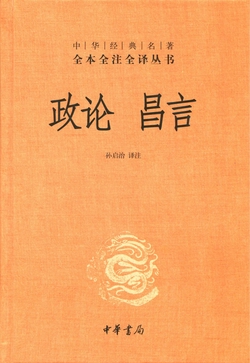 政论 昌言(中华经典名著全本全注全译)
 宋元明诗三百首(插图本)
 二十六史:完本精校大全集
 二十五史:完本精校大全集(中华古籍国学宝典文库)
 二十四史:完本精校大全集(中华古籍国学宝典文库)
 仲长统研究
 宋史(中华古籍国学宝典文库)
Comments
Find this book
This site is an index: you start “Search all sources” in your browser, and the entries it lists all point to third-party sites; please judge their availability yourself.
About the author
Zhongchang Tong was a thinker of the late Eastern Han period. Publicly available information about his life, including his birthplace and the years of his birth and death, is limited; what can be confirmed is chiefly his identity as the author of the transmitted work Changyan (Words of Prosperity). In the sparse records that survive, Zhongchang Tong is known for his writings, and his work is classified among classic works, indicating that Changyan holds a certain place in the traditional canon. Because historical sources are scarce, our understanding of him today rests mainly on this work rather than on biographical detail. Changyan leans toward argument and reflection, and its style is said to be direct and lucid, concerned with real political and social issues and reflecting late Han scholars' reflections on their times. As an author with only one surviving work, Zhongchang Tong is largely identified with Changyan; readers usually come to know him through the text rather than through biographical material. Further understanding of the man still requires returning to Changyan itself and examining it against the intellectual background of the late Han.
