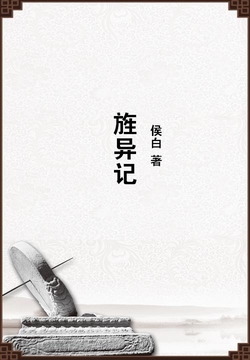
Record of Manifest Marvels cover

Record of Manifest Marvels

Rating 3.3
Word count
3K words
Chapters
2

Tags

Summary

Traditional Chinese thought and culture have a long history and are highly original, inventive, and literary. Early forms of thought are especially distinctive: religious theology, classical texts of Chinese medicine, ancient military strategy, Confucianism, Daoism, Buddhism, and the Hundred Schools, feng shui and metaphysics, the Twenty-Four Histories, customs and local gazetteers—these subjects are vast and profound. This series, Essential Classics of Chinese Traditional Culture: Original Texts, preserves the appearance of the original books and focuses on conserving and transmitting traditional Chinese thought and culture. By reading the literary essence handed down by ancient sages, readers can cultivate their temperament and quietly absorb the classics of Chinese learning.

Editor's review

Jingyi Ji is included in the series Essential Classics of Chinese Traditional Culture: Original Texts and is attributed to Hou Bai. This edition presents the 2024 collated text, retaining the basic layout and classical-language character of the original. As the title suggests, the contents tend toward accounts of the strange and the marvelous, belonging to the branch of ancient narrative literature that records unusual tales and manifests the uncanny, sharing an affinity with the Six Dynasties tradition of zhiguai. Its value lies not in elaborate plotting but in preserving, in spare and concise language, fragments of an early world of belief and folk imagination, allowing readers to see how people of antiquity narrated the anomalous and made room for the unknown. The writing feels archaic and plain; most pieces are short, making the book suitable for piecemeal browsing and also useful as supplementary material for tracing the origins and development of ancient zhiguai. For general readers it is more a cultural sampler to leaf through at random than a long work with continuous plot; for researchers it offers a view of early forms of narrative motifs and religious ideas. It is best read with an openness to doubt and difference, valuing its documentary atmosphere and textual texture.

Who it's for

A good fit for

  • General readers interested in ancient zhiguai and tales of the strange
  • Students of literature and history studying the origins of classical-language fiction from the Six Dynasties to the Sui and Tang
  • Readers who need short classical-language texts for reading practice
  • Enthusiasts and researchers interested in traditional beliefs and folk imagination

Not a good fit for

  • Readers expecting complete long-form plots and the pace of modern fiction
  • Beginners with weak classical Chinese who need sentence-by-sentence vernacular annotation
  • Readers seeking systematic religious doctrine or definitive historical conclusions

Reading tips

  1. Begin with the preface or editorial note to understand the background of the book and its textual editions, then move on to the main text.
  2. Read three to five pieces at a time and jot down recurring motifs, such as efficacy, retribution, and omens.
  3. When you meet unfamiliar characters or expressions, first infer their meaning from context; after finishing the whole piece, look back rather than interrupting yourself with frequent consultation.
  4. Read alongside other zhiguai works such as Soushen Ji to appreciate the shared features and differences of early tales of the strange.

Contents

  1. 版权信息
  2. 旌异记

FAQ

What is Jingyi Ji mainly about?
Judging from its title and authorship, it belongs to the ancient category of accounts of the strange and marvelous, recording unusual tales, uncanny events, and extraordinary matters in brief, archaic language; it focuses on preserving fragments of early belief and folk narrative rather than developing complete plots.
Can I read this book without any grounding in classical Chinese?
The book preserves the original appearance of the text and is mainly in classical Chinese, without sentence-by-sentence vernacular translation. Readers with weak classical Chinese will find it difficult; it is best to have basic reading ability in classical Chinese or to use it with reference works and relevant annotated editions.
Is this book suitable for reading straight through from beginning to end?
Each piece is short and independent, making the book better suited to browsing at random or reading in installments. It can be read straight through as well, but continuity need not be forced; the point is to feel the texture of the language and the recurrence of narrative motifs.

Related on WeRead

Comments

Find this book

This site is an index: you start “Search all sources” in your browser, and the entries it lists all point to third-party sites; please judge their availability yourself.

About the author

侯白 Author

Hou Bai is an author from ancient China about whom very little is publicly known: his birthplace, dates of birth and death, and career are all undocumented, making a full life story difficult to reconstruct. What can be confirmed is that two works are attributed to him, Qiyan lu (Records of Laughter) and Jingyi ji (Records of the Strange), both commonly listed among classic works. Qiyan lu is known for its humor and wit, gathering jokes and anecdotes in a lively, colloquial style that reflects strong folk flavor; Jingyi ji leans toward recording strange tales and has the character of zhiguai notebook literature. One humorous, one marvel-filled, the two books differ in subject but both show the author's attention to human manners and unusual reports. Since much of the original texts is lost and what survives consists largely of reconstructed editions, details of his life remain especially obscure. Overall, Hou Bai's name has come down mainly through these two works; his easy, quick-witted style gives him a place in the literature of jokes and strange tales, offering valuable texts for later readers interested in ancient humor and anecdote.

More by the same author

Top rated in the same category