

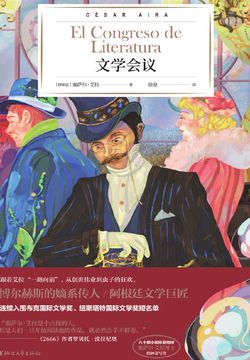
Literary Conference
Tags
Summary
Editor's review
Who it's for
A good fit for
- Readers interested in contemporary Latin American literature, especially writing of the "post-Boom" period
- Readers who enjoy experimental texts that break genre boundaries and blend science fiction with literary fiction
- Newcomers to César Aira who want to understand his distinctive "improvisational writing" style and literary world
- Readers who enjoy short, intellectually playful novellas full of unexpected turns
Not a good fit for
- Readers seeking traditional linear narrative and complete character arcs
- Readers who find metafiction, self-reference, and absurd plots uncomfortable or confusing
Reading tips
- Treat it as a relaxed literary game; don't insist on finding deep meanings, and enjoy the leaps and surprises of the narrative itself
- While reading, pay attention to how the author pushes ordinary everyday scenes (such as a literary conference) abruptly into science-fictional spectacle
- After reading, compare it with other Latin American writers such as Borges and Cortázar, and consider Aira's unique position in inheritance and innovation
About the publisher
Zhejiang Literature and Art Publishing House is a Chinese publisher specializing in literary publishing. Judging from the 808 titles in the database, its publishing areas cover world classics, foreign literature, social novels, folk literature and classic works, as well as modern and contemporary literature and prose. Representative titles include foreign literary translations such as Anna Karenina, The Temple of the Golden Pavilion, In Praise of Shadows and The Complete Tragedies and Comedies of Shakespeare, alongside classic works by Lao She and Lu Xun such as Camel Xiangzi, Teahouse and Wandering. Its authors and translators include Leo Tolstoy, Cao Ying, Lao She, Yukio Mishima, Jun'ichirō Tanizaki and Zhu Shenghao. The press emphasizes the translation and introduction of classic texts and the compilation of native literary works, giving equal weight to Chinese and foreign literature. Owing to limited public information, its specific series and editorial policies are not elaborated here.
Contents
- 版权信息
- 第一部分 马库托之索
- 马库托之索
- 第二部分 大会
- 大会
- 一
- 二
- 三
- 四
- 五
- 六
- 七
- 八
- 译后记 从创世伟业到虫子的狂欢:跟着艾拉“一路向前”
- 从创世伟业到虫子的狂欢:跟着艾拉“一路飞奔向前”
- 塞萨尔·艾拉 作品导读 八十部小说环游地球:艾拉博士的神奇写作
FAQ
How is this book different from typical Latin American magical realism?
Why is César Aira considered a representative of "improvisational writing"?
The book is very thin—is the content thin as well?
Related on WeRead
 文学会议
 中国当代文学会议研究
 海上丝绸之路:陶瓷之路(景德镇陶瓷与“一带一路”战略国际学术研讨会会议论文集)
 变化中的加拿大:广东外语外贸大学加拿大研究国际会议论文集(2016)
 2011清华医疗管理国际学术会议论文集
Comments
Find this book
This site is an index: you start “Search all sources” in your browser, and the entries it lists all point to third-party sites; please judge their availability yourself.
About the author
César Aira is a writer whose works have been translated into Chinese. The library currently holds seven of his titles, including The Littoral Life of a Landscape Painter, The Literary Conference, The Musical Brain, Dr. Aira's Magic Cure, God's Tea Party, The Ghost's Feast, and the boxed set The César Aira Quartet. On this site these works are usually grouped under classics, foreign literature, and otherworldly fantasy, suggesting that his writing combines literary quality with imaginative, often strange and fantastical subject matter. Public information about his nationality, dates of birth and death, and English name is limited, so this page does not speculate. Judging from the available titles, Aira's works vary in length and form, appearing both as individual volumes and as sets, and may appeal to readers interested in contemporary foreign literature and inventive narrative.
Xu Quan is an author for whom only limited public information is available. Two works are currently known, namely Night in Chile and The Literature Conference. As details such as nationality, dates of birth and death, and English name remain unconfirmed, little can be said about the author's personal background. Existing classifications place the works under foreign literature and otherworldly fantasy, suggesting that the writing may span both realistic and fantastical subjects. Judging from the works themselves, Xu Quan tends to develop characters and events within concrete situations and to choose subjects without restriction, moving both into the context of foreign literature and into narrative spaces with an otherworldly flavor. The two works, placed side by side, reflect the author's varied attempts in subject and style. Although verifiable material on Xu Quan's life and creative background is still lacking, the two existing works nevertheless offer readers an entry point for observing the author's writing orientation and for learning more about this author.
