

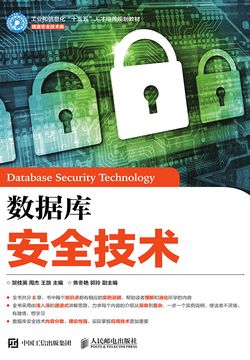
Database Security Technology
Tags
Summary
Editor's review
Who it's for
A good fit for
- Upper-level undergraduates and graduate students in computer science or information security-related programs
- IT professionals engaged in database management, system operations, or security protection
- Self-learners seeking to systematically build a knowledge system in database security
- Technical managers who need to develop data security strategies for their teams or conduct internal training
Not a good fit for
- General readers with only a preliminary understanding of computers who are looking for light introductory reading
- Pure hands-on security enthusiasts seeking cutting-edge details on hacker attack and defense techniques or tool usage
Reading tips
- Reading in chapter order is recommended: first establish an understanding of the overall framework of database security, then delve into specific technical details.
- Readers may conduct comparative experiments with actual database management systems (such as Oracle and MySQL) to deepen understanding.
- For key chapters such as access control and auditing, taking notes to summarize core mechanisms and implementation points is recommended.
About the publisher
Posts & Telecom Press is known for its strengths in science and technology, computing, and information and communications titles, and has extended its publishing into photography, art, software learning, and inspirational growth, giving it a fairly diverse range. Its catalog includes computing and communications works such as Refactoring and Patterns (Revised Edition) and Huawei Switch Learning Guide (Second Edition), alongside bilingual collector's editions such as The Little Prince (Chinese-English-French illustrated collector's edition), The Great Gatsby, and Three Days to See. Beijing Ten Years: 1980-1990 and Ghost Blade: WLOP Personal Illustration Collection reflect its presence in photography and art. Its authors include Antoine de Saint-Exupéry, Helen Keller, Joshua Kerievsky, Wang Da, Zhang Zhaozeng, and WLOP.
Contents
- 版权信息
- 内容提要
- 前言
- 第1章 数据库安全基础
- 1.1 数据库相关概念及发展
- 1.1.1 数据
- 1.1.2 数据表及其设计规范
- 1.1.3 数据库
- 1.1.4 数据库管理系统
- 1.1.5 数据库的发展
- 1.1.6 主流数据库管理系统
- 1.1.7 数据库安全
- 1.2 SQL Server数据库
- 1.2.1 物理存储结构
- 1.2.2 逻辑存储结构
- 1.2.3 数据表
- 1.2.4 数据完整性
- 1.2.5 数据约束
- 1.3 数据库安全威胁来源及对策
- 1.3.1 内部风险来源及对策
- 1.3.2 操作系统风险来源及对策
- 1.3.3 网络风险来源及对策
- 第2章 数据库安全层次
- 2.1 网络安全
- 2.1.1 网络安全概述
- 2.1.2 Web应用系统架构
- 2.1.3 Web安全
- 2.2 服务器安全
- 2.2.1 操作系统安全
- 2.2.2 防火墙
- 2.2.3 服务器环境安全
- 2.3 数据库安全
- 2.3.1 数据库安全的重要性
- 2.3.2 数据库潜在的安全风险
- 2.3.3 数据库的安全管理
- 2.4 网络管理员的职责和职业道德
- 2.4.1 网络管理员的职责
- 2.4.2 网络管理员的职业道德
- 2.5 网络安全防范措施
- 2.5.1 安全威胁来源
- 2.5.2 网络安全防范措施
- 2.5.3 其他网络安全技术
- 2.5.4 网络安全未来发展趋势
- 第3章 SQL和Web应用基础
- 3.1 SQL的基础知识
- 3.1.1 SQL的发展
- 3.1.2 SQL的分类
- 3.1.3 SQL的基本语句
- 3.2 Web应用工作原理
- 3.2.1 Web应用的三层架构
- 3.2.2 Web应用的工作原理
- 3.2.3 Web应用与SQL语句
- 3.3 “危险”的SQL语句
- 3.3.1 数据准备
- 3.3.2 变量
- 3.3.3 注释
- 3.3.4 逻辑运算符
- 3.3.5 空格
- 3.3.6 NULL值
- 3.3.7 数据控制语句
- 3.3.8 UNION查询
- 3.3.9 统计查询
- 第4章 SQL注入与防范
- 4.1 SQL注入的基础知识
- 4.1.1 SQL注入原理
- 4.1.2 SQL注入过程
- 4.2 寻找和确认SQL注入漏洞
- 4.2.1 借助推理
- 4.2.2 错误信息处理
- 4.2.3 内联SQL注入
- 4.2.4 终止式SQL注入攻击
- 4.3 利用SQL注入
- 4.3.1 识别数据库类型
- 4.3.2 利用UNION注入
- 4.3.3 利用条件语句注入
- 4.3.4 枚举数据库模式
- 4.3.5 在INSERT、UPDATE、DELETE中实施攻击
- 4.4 SQL自动注入工具
- 4.4.1 Pangolin的主要功能特点
- 4.4.2 Pangolin的使用说明
- 4.5 SQL注入的代码层防御
- 4.5.1 输入验证防御
- 4.5.2 通过代码过滤防御
- 4.5.3 通过Web应用防御
- 4.6 SQL注入的平台层防御
- 第5章 数据库访问控制
- 5.1 数据库系统安全机制概述
- 5.2 身份验证模式
- 5.2.1 Windows身份验证模式
- 5.2.2 混合身份验证模式
- 5.2.3 密码策略
- 5.3 权限、角色与架构
- 5.3.1 权限
- 5.3.2 角色
- 5.3.3 架构
- 5.3.4 用户授权
- 5.4 权限管理
- 5.4.1 服务器权限
- 5.4.2 数据库权限
- 5.4.3 数据库对象权限
- 5.4.4 权限管理的SQL语句
- 5.5 1433端口与扩展存储过程
- 第6章 数据库备份与恢复
- 6.1 数据库恢复模式与备份
- 6.1.1 数据库恢复模式
- 6.1.2 数据库备份
- 6.1.3 数据库备份要素
- 6.2 数据库备份与恢复的操作过程
- 6.2.1 完整备份与恢复
- 6.2.2 差异备份与恢复
- 6.2.3 事务日志备份与恢复
- 6.2.4 数据库的分离与附加
- 6.3 数据迁移
- 6.3.1 脚本迁移数据
- 6.3.2 数据的导入与导出
- 6.4 维护计划
- 6.5 SQL Server代理
- 第7章 数据加密与审核
- 7.1 数据加密
- 7.1.1 加密简介
- 7.1.2 数据加密
- 7.1.3 内置的加密函数
- 7.1.4 证书加密与解密
- 7.1.5 MD5加密
- 7.1.6 数据库加密
- 7.2 数据审核
- 7.2.1 数据审核简介
- 7.2.2 数据审核原理
- 7.2.3 数据审核规范
- 7.2.4 登录审核
- 7.2.5 C2审核
- 7.2.6 SQL Server审核操作
- 第8章 大数据与安全
- 8.1 认识大数据
- 8.1.1 大数据的定义
- 8.1.2 大数据的特征
- 8.1.3 大数据相关技术介绍
- 8.2 大数据的应用及发展
- 8.2.1 大数据的应用
- 8.2.2 数据挖掘
- 8.2.3 大数据的发展
- 8.3 大数据安全及保护
- 8.3.1 大数据中的隐私保护
- 8.3.2 大数据的可信性
- 8.3.3 大数据的访问控制
- 8.3.4 大数据安全保护技术
- 附录
- 1.SQL语句的全局变量
- 2.重要的系统视图
- 3.重要的系统存储过程
- 4.显示每个表的行数
- 5.显示当前数据库所有的表信息
- 6.获取数据库服务器的IP地址
- 7.ASP中的MD5加密代码
- 参考文献
FAQ
What is the Douban rating of this book?
Does the book include specific code or tool operation examples?
Is the content of this book outdated?
Related on WeRead


Comments
Find this book
This site is an index: you start “Search all sources” in your browser, and the entries it lists all point to third-party sites; please judge their availability yourself.
About the author
He Guiying is an author for whom limited public information is available. The only work currently attributed to this name is Database Security Technology, which is categorized under general computer science. This work suggests that the author's writing focuses on the intersection of database technology and information security, addressing security mechanisms, protection approaches, and related technical practices in database systems, and is intended for computer science students, database administrators, and information security practitioners. Because biographical details such as education and professional positions are unavailable, it is difficult to assess the author's background or the full scope of their writing, and it cannot be confirmed whether this is their only publication. Based on the available material, He Guiying's contribution lies mainly in presenting database security as a specialized topic to Chinese readers in the form of a textbook or technical reference, offering support for course study and engineering practice. The writing style tends toward technical explanation and knowledge organization, emphasizing clear concepts and practical content, making it suitable for introductory reading and reference.
Zhou Jie is an author about whom limited public information is available, and whose signed works span several fields. Judging from the five titles held in the collection, his writing and editorial interests cross both computer technology and the humanities: on the one hand, they cover database security, computer network technology, and circuit design, simulation, and board production based on PROTEUS, falling into the categories of industrial technology and examinations; on the other, they extend to world history and travel, including an accessible introduction to Japanese history and a general work on Japan. This interdisciplinary range suggests a writer with both a technical background and humanistic reading, inclined toward practical, introductory books for general readers and students. Because the available materials provide no nationality, dates, or specific biography, a fuller life story cannot yet be outlined; readers may instead approach his subject interests and writing orientation through the works listed above.
Wang Lü is an author about whom publicly available information is limited. At present, only one work by this author, Database Security Technology, is known and included in the library, where it is classified under the general computer category. Judging from this subject, Wang Lü is concerned with the security protection of database systems, touching on areas such as data storage, access control, and security management, which places the writing within the field of applied computing and technical practice. Because biographical details, educational background, and professional positions are unavailable, it is not possible to determine the author's academic training or work experience, nor is it appropriate to draw extensive conclusions about writing style. In this field, database security is a fundamental part of information system construction, and books on the subject are generally aimed at students, technical personnel, and practitioners, emphasizing clear concepts and practical application. Readers may use it as an introductory reference for understanding the basics of database security; further details can be added if more information becomes available.
