

Responsibility
Tags
Summary
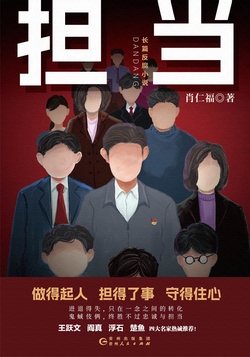
Recommended by Municipal Party Secretary Wei Cunhu to study at the provincial party school, Wu Chudong joins forces with Yu Heping—once secretary to provincial organization department head Yan Qiushan—to draft a new vision for Ruzhou's economic development, which draws the attention of Provincial Party Secretary Han Shijiang; the two are sent back to Ruzhou with important tasks. Liu Tianlong, however, sees them as thorns in his side and uses his backers to squeeze and suppress them. The two sides battle again and again. The many problems exposed in Ruzhou come to the attention of the provincial discipline inspection commission, and Wei Yezhou is tasked with investigating Liu Tianlong's corruption ring. Liu Tianlong refuses to submit and puts up a desperate resistance—unaware that his high-level backers have already made him a discarded pawn in a larger game.
Editor's review
The plot does not advance through bizarre power intrigues but through a series of seemingly ordinary yet tension-filled scenes of daily work and life, peeling back layer by layer the ethical dilemmas and choices facing the protagonist. Xiao Renfu's narrative is steady and restrained, and his portrayal of characters' psychology is especially precise, freeing his officials from stereotype and giving them a flesh-and-blood texture of hesitation and perseverance. This sense of reality is precisely the foundation of the book's broad resonance. It is not merely an "industry novel" for those inside the system but a mirror reflecting the human relations and value choices of contemporary society.
For readers, reading *Duty* is a profound intellectual experience. It prompts us to ask: in our own positions and lives, how do we define and bear our own share of "duty"? The book offers no simple answers, but through the trajectories of its characters' fates it shows the costs and glories behind different choices. Its literary value and intellectual depth make it stand out among works of its kind.
Who it's for
A good fit for
- Readers interested in contemporary Chinese social reality and the political ecology at the grassroots level
- Thinkers who wish to explore profound questions of responsibility, ethics, and choice through literature
- Lovers of fiction who appreciate realism and deep psychological characterization
- Practitioners in management or public service seeking resonance and reflection
Not a good fit for
- Entertainment-oriented readers seeking strong plot, fast pacing, and dramatic conflict
- Readers expecting pure exposure of darkness or simple binary narratives
Reading tips
- Read with a calm, immersive mindset, following the protagonist's perspective gradually into the field of his work and life.
- Pay attention to the depiction of everyday details and dialogue, which are often key to understanding characters' motives and circumstances.
- After reading, consider comparing and reflecting on your own understanding of "responsibility."
About the publisher
Guizhou People's Publishing House is a comprehensive publisher based in Guizhou, with publishing directions covering architecture, foreign literature, Eastern philosophy and history. Its library currently holds 232 titles, including representative works such as Liang Sicheng's A History of Chinese Architecture, Yasunari Kawabata's Snow Country, The Old Capital, The Izu Dancer and Thousand Cranes, Mou Zongsan's Nineteen Lectures on Chinese Philosophy, Jiang Tingfu's Modern Chinese History and Rashomon. Its author resources span architecture, foreign literature and philosophical studies. These titles show that the press both introduces foreign literary classics, including Japanese literature, and continues to publish academic and general-interest works on Chinese architectural history, Chinese philosophy and modern history, reflecting a publishing profile that balances Chinese and foreign works and combines classics with accessible reading. Public information on its fuller publishing history and key series is limited, so no speculation is offered here.
Contents
- 版权信息
- 一
- 二
- 三
- 四
- 五
- 六
- 七
- 八
- 九
- 十
- 十一
- 十二
- 十三
- 十四
- 十五
- 十六
- 十七
- 十八
- 十九
- 二十
- 二十一
- 二十二
- 二十三
FAQ
Is this an officialdom novel? How does it differ from similar works?
What is author Xiao Renfu's background? Does it influence his writing?
Is the book's tone pessimistic or positive?
Related on WeRead


Comments
Find this book
This site is an index: you start “Search all sources” in your browser, and the entries it lists all point to third-party sites; please judge their availability yourself.
About the author
Xiao Renfu (born 1960) is a Miao writer from Chengbu, Hunan, and a member of the China Writers Association. He formerly served as vice chairman of the Shaoyang Federation of Literary and Art Circles and chairman of the city's Writers Association. Drawing on institutional life and social reality, his fiction focuses on officialdom and the ups and downs of bureaucratic careers, rendering the workings of power and human nature through closely observed personal and professional relationships. His novels include Guan Yun, Weizhi, Xinfu, Daiyu and Shitu, as well as the historical novel Li Hongzhang; 17 of his works are held in this collection. Known for his sustained engagement with institutional themes, he has been called "the foremost writer of Chinese office novels." His work spans social fiction and historical narrative, combining accessible storytelling with sober observation of contemporary reality.
