

The First Half of My Life: Complete Edition
Tags
Summary
Editor's review
In content, the book falls into two parts: the first focuses on imperial life within the Forbidden City, depicting the last splendor and decay of the Qing dynasty; the second recounts Puyi's reform at the war criminals' management center and how he gradually came to accept the new society and be reborn. This stark contrast lifts the book beyond mere autobiography into a profound record of social transformation.
It is worth noting that the book was written under special historical circumstances—completed after Puyi underwent ideological reform. Readers should therefore maintain a degree of historical critical awareness, recognizing both the genuine personal experience revealed in the text and its possible period limitations and self-censorship in expression. This complexity is precisely what deepens the book's reading.
In documentary terms, the book provides a wealth of firsthand historical detail, especially personal witness to such key events as court life, warlord coups, and Japan's installation of Manchukuo—material of irreplaceable reference value for the study of modern history. At the same time, Puyi's candid analysis of his own inner journey makes the book a precious psychological case study of identity transformation amid the tide of history.
Overall, From Emperor to Citizen: The Complete Edition is a special work combining historical documentary and literary value. It is not merely one man's biography but the epitome of an era and a witness to a nation's travail in the course of modernization. For readers seeking a deeper understanding of the complexities of modern Chinese history, it offers a vivid perspective and emotional immediacy that textbooks cannot provide.
Who it's for
A good fit for
- Researchers and enthusiasts interested in modern Chinese history, especially from the late Qing to the founding of New China
- Readers who wish to understand from a personal perspective how historical change affected individual fates
- Readers who prefer nonfiction such as biography and memoir
- Readers who want to understand the inner world and identity transformation of a figure of unique historical significance
Not a good fit for
- Readers seeking light entertainment or purely literary pleasure
- Readers impatient with historical detail who want quick conclusions
Reading tips
- Read alongside relevant historical background material to understand the narrative more fully and critically
- Pay attention to changes in Puyi's self-perception across historical stages—key to understanding the book's central theme
- Read comparatively with memoirs or studies of other historical figures for a multidimensional view
About the publisher
China Yanshi Press is a comprehensive publisher whose output covers politics, law, economics, management, history, culture, and cadre education, alongside general-interest titles in documentary literature, inspirational growth, essays and miscellaneous works, classics, youth literature, and social novels. Its library currently holds 146 titles. Representative books include classics such as The First Half of My Life: Complete Edition and Liang Qichao's Family Letters, inspirational works such as Dale Carnegie's The Quick and Easy Way to Effective Speaking, and technical titles such as Theory and Technology of Humanoid Robots. Its authors include Aisin-Gioro Puyi, Liang Qichao, Hu Shi, and Dale Carnegie. The press has built considerable strength in documentary literature and classic works while also serving academic theory and general reading, showing a publishing profile that values multiple fields. Public information is limited, and the above is based mainly on the books held in the library.
Contents
- 版权信息
- 中国人的骄傲
- 第一章 我的家世(1859—1908)
- 一、醇贤亲王的一生
- 二、外祖父荣禄
- 三、慈禧太后的决定
- 四、摄政王监国
- 五、亲王之家
- 第二章 我的童年(1908—1917)
- 一、登极与退位
- 二、帝王生活
- 三、母子之间
- 四、毓庆宫读书
- 五、太监
- 六、我的乳母
- 第三章 北京的“小朝廷”(1917—1924)
- 一、袁世凯时代
- 二、丁巳复辟
- 三、北洋元老
- 四、不绝的希望
- 五、庄士敦
- 六、结婚
- 七、内部冲突
- 八、遣散太监
- 九、整顿内务府
- 十、紫禁城的末日
- 十一、在“北府”里
- 十二、三岔口上的抉择
- 十三、由“使馆区”到“租界地”
- 第四章 天津的“行在”(1924—1930)
- 一、罗振玉的努力
- 二、我和奉系将领之间
- 三、谢米诺夫和“小诸葛”
- 四、东陵事件
- 五、领事馆、司令部、黑龙会
- 六、郑孝胥的理想
- 七、“行在”生活
- 第五章 到东北去(1931—1932)
- 一、不静的“静园”
- 二、日本人意见分歧
- 三、会见土肥原
- 四、白河偷渡
- 五、在封锁中
- 六、我的所见与所思
- 七、会见板垣
- 第六章 伪满十四年(1932—1945)
- 一、同时上演的另一台戏
- 二、登场
- 三、“元首”的“尊严”
- 四、李顿调查团
- 五、第三次做“皇帝”
- 六、吉冈安直
- 七、我的恐惧
- 八、四大“诏书”及其他
- 九、在羊的面前是狼
- 十、“后”与“妃”的命运
- 十一、大崩溃
- 第七章 在苏联的五年(1945—1950)
- 一、疑惧和幻想
- 二、放不下来的架子
- 三、我不认罪
- 四、远东国际军事法庭
- 第八章 由抗拒到认罪(1950—1954)
- 一、回到了祖国
- 二、第一次写自传
- 三、乾隆的田黄石印
- 四、黑色的皮箱
- 五、交代一段历史真相
- 六、检举与认罪
- 七、震动
- 八、原形毕露
- 第九章 认罪以后(1955—1956)
- 一、观测“气象”
- 二、劳动滋味
- 三、生活检讨会
- 四、血泪控诉
- 五、平顶山的方素荣
- 六、台山堡一家农民
- 七、第三次崩溃
- 第十章 一切都在变(1956)
- 一、最初的答案
- 二、会见亲属
- 三、日本战犯
- 四、离婚
- 第十一章 “世界上的光辉”(1957—1959)
- 一、在我心里失掉过的
- 二、解放了的人
- 三、美与丑、善与恶
- 四、“监狱”
- 五、“所方”
- 六、命运是可以掌握的
- 第十二章 特赦(1959)
- 一、中共中央的建议
- 二、一九五九年十二月四日
- 三、告别
- 附录 从我的经历揭露日本军国主义的罪行
FAQ
There are many editions—what is special about this "complete edition"?
Is everything in the book true?
Can I understand this book without a history background?
Related on WeRead
 我的前半生(全本)
 我的前半生(权威版全本)
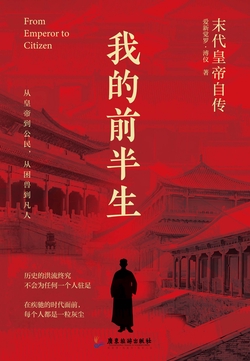 我的前半生(最新版全本)
 成长关键期全阅读我的第一套安全书 原创绘本双语有声 3-8岁安全保护绘本学前儿童推荐阅读 全10册
 美人
 《纵横》30年典藏:全52册
 《纵横》杂志(全国政协综合性文史期刊,记录建国前后的大事、发表各界人士回忆录):2003-2012年共120期
 沈阳故宫四百年:一部叙事体的文化史记
 纵横30年2007(7-12)
Comments
Find this book
This site is an index: you start “Search all sources” in your browser, and the entries it lists all point to third-party sites; please judge their availability yourself.
About the author
Aisin-Gioro Puyi was the last emperor of China's Qing dynasty and a highly unusual twentieth-century Chinese autobiographer. Publicly available information about the details of his life is limited, so this page does not elaborate on them. Judging from the fourteen works held in the collection, his writing centers almost entirely on his own experience, most importantly the autobiography From Emperor to Citizen (My First Half of Life), which appears in an unabridged edition, a latest complete edition, a multi-volume edition, and other versions, as well as an edition subtitled as the autobiography of the "Xuantong Emperor" Puyi. These works fall under the categories of general biography and documentary literature. Written in the first person, they recall court life, the changes of the times, and personal fate, in a plain and reflective narrative voice. Because of the eyewitness perspective, his autobiography has distinctive value as historical material and a notable reading influence, and it is an important reference text for understanding Chinese history from the late Qing to the Republican period.
