

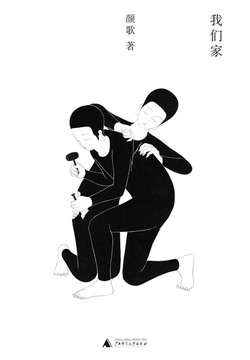
Our Family
Tags
Summary
Editor's review
Who it's for
A good fit for
- Readers who enjoy contemporary Chinese-language novels and prefer dialect narrative and family themes
- Literary researchers or writing enthusiasts interested in dialect writing and experiments with narrative perspective
- Readers who want to experience the customs and street life of a small town in western Sichuan through fiction
- Readers following Yan Ge's creative trajectory and hoping to understand her Pingle Town series
Not a good fit for
- Readers who find extensive Sichuan dialect expressions an obstacle to reading and prefer standard written Chinese
- Traditional story readers who expect linear plot progression and a clear protagonist growth arc
- Readers with little interest in everyday matters such as family disputes and banquet preparations
Reading tips
- It is advisable first to accept the feel of the dialect without looking up every word, and to read on along the narrative rhythm
- Note how the mad daughter's voice links the characters while absent, and appreciate the brilliance of the perspective experiment
- After finishing the book, revisit the passages where secrets explode around the banquet to sort out the structure of overlapping time
- If reading the Pingle Town series, compare this book with the first volume to observe different facets of the same small town
About the publisher
Guangxi Normal University Press is a publisher known for literature, foreign literature and history titles. Its 1,175 books in the database show a solid accumulation in classics and prose collections, including foreign literary works such as Les Fleurs du mal: Annotated Poems of Baudelaire, Snow Country, Dubliners and The Wild Palms, as well as modern prose compilations like The Complete Prose of Zhou Zuoren. History and philosophy also hold a notable share, with titles such as Running Dogs: Clerks and Runners in Qing County Yamen and The History and Thought of the Taiping Heavenly Kingdom reflecting attention to Qing local administration and modern history. In art literature there is the 16-volume Ten Bamboo Studio Painting and Calligraphy Manual. Its author resources include foreign writers Charles Baudelaire and Yasunari Kawabata, translators and annotators Liu Nanqi and Zou Bo, and scholars such as Zhong Shuhe, Bradly W. Reed and You Chenjun. As public information is limited, this characterization is based only on the books in the database, which together present a profile balancing Chinese and foreign literary classics with academic works in the humanities and social sciences.
Contents
- 版权信息
- 第一章
- 第二章
- 第三章
- 第四章
- 第五章
- 第六章
- 第七章
- 第八章
- 第九章
- 第十章
FAQ
Which volume of the Pingle Town trilogy is this book?
Why does the narrator "I" never appear in the novel?
Can it be understood without any foundation in Sichuan dialect?
Is this book suitable as material for understanding western Sichuan customs?
Related on WeRead


Comments
Find this book
This site is an index: you start “Search all sources” in your browser, and the entries it lists all point to third-party sites; please judge their availability yourself.
About the author
Yan Ge is a Chinese-language fiction writer whose four works are included in this collection, with representative titles such as The Queen of May, Collected Sad Stories of Pingle Town, and Our Family. Public information about her nationality, dates of birth and death, and educational background is limited, so no inferences are made here. Judging from the available works, her writing often centers on family relationships and local human ties within social life, and is commonly categorized as social fiction and classic works. Collected Sad Stories of Pingle Town uses a small town as its narrative space, gathering multiple stories that present the joys and sorrows and changes in ordinary people's daily lives; The Queen of May and Our Family likewise focus on individuals' situations within family and society. Her narration emphasizes detail and character psychology, with plain language carrying a local flavor, and she is skilled at drawing emotional tension from ordinary life. These works offer readable examples for understanding the small-town writing in contemporary Chinese fiction.
