

The President
Tags
Summary
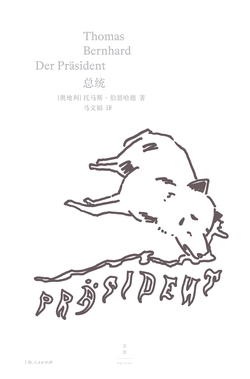
Not long before, an anarchist assassination attempt on the President failed; the President himself survived, while his close associate the Colonel and the First Lady's beloved dog lost their lives. As they wash and dress, the President and the First Lady review that harrowing attack and speak of a life at the heights of power, a life shadowed by fear.
Editor's review
Who it's for
A good fit for
- Readers interested in modern drama, especially the German-language theatrical tradition
- Literature enthusiasts willing to challenge traditional narrative structures and experience the tension of language and thought
- Deep readers concerned with critiques of power, historical reflection, and existential themes
- Students and scholars studying Thomas Bernhard and postwar Austrian literature
Not a good fit for
- Readers seeking light entertainment or traditional plot-driven stories
- Readers uncomfortable with extensive repetitive, incantatory dialogue and dark themes
Reading tips
- It is advisable to first learn about the historical and cultural context of postwar Austria, which helps in understanding the context of Bernhard's critique
- While reading, pay attention to the opposition and intertextual relationship between the music in the play (Schubert) and the content of the dialogue
- Try reading some of the dialogue aloud to personally experience the unique rhythm and oppressive quality of Bernhard's language
About the publisher
Shanghai People's Publishing House is a comprehensive publisher whose list focuses on academic monographs and general-interest titles in philosophy, social sciences, politics and law, economics and management, and history. Among its books are Wei, Jin, Southern and Northern Dynasties History in the Chinese Dynastic History series; The Hobbit and The Lord of the Rings trilogy in foreign literature; the Wenjing Classical Translation Illustrated Edition of The Complete Greek Tragedies of Euripides; and works of social theory such as Max Weber's Economy and Society and Dialectic of Enlightenment: Philosophical Fragments. Its authors include Wang Zhongluo, J.R.R. Tolkien, Luo Niansheng, and Zhou Zuoren.
Contents
- 版权信息
- 特立独行的伯恩哈德——伯恩哈德作品集总序
- 总统
- 以极端的夸张去认识和表现世界——代译后记
- 托马斯·伯恩哈德生平及创作
FAQ
Is this book a novel or a play?
What are the characteristics of Bernhard's writing style?
Is there a Chinese translation of this book? How is its quality?
Related on WeRead

Comments
Find this book
This site is an index: you start “Search all sources” in your browser, and the entries it lists all point to third-party sites; please judge their availability yourself.
About the author
Thomas Bernhard was an Austrian writer, with 12 of his works held in this collection, spanning the categories of general biography and foreign literature. Representative works include My Prize for Literature, Amras, Wittgenstein's Nephew: A Friendship, The Persian Woman · The Hatmaker, Bernhard's Artist Trilogy, The Loser, Heroes' Square, and The President. Public information is limited, and details of his life are not recorded in this collection. Judging from the works, he often takes literary prizes, friendship, the fate of artists, and structures of power as his subjects, in a cold, intense style marked by a distinct critical and self-reflective temperament. He worked in both fiction and drama, with a repetitive, musical language that has had a profound influence on twentieth-century German-language literature and on later writers.
Ma Wentao is a Chinese author about whom limited public information is available. Twelve of his works are held in the collection, generally classified under biography and foreign literature. Judging from his representative titles, his writing centers on German-language literature and artists: My Literary Prize and Wittgenstein's Nephew: A Friendship touch on literary prizes and personal relationships, while Bernhard's Artist Trilogy, Amras, The Loser, Heroes' Square, The President, and The Persian Woman · The Hatmaker point to the creative world of writers such as Thomas Bernhard. These titles suggest that Ma Wentao may work in the translation or commentary of foreign, especially German-language, literature, with an emphasis on biography and close reading of texts, attending to the situation of artists, spiritual predicaments, and literary institutions. Since his nationality, dates, and education are unknown, his biography cannot be outlined; readers can only approach his writing through these works.
