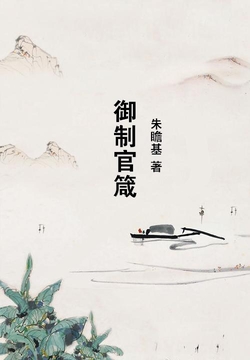
Imperially Composed Admonitions for Officials cover

Imperially Composed Admonitions for Officials

Rating 3.0
Word count
6.3K words
Chapters
4

Tags

Summary

Traditional Chinese thought and culture have a long history and are highly original, inventive, and literary. Early forms of thought are especially distinctive: religious theology, classical texts of traditional Chinese medicine, ancient military strategy, Confucianism, Daoism, Buddhism, and the Hundred Schools of Thought, feng shui and metaphysics, the Twenty-Four Histories, and local customs and geography are all profound and extensive. This series, "Classic Chinese Studies: Essential Cultural Texts," preserves the original appearance of the books and focuses on preserving and transmitting traditional Chinese thought and culture. By reading the literary essence left by ancient sages, readers can cultivate their temperament and imperceptibly come to appreciate the classics of Chinese studies.

Editor's review

The Imperial Admonitions for Officials (Yuzhi Guanzhen) was composed by Zhu Zhanji, Emperor Xuanzong of the Ming dynasty, who admonished his officials in his capacity as emperor, making it a document of special status among ancient works in the genre of official admonitions. This reprint in the "Classic Chinese Studies: Essential Cultural Texts" series preserves the original appearance of the book and focuses on preserving and transmitting traditional Chinese thought and culture. Its value lies in directly presenting the basic requirements the Ming officialdom set for officials' integrity, performance of duties, and ruler-minister relations; it is a primary source for studying Ming political ethics and the culture of official admonition. The writing is concise and severe, with a distinctly admonitory tone, allowing readers to experience the norms of official conduct from an emperor's perspective. Readers should place it back in the political context of the Ming dynasty, note the distance between official pronouncements and institutional practice, and avoid treating it as a collection of maxims to be applied directly to life. It is suitable for close reading as a supplementary source for institutional history and the history of political thought, and may also be consulted by readers interested in the ancient genre of official admonition.

Who it's for

A good fit for

  • Historians studying Ming political thought and the culture of official admonition
  • Readers interested in ancient administrative ethics and ruler-minister relations
  • Editors and teachers engaged in compiling classical Chinese texts and popularizing traditional culture
  • Advanced students who need works of official admonition for specialized study

Not a good fit for

  • Beginning readers hoping for systematic annotation and vernacular translation
  • General readers treating official admonitions as a modern workplace guide
  • Casual readers expecting vivid stories and character cases

Reading tips

  1. First understand the political background of Emperor Xuanzong's reign, then read the main text, so as not to take it out of context.
  2. Excerpt the admonitions by theme—integrity, performance of duties, ruler-minister relations—for easy comparison.
  3. Read it alongside other Ming works of official admonition to compare imperial admonition with scholars' self-admonition.
  4. Distinguish between official pronouncements and institutional practice while reading, and maintain a critical distance.

Contents

  1. 版权信息
  2. 圣谕
  3. 宣宗章皇帝御制官箴目录
  4. 御制官箴凡三十五篇

FAQ

Was the Imperial Admonitions for Officials written personally by Zhu Zhanji?
The book is attributed to Zhu Zhanji, Emperor Xuanzong of the Ming dynasty, and belongs to the category of imperial admonitions—admonitory texts issued in the emperor's name. The actual process of composition may have involved the assistance of literary officials; readers need only note its nature as an official admonition and should not simply equate it with a personal essay.
Does the content of the official admonitions still have reference value today?
As a historical document, it helps readers understand the Ming officialdom's requirements for officials' integrity and performance of duties, and has value for institutional history and the history of political thought. However, its ethics of ruler-minister relations bear the limitations of its time and should not be applied directly to modern workplaces or management.
What background knowledge is needed to read this book?
It is advisable first to have a basic understanding of the Ming political system and to know the function and intended audience of the official-admonition genre before turning to the main text. Without this background, readers may easily misread the admonitory text as universally applicable maxims for living.

Related on WeRead

Comments

Find this book

This site is an index: you start “Search all sources” in your browser, and the entries it lists all point to third-party sites; please judge their availability yourself.

About the author

朱瞻基 Author

Zhu Zhanji, known as Emperor Xuanzong of Ming with the reign title Xuande, was a Ming dynasty emperor. Five of his works are held in this collection: Imperial Poems of Emperor Xuanzong, Imperial Admonitions for Officials, a second edition of the imperial poems, a second edition of the admonitions, and A Record of the Imperial Guanghan Hall. These are mainly imperial poems and official admonitions instructing officials. Because public information is limited, details of his life cannot be given in full, yet the works show a solemn and elegant style that combines imperial dignity with Confucian exhortation. The poems often treat court life, landscapes, and reflections on governance in concise, carefully parallel language, while the admonitions are upright in argument and aimed at instructing officials and rectifying political conduct, reflecting a concern for official discipline and moral education. They are commonly classified under Eastern philosophy, culture, and literary appreciation, and are of reference value for the study of Ming court literature and official thought.

More by the same author

Top rated in the same category