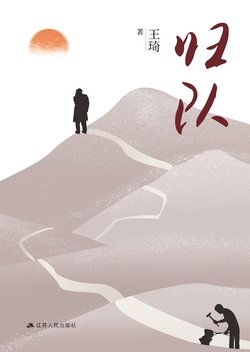
Returning to the Ranks cover

Returning to the Ranks

Rating 3.4
Word count
235K words
Chapters
59
ISBN
9787214271488

Tags

Summary

Set against the backdrop of the New Democratic Revolution and the periods of socialist revolution and construction in Shuyang, Jiangsu, this revolutionary historical novel tells the moving story of Hei Wu, an ordinary Communist Party member who holds fast to his convictions. Hei Wu is an ordinary blacksmith in Shuyang who joins the Party at the lowest ebb of the revolution, only to lose contact with the organization soon afterward. He does not reconnect with the organization until the outbreak of the War of Resistance Against Japanese Aggression, and during that war and the War of Liberation he serves as an underground Party worker and makes outstanding contributions to local organizational activities. After the founding of New China, however, complex historical reasons leave Hei Wu unable to prove his Party membership. Not until the 1980s, when the veteran revolutionary who had recruited him confirmed his status, does Hei Wu realize his dream of rejoining the ranks.

The novel draws on real historical figures and events, blending Hei Wu's personal fate with the tide of history and the development and changes of society. The plot is full of twists and turns, and the language carries a rich flavor of northern Jiangsu's countryside, giving readers a deep sense of the appeal of Shuyang's "red culture."

Editor's review

With Shuyang, Jiangsu as its geographical anchor, Rejoining the Ranks embeds the rise and fall of an ordinary blacksmith named Hei Wu within the grand historical arc from the New Democratic Revolution to the early years of reform and opening up. What is most moving about the work is that it does not portray its protagonist as a born hero, but instead writes of an ordinary man who joined the Party during a low tide of the revolution and how, through long years of losing contact, reconnecting, and losing contact again, he holds fast to a plain faith in the organization. Drawing on real people and events, author Wang Qi crafts a plot that is dramatic without contrived sentimentality, and a language that carries the distinctive texture and warmth of northern Jiangsu's countryside, letting readers feel the weight of belief amid the forge fire of the blacksmith shop and the dust of country roads. This book suits quiet evening reading, especially for readers willing to follow the fate of an ordinary Party member in order to understand the complex tension between "identity" and "belief"; Hei Wu's late-life rejoining is then not merely the restoration of an organizational relationship but a spiritual affirmation spanning decades.

Who it's for

A good fit for

  • General readers interested in revolutionary historical fiction
  • Local history enthusiasts hoping to learn about the red culture of northern Jiangsu
  • Literary readers drawn to the fate of ordinary people caught in the currents of history
  • Party affairs workers in need of reading material on grassroots Party members' faith

Not a good fit for

  • Readers who prefer fast-paced suspense or urban fiction
  • Military fiction fans expecting grand battle scenes
  • Readers with low tolerance for regional dialect in prose

Reading tips

  1. Readers may first familiarize themselves with the basic historical background of Shuyang, Jiangsu, during the New Democratic Revolution before entering the main text.
  2. Pay attention to the psychological descriptions each time Hei Wu's relationship with the organization changes; this is key to understanding the book.
  3. After reading, consult the real historical events mentioned in the book for further context to deepen understanding of local red culture.
  4. If used for a book club, discussion topics can be organized around "proof of identity and steadfastness of belief."

Contents

  1. 版权信息
  2. 何日能归队,何处是归途
  3. 我们从何处来?往何处去?
  4. 开篇
  5. 一 八月暴动
  6. 二 扑不灭的火焰
  7. 三 出师
  8. 四 去上墟
  9. 五 黑五娶亲
  10. 六 上海奇遇
  11. 七 一份黑名单
  12. 八 造枪
  13. 九 拳打“毛窝嘴”
  14. 十 看不透的干爷
  15. 十一 当乡长
  16. 十二 破案
  17. 十三 发了点小财
  18. 十四 检阅保卫队
  19. 十五 鬼子来了
  20. 十六 李委员,你在哪里?
  21. 十七 张远志的鬼心思
  22. 十八 首战章巷
  23. 十九 接头
  24. 二十 瓦缸寺的小和尚
  25. 二十一 这个春天有点乱
  26. 二十二 蹚底张兴中
  27. 二十三 麦收时节
  28. 二十四 呜咽的六塘河
  29. 二十五 转移
  30. 二十六 喝喜酒
  31. 二十七 领受新任务
  32. 二十八 沭北来了八路军
  33. 二十九 地下交通线
  34. 三十 贩私盐
  35. 三十一 截粮
  36. 三十二 护送胡服同志
  37. 三十三 桑园伏击
  38. 三十四 臭狗阵
  39. 三十五 打他一个冷不防
  40. 三十六 门里门外
  41. 三十七 干爷回来了
  42. 三十八 包围
  43. 三十九 安峰山事件
  44. 四十 营救
  45. 四十一 审查
  46. 四十二 黑五成了劳改犯
  47. 四十三 重逢在他乡
  48. 四十四 过年
  49. 四十五 在抗洪抢险中
  50. 四十六 漫漫回家路
  51. 四十七 黑五的幸福时光
  52. 四十八 不是冤家不聚头
  53. 四十九 雪纷纷
  54. 五十 二进农场
  55. 五十一 临时工
  56. 五十二 再回上墟
  57. 五十三 归队
  58. 尾声
  59. 后记

FAQ

Why is Hei Wu unable to prove his Party membership after the founding of New China?
The novel explains that due to complex historical reasons, Hei Wu's contact with the organization as an underground worker was interrupted multiple times, and the relevant witnesses and archives were difficult to preserve during the war years. As a result, his Party membership could not be confirmed for a long time after the founding of New China, and he was not able to rejoin the ranks until the 1980s, when the veteran revolutionary who had recruited him stepped forward to testify.
What are the characteristics of the book's language style?
The novel's language has a rich flavor of northern Jiangsu's countryside, with a texture of local colloquial speech in the dialogue and narration that gives it an earthy feel. This style makes the figure of the blacksmith Hei Wu more real and vivid, and allows Shuyang's regional culture to emerge naturally in the story rather than being introduced stiffly.
Is the novel fictional or based on real events?
According to available information, the novel draws on real historical figures and events. The character of Hei Wu is based on a real prototype, and the historical stages in the story's background—the New Democratic Revolution, the War of Resistance Against Japanese Aggression, the War of Liberation, and the period after the founding of New China—are all real historical threads, which the author has integrated and narrated in literary form.

Related on WeRead

Comments

Find this book

This site is an index: you start “Search all sources” in your browser, and the entries it lists all point to third-party sites; please judge their availability yourself.

About the author

Wang Qi Author · Chinese · 1943

Wang Qi (born 1943), a native of Gaoyou, Jiangsu, is an academician of the Chinese Academy of Engineering, a National Master of Chinese Medicine, and a lifetime professor at Beijing University of Chinese Medicine. He established academic systems including traditional Chinese medicine (TCM) constitutionology and TCM andrology, proposed the theory of nine Chinese body constitutions, and created a diagnostic and treatment model based on constitution differentiation, disease differentiation, and syndrome differentiation, as reflected in works such as The Creation and Application of Wang Qi's Constitution-Disease-Syndrome Differentiation Model, Wang Qi's Prescription Collection, and General Principles of TCM. His research also extends to children's TCM constitution and nutrition. The library also holds his compiled editions of The Complete Works of Li Taibai and related poetry annotations and anthologies, showing an interest in classical poetry and Eastern philosophy. With 30 works spanning medicine, classical poetry, Eastern philosophy, artificial intelligence, and health, public information is limited, making it difficult to detail every aspect of his life.

More by the same author

Top rated in the same category