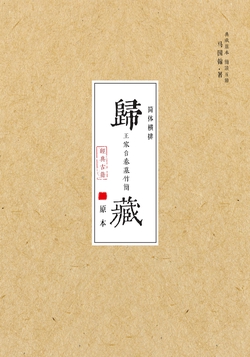
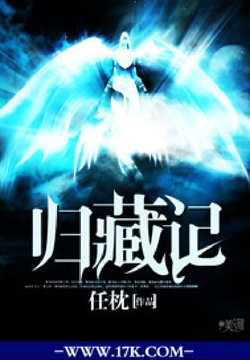
The Return to the Hidden cover

The Return to the Hidden

Rating 2.8
Word count
15K words
Chapters
12

Tags

Summary

Traditional Chinese thought and culture have a long history and are highly original, inventive and literary. Early forms of thought are distinctive: religious theology, canonical Chinese medical texts, ancient military treatises, Confucian, Daoist, Buddhist and Hundred Schools thought, feng shui and metaphysics, the Twenty-Four Histories, and customs and local gazetteers—all are profound and extensive. This "Essence of the Chinese Classics: Original Cultural Texts" series preserves the original appearance of the texts, with the aim of preserving and transmitting traditional Chinese thought and culture. By reading the literary essence left by ancient sages, readers cultivate their character and quietly come to know the classics of Chinese learning.

Editor's review

This book belongs to the "Essence of the Chinese Classics: Original Cultural Texts" series, compiled on the principle of preserving the original appearance of the texts and focused on preserving and transmitting traditional Chinese thought and culture. The work compiled by Ma Guohan serves as an accessible step into ancient thought literature: readers can experience the diverse aspects of early thought, including religious theology, canonical Chinese medical texts, ancient military treatises, and the distinct strands of Confucian, Daoist, Buddhist and Hundred Schools thought. Its value lies not in offering modern vernacular interpretation but in letting readers face the original text directly and experience the expressive modes and conceptual world of the ancients. Read slowly, using annotations and reference works to understand words and phrases, and do not feel obliged to finish it in one go. Reading it alongside similar classics makes it easier to see similarities, differences and developments among schools of thought. Overall, this is a traditional-culture reader suited to keeping on one's desk for browsing and reflection, good for careful reading in quiet surroundings and also suitable as a starting choice for a Chinese classics reading plan.

Who it's for

A good fit for

  • Readers with an initial interest in traditional Chinese culture and ancient thought who wish to engage directly with original texts
  • Those drawing up a Chinese classics reading plan who need a volume to browse over the long term
  • Traditional-culture enthusiasts who prefer preserving original textual appearances and avoid over-vernacularized adaptations
  • General readers who need an outline of the strands of religious theology, military thought, Confucianism and Daoism

Not a good fit for

  • Beginning readers seeking sentence-by-sentence vernacular translation and detailed modern interpretation
  • Casual readers who mainly read for plot and story
  • Specialist researchers needing systematic scholarly textual criticism or monographic research materials

Reading tips

  1. First read the table of contents and preface to understand the book's structure, then select passages of interest for close reading rather than insisting on reading from beginning to end.
  2. Keep a dictionary of common classical Chinese characters at hand and look up rare words as they arise, reducing obstacles to reading.
  3. Read only a short passage each time, then summarize its gist in two or three sentences to help consolidate understanding.
  4. Read alongside similar Chinese classics anthologies, noting resonances and differences among different strands of thought.

Contents

  1. 版权信息
  2. 归藏
  3. 十二辟卦
  4. 归藏 郑母经
  5. 归藏 本蓍篇
  6. 归藏 启筮篇
  7. 附诸家论说
  8. 归藏 启筮
  9. 归藏 郑母经
  10. 归藏 初经
  11. 归藏 齐母经
  12. 归藏 本蓍篇

FAQ

Is this book suitable for readers with no background to read directly?
It can be read, but preparation is needed. The book preserves the original textual appearance and does not provide sentence-by-sentence vernacular translation, so readers with no background will encounter obstacles in vocabulary and expression. It is advisable first to use reference works and annotated editions, or to begin with shorter, easier passages and gradually expand.
How does this book differ from vernacular Chinese classics books on the market?
Its focus is on preserving and transmitting traditional Chinese thought and culture, retaining the original textual appearance as far as possible so that readers engage directly with ancient texts rather than a modern vernacular retelling. It suits readers who want to experience the original flavor of expression and are willing to read slowly and savor it.
Does one need to read this book in order from beginning to end?
No. The contents cover religious theology, canonical Chinese medical texts, ancient military treatises, Confucian, Daoist, Buddhist and Hundred Schools thought, and many other areas, and the passages are relatively independent. Readers may select according to interest and then gradually expand their reading.
What traditional thought can this book help one understand?
The materials indicate that the book covers a wide range of content, including religious theology, canonical Chinese medical texts, ancient military treatises, Confucian, Daoist, Buddhist and Hundred Schools thought, feng shui and metaphysics, the Twenty-Four Histories, and customs and local gazetteers. Readers can thereby form an initial understanding of the diverse aspects of traditional thought and culture.

Related on WeRead

Comments

Find this book

This site is an index: you start “Search all sources” in your browser, and the entries it lists all point to third-party sites; please judge their availability yourself.

About the author

马国翰 Author

Ma Guohan's personal details, including his life dates and nationality, are limited in publicly available sources; all that is currently known is that one work, Gui Zang, is attributed to him. According to the library's classification, the book falls under literary appreciation, suggesting that its content may focus on close reading, commentary, and interpretation of related texts rather than being a pure compilation of materials or a theoretical monograph. With little verifiable material, his writing style and specific influence are difficult to describe in detail, but the title Gui Zang itself carries a strong flavor of classical texts and readily evokes the tradition of ancient Yi studies literature. This may be why the book is examined within the framework of literary appreciation. Overall, Ma Guohan's profile as an author can presently be glimpsed only through this single work, and the orientation toward literary appreciation deserves readers' attention when they read Gui Zang.

Top rated in the same category