

Biography of Zhang Jian
Tags
Summary
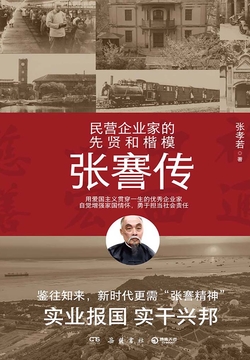
Over his lifetime he founded more than 370 schools. To this day, numerous institutions—including Tongji University, Shanghai Ocean University, Shanghai Maritime University, Hohai University, Nanjing University, Southeast University, Yangzhou University, Soochow University, and Donghua University—bear the mark of his efforts. He achieved remarkable successes in many fields and established numerous "national firsts," making outstanding contributions to accelerating China's modernization.
Chairman Mao said, "When we speak of China's national industry and light industry, we must not forget Zhang Jian."
On November 12, 2020, after visiting an exhibition on Zhang Jian's life in Nantong, General Secretary Xi Jinping noted that while establishing industries, Zhang Jian actively promoted education and social welfare, benefited his hometown, and helped the people, with far-reaching influence. He is a pioneer and model of Chinese private entrepreneurs. Zhang Jian's deeds are highly instructive, and this site should be made a base for patriotic education so that more people, especially young people, may learn from them and strengthen the "Four Confidences."
Zhang Jian was a uniquely compelling figure in modern China, and the material and spiritual legacy he left behind is a precious treasure of the Chinese nation.
Editor's review
Who it's for
A good fit for
- Readers interested in modern Chinese history, especially the social transformation of the late Qing and early Republican period
- Students of the historical development of Chinese entrepreneurial spirit and the history of business thought
- Those who wish to explore the history of education, local self-government, and social construction
- Readers seeking in-depth biographies of historical figures that emphasize the interplay between individual thought and the times
Not a good fit for
- Casual readers expecting a strongly plotted, novelistic tale of a legendary figure
- Readers who only want a quick outline of Zhang Jian's life and have little patience for deeper historical analysis
Reading tips
- May be read alongside works on late Qing political and economic history for a fuller grasp of the broader context of Zhang Jian's activities.
- Readers may wish to pay attention to excerpts from Zhang Jian's speeches, letters, and memorials; these primary materials are key to understanding his thought.
- Zhang Jian may be compared and considered alongside contemporary industrialists and reformers at home and abroad to deepen understanding of his historical standing and distinctiveness.
About the publisher
Founded in 1984, Guowen Publishing House focuses on works in philosophy, economics, politics, history, and literature, and also publishes calligraphy, art, and photography titles as well as social science works from Hong Kong, Macao, and Taiwan. Judging from the 40 titles in the database, the press has built a presence in biography, applied psychology, popular science, and philosophy. Representative books include Elon Musk: Rocket Revolution, The Power of Ritual, The Collapse of Silence, The Cost of Altruism, and When We Talk About the Ocean. Its authors include Eric Berger, Michael Norton, and David Edmonds, combining translated works with domestic writing. Biography and psychology-oriented inspirational titles stand out, while popular science and philosophy books emphasize readability, giving the list an interdisciplinary, general-readership orientation. Public information is limited, so the above focuses on the publishing directions reflected in the database.
Contents
- 版权信息
- 前言 张謇,一个伟大的背影
- 第一章 我踏金鳌海上来
- 少年英才
- 冒籍考试
- 初出茅庐
- 第二章 30年圆梦科考
- 科场坎坷
- 10年磨砺
- 人生逆袭
- 师恩难忘
- 第三章 实业救国赤子心
- 惊世骇俗的决定
- 状元办厂
- 通海垦牧
- 实业梦想
- 世博情缘
- 第四章 教育救国峥嵘路
- 家可毁,不可败师范
- 构建大教育体系
- 第五章 慈善济民先行者
- 创办公益事业
- 创办慈善事业
- 第六章 难以超越的背影
- 黯然离去
- 成败得失
- 家风世传
- 附录 张謇生平大事年谱
FAQ
What is the book's rating on Douban?
What is the author Zhang Hua's academic background?
What aspects of Zhang Jian's achievements does the book mainly cover?
Related on WeRead


Comments
Find this book
This site is an index: you start “Search all sources” in your browser, and the entries it lists all point to third-party sites; please judge their availability yourself.
About the author
Zhang Hua (232–300), courtesy name Maoxian, was a native of Fangcheng in Fanyang (present-day Gu'an, Hebei) and a politician, man of letters, and book collector of the Western Jin dynasty. A scholar of wide learning, he compiled Bowuzhi, China's first work of natural history, and also wrote such pieces as "Ode to the Wren" and "Admonitions for Women." Bowuzhi records mountains and rivers, geography, strange creatures, anecdotes, and legends, combining the study of natural curiosities with tales of the strange; it deeply influenced later note-style fiction and writings on folklore and the supernatural, and is often read alongside the note-style fiction of the Han, Wei, and Six Dynasties. In the first year of Yongkang (300), he was killed by Sima Lun, Prince of Zhao. Because public sources on the details of his life are limited, his works are noted for spanning classical literature, cultural folklore, and medicine; representative titles also include Bowuzhi (with Seven Other Works), A Grand View of Han-Wei and Six Dynasties Note-Style Fiction, Chinese Wisdom Stories—Classic Chinese Stories, and A Biography of Zhang Jian.
