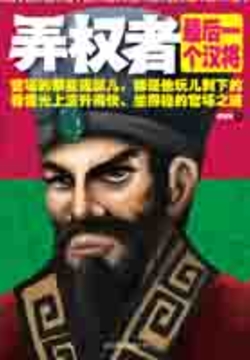
Those Who Manipulate Power cover

Those Who Manipulate Power

Rating 2.9
Word count
239K words
Chapters
32
ISBN
9787550210141

Tags

Summary

After Emperor Wu of Han (Liu Che) died, he entrusted the heavy responsibility of assisting Emperor Zhao to Huo Guang. Huo Guang became the chief minister and grand general who held sway over the court. He had to review every important court matter personally, and could even make the decisions. He became a pillar minister whom the emperor both relied on and feared. When Emperor Zhao passed away, he personally installed a new emperor and then deposed him. Why could he have the final say on local installation and deposition? Huo Guang controlled the Han court for nearly 20 years, yet why did his entire clan ultimately perish? See The Power Wielder: the last Han general stages the most striking history of officialdom in the Han dynasty!

Editor's review

This book focuses on Huo Guang, a key figure in Western Han politics. It begins with Emperor Wu's deathbed entrustment, lays out his nearly two decades in power—assisting Emperor Zhao, installing and deposing the Prince of Changyi, and backing Emperor Xuan—and ends with the destruction of the entire Huo clan. Writing from the perspective of officialdom, the author renders with great tension the delicate relationship between a regent and an emperor who both depends on and dreads him, and reveals the inevitable logic by which a powerful minister's family rises and falls when power lacks checks. The narrative emphasizes political maneuvering and personal choices, moves at a brisk pace, and suits readers interested in Han politics and the fate of powerful ministers. While reading, pay attention to the legitimacy behind each of Huo Guang's installation and deposition decisions and to the attitudes of court officials; this is more illuminating than simply watching power change hands.

Who it's for

A good fit for

  • Readers interested in Han politics and the fate of powerful ministers
  • Readers who enjoy narratives of court maneuvering and power succession
  • History enthusiasts who want to understand the regency system through a case study
  • General readers who prefer character-driven history books

Not a good fit for

  • Researchers who need rigorous academic verification and source annotations
  • Casual readers who prefer a light, humorous style
  • Readers completely unfamiliar with Western Han history who are unwilling to build background first

Reading tips

  1. First understand the basic background of Emperor Wu's late-life entrustment and the Zhao-Xuan transition before reading
  2. Focus on the reasons behind each of Huo Guang's imperial installations and depositions and the reactions of court officials
  3. When reading about the fall of the Huo clan, look back at the foreshadowing of power accumulation earlier in the book
  4. Read alongside basic knowledge of Han officialdom to understand the authority of the grand general and chief minister

Contents

  1. 前言
  2. 引子1
  3. 引子2
  4. 引子3
  5. 第一章 无为而治
  6. 第二章 查贪官
  7. 第三章 假奏章1
  8. 第四章 假奏章2
  9. 第五章 假奏章3
  10. 第六章 假奏章4
  11. 第七章 假奏章5
  12. 第八章 粉碎政变1
  13. 第九章 粉碎政变2
  14. 第十章 粉碎政变3
  15. 第十一章 粉碎政变4
  16. 第十二章 粉碎政变5
  17. 第十三章 立昌邑王为帝1
  18. 第十四章 立昌邑王为帝2
  19. 第十五章 昏君乱政
  20. 第十六章 废黜昏君
  21. 第十七章 拥立新帝
  22. 第十八章 皇后之位1
  23. 第十九章 皇后之位2
  24. 第二十章 皇后之位3
  25. 第二十一章 霍光之死
  26. 第二十二章 横行不法1
  27. 第二十三章 横行不法1
  28. 第二十四章 横行不法2
  29. 第二十五章 横行不法3
  30. 第二十六章 阴谋叛乱
  31. 第二十七章 刺杀汉宣帝
  32. 第二十八章 霍氏家族覆灭

FAQ

Is this book a novel or a history book?
Judging from the introduction, it is a work of historical narrative. It uses the real historical thread of Huo Guang's regency, his installation and deposition of emperors, and his family's destruction as its framework, and adopts a story-oriented perspective of officialdom. It is not a fictional novel, but it is not a strict academic monograph either.
Can I understand it without knowing Western Han history?
Basically yes, but it is advisable to first know a few key points: Emperor Wu's deathbed entrustment, Emperor Zhao's early death, the deposition of the Prince of Changyi, and Emperor Xuan's accession. The book has many figures and official titles; building a little background beforehand will make the workings of Huo Guang's power clearer.
Does the book focus on Huo Guang or on Han officialdom?
It centers on Huo Guang while using his experience in power to show the power relations among regents, emperors, and consort-clan officials in Han officialdom. The main line is Huo Guang's nearly two decades of rule and his family's rise and fall; court maneuvering is the main narrative perspective.

Related on WeRead

Comments

Find this book

This site is an index: you start “Search all sources” in your browser, and the entries it lists all point to third-party sites; please judge their availability yourself.

About the author

都现民 Author

Du Xianmin is an author about whom limited public information is available. Only one work by this author can currently be identified, namely The Power Seeker. Judging from its classification, The Power Seeker belongs to the otherworldly continent genre, a type of fiction typically set in an invented world and combining power struggles, factional maneuvering, and adventurous growth, which places considerable demands on world-building and plot development. As no reliable records of Du Xianmin's other personal details, writing career, or background have been found, a fuller account of the author's creative trajectory cannot yet be given. Based on the available clues alone, readers can gain a sense of the author's narrative approach and thematic preferences within the otherworldly continent genre through The Power Seeker. For readers interested in power-themed fiction set in invented worlds, this work offers an entry point for observing the author's writing style, while further information about the author's future creative work remains to be supplied by more public sources.

More by the same author

Top rated in the same category