

The Abandoned Capital
Tags
Summary
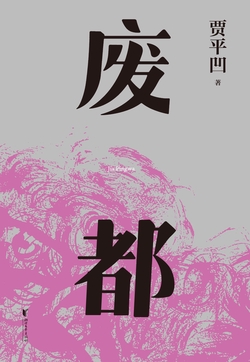
The novel tells the story of a group of intellectuals in a large city in northwest China in the 1980s. The protagonist, Zhuang Zhidie, is one of the four most famous cultural figures in Xijing and the most capable of the four, "one of the top figures in the Xijing literary world." The novel contains a large amount of "sexual" description, which has caused considerable controversy. The novel also makes extensive use of symbolism, a noteworthy artistic feature of the work.
Editor's review
Who it's for
A good fit for
- Readers interested in the history of contemporary Chinese literature, especially "New Era literature"
- Readers hoping to gain insight through fiction into the mentality of intellectuals and the transformation of urban culture during a period of social transition
- Readers who appreciate Jia Pingwa's distinctive literary style and are fascinated by his "dense" narrative and regional cultural writing
- Readers able to tolerate serious literary works dealing with cultural taboos, the depths of human nature, and existential predicaments
Not a good fit for
- Readers seeking light entertainment or purely romantic stories
- Readers who are uncomfortable with explicit erotic description or who hold an absolutist moralizing stance toward it
Reading tips
- It is advisable to understand the novel within the historical context of its creation (the early 1990s) and to appreciate its avant-garde and controversial character of the time
- Attention may be paid to the many cultural symbols in the book (such as the xun, bronze mirrors, and folk songs) and to its mysterious narrative, which together form the symbolic system of the "ruined city"
- While reading, consider whether Zhuang Zhidie's tragedy is personal degeneration or a metaphor for a certain spirit of the times, and wherein its "ruin" lies
About the publisher
Zhejiang Literature and Art Publishing House is a Chinese publisher specializing in literary publishing. Judging from the 808 titles in the database, its publishing areas cover world classics, foreign literature, social novels, folk literature and classic works, as well as modern and contemporary literature and prose. Representative titles include foreign literary translations such as Anna Karenina, The Temple of the Golden Pavilion, In Praise of Shadows and The Complete Tragedies and Comedies of Shakespeare, alongside classic works by Lao She and Lu Xun such as Camel Xiangzi, Teahouse and Wandering. Its authors and translators include Leo Tolstoy, Cao Ying, Lao She, Yukio Mishima, Jun'ichirō Tanizaki and Zhu Shenghao. The press emphasizes the translation and introduction of classic texts and the compilation of native literary works, giving equal weight to Chinese and foreign literature. Owing to limited public information, its specific series and editorial policies are not elaborated here.
Contents
- 版权信息
- 正文一
- 正文二
- 正文三
- 正文四
- 正文五
- 后记
FAQ
Why was Ruined City once banned?
Where is "Xijing" in the book?
How should the character Zhuang Zhidie be evaluated?
Related on WeRead




Comments
Find this book
This site is an index: you start “Search all sources” in your browser, and the entries it lists all point to third-party sites; please judge their availability yourself.
About the author
Jia Pingwa, originally named Jia Pingwa, was born in Danfeng, Shaanxi, in 1952. A contemporary writer, he graduated from the Department of Chinese Language and Literature at Northwest University in 1975 and has served as chairman of the Shaanxi Writers Association and vice chairman of the China Writers Association. His work spans social novels and prose, including Ruined City, Qin Opera, Ancient Furnace, Shan Ben and Zhan Zuo; Qin Opera won the seventh Mao Dun Literature Prize. The collection also includes Solo Walking, Moon Traces: Selected Prose of Jia Pingwa (English), Remembering the Wolf, Lao Sheng and Dai Deng, among twenty-six titles. His novels are rooted in rural life and social reality, while his prose is plain and natural, revealing character in everyday detail.
