

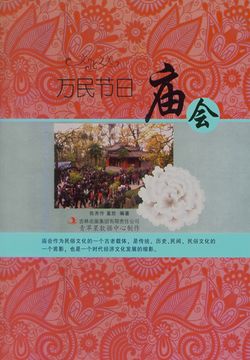
Temple Fair
Tags
Summary
Editor's review
Who it's for
A good fit for
- Readers interested in northern Chinese folk culture and social change
- Readers who enjoy documentary literature and nonfiction writing styles
- Observers who hope to understand contemporary China's transformation through concrete scenes of daily life
- People who reflect on the fate of traditional culture in the process of modernization
Not a good fit for
- Lovers of popular fiction who seek strong plots and fast-paced narrative
- Researchers who expect systematic academic analysis or theoretical exposition
Reading tips
- It can be regarded as a documentary in words; readers may wish to slow down and savor the scenes and details.
- It is suggested to read it in comparison with one's own memories of "hometown" or "traditional festivals" for a deeper experience.
- The book spans a large timeline; paying attention to changes in the circumstances of the same person or family in different eras can help better grasp the thread.
About the publisher
Jilin Literature and History Publishing House is a professional publisher specializing in literature, history, and social science titles, with publishing areas covering culture, theory, historical reading, military affairs, classical poetry, and medicine. Its list includes historical and military works such as National History 001: The Tragedy of the Southern Ming and Naval Battles 006: The Russian Navy before and after the Russo-Japanese War, as well as the "Chinese Culture Knowledge Reader" series, which covers Sun Tzu and military thought, ancient tea ware and Zisha art, Song Huizong Zhao Ji's contributions to painting, the Book of Songs, and Hai Rui. Medical works such as How a Famous Doctor Diagnoses Patients are also represented. Authors include Jin Kaicheng, Yang Liang, Zha Youyin, Luo Dalun, Zhiwen Fenghuo Studio, and Theodore Dodge. The press combines the popularization of literary and historical knowledge with focused research, forming a publishing profile centered on traditional culture readers and balancing academic and general reading.
Contents
- 版权信息
- 《中国文化知识读本》编委会
- 关于《中国文化知识读本》
- 一 会的释义及赶庙会的由来
- (一)什么叫做庙会
- (二)庙会的分类
- (三)为什么要“赶庙会”
- 二 庙会文化的发展历程
- (一)庙会的渊源
- (二)庙会的形成
- (三)庙会的兴盛
- 三 庙会上的活动
- (一)宗教活动
- (二)文化活动
- (三)商业活动
- (四)庙会小吃
- 四 当代庙会的发展
- (一)传统庙会在当今的局限
- (二)现代庙会中的气象
FAQ
Is this book a novel or documentary literature?
Which region's temple fair does the book mainly describe?
Can readers without relevant background knowledge understand it?
Related on WeRead



Comments
Find this book
This site is an index: you start “Search all sources” in your browser, and the entries it lists all point to third-party sites; please judge their availability yourself.
About the author
Li Zheng is an author about whom limited public information is available; only two works are known, A Study on the Impact of Excavation Unloading in Soft Soil Areas on Adjacent Subway Tunnels and Temple Fairs. His writing spans two categories, popular science and design. The former addresses the specialized issue of how excavation unloading in soft soil areas affects nearby subway tunnels, an area where geotechnical engineering meets urban rail transit protection, and seeks to combine mechanical analysis with engineering practice. The latter takes temple fairs as its subject, focusing on the spatial forms and cultural design implications of this traditional folk activity. Though the two subjects differ markedly, both reflect an approach that begins with concrete objects and balances professional rigor with readability.
