

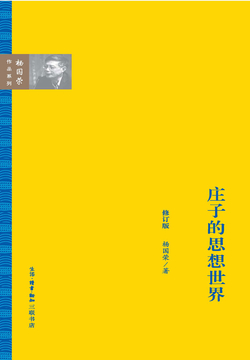
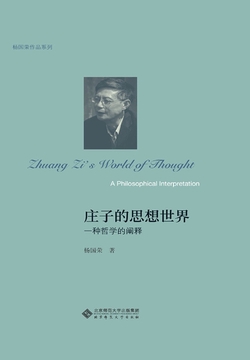
The World of Zhuangzi
Tags
Summary
Editor's review
What is especially rare is the restrained balance the authors maintain. They probe Zhuangzi's profound insight into life's predicaments—life and death, fame and gain, right and wrong—and his wisdom of transcendence, while also objectively noting the tendency toward withdrawal from the world that may exist in his thought and its tension with modern practice. The book is thus not only a tribute to classical wisdom but a dialogue of equals with a past thinker, guiding readers to consider how to draw nourishment for "wandering the mind" amid the clamor of modern life. The authors' appreciation of the Zhuangzi's literary qualities is also finely wrought, revealing the rigorous intellectual logic and astonishing imagination behind its unrestrained prose. For readers who wish to grasp the essence of Zhuangzi's thought systematically without being trapped by abstruse academic language, this is an exemplary introduction and a guide to deeper study.
Who it's for
A good fit for
- Readers who want a systematic understanding of the core ideas of Zhuangzi's philosophy rather than isolated aphorisms.
- Beginners interested in classical Chinese philosophy and literature who are daunted by difficult classical Chinese and need reliable modern guidance.
- Spiritual seekers looking for inspiration and transcendent wisdom amid busy modern life.
- Readers who enjoy understanding profound ideas through vivid parables and stories.
Not a good fit for
- Specialist scholars seeking a word-by-word vernacular translation of the Zhuangzi or purely textual research.
- Pragmatists hoping for simple "success literature" or a direct action guide.
Reading tips
- Read the whole book through first to form an overall impression of Zhuangzi's thought, then return to the core chapters that interest you for close reading.
- As you read, try setting the book's philosophical concepts (such as "free and easy wandering") against your own experience and reflect on them.
- It is worth reading alongside the original Zhuangzi (for example, the Zhonghua Book Company edition) to deepen your understanding and feel the charm of the source text.
About the publisher
Zhonghua Book Company is a publisher known for collating ancient texts and academic publishing, with its output centered on Eastern philosophy, culture, classic works, art, and historical reading. Its library contains 532 titles, including Chen Shou's Records of the Three Kingdoms, Guo Qingfan's Collected Commentaries on Zhuangzi, the four-volume Chinese Literature: Four Great Classical Novels, and the two-volume Table of Seal and Clerical Script Forms from Qin, Han, Wei, and Jin. These titles span historical classics, commentaries on the philosophers, classical novels, and philological reference works. Representative authors include Chen Shou, Guo Qingfan, Wu Cheng'en, Shi Nai'an, Cao Xueqin, Luo Guanzhong, Xu Wenwu, and the Hanyu Dazidian character-form group, reflecting a focus on primary sources and scholarly editors. Its publishing character lies in combining authoritative editions and annotated texts with both accessible classics and specialized research. Public information on its fuller catalog is limited; this note describes only the directions evident in the library's holdings.
Contents
- 版权信息
- 逍遥游的世界
- “鹏”也有所待
- 蜩、学鸠与斥□
- 圣人无名
- 神人无功
- 至人无己
- 齐物论的世界
- 吾丧我
- 人籁与地籁
- 天籁
- 大知小知
- 真宰与真君
- 成心
- 物无非彼,物无非是
- 道通为一
- “道之所以亏,爱之所以成”
- 万物与我为一
- “八德”
- “物之所同是”
- “不从事于务”的圣人
- 生死与梦觉
- “和之以天倪”
- 蝴蝶梦
- 养生主的世界
- “养生”之“主”
- “缘督以为经”
- 庖丁解牛
- 右师、泽雉与秦失
- 人间世的世界
- 颜回与孔子
- 颜回请行
- 颜回赴卫注定没有结果
- “唯道集虚”的“心斋”
- 天下的两个“大戒”
- 使臣的困境
- 与“其德天杀”的太子相处
- 寄身社神的栎树
- “不材”的商丘之木
- 无用之用
- 德充符的世界
- “德充”是一个渐进的过程
- 德的最高境界:和
- 形骸之内与形骸之外
- “天刑之,安可解”的孔子
- “非爱其形也,爱使其形者也”
- “才全而德不形者”
- 人之形与人之情
- 大宗师的世界
- 大宗师,何许人也
- 真人
- “不如相忘于江湖”
- “道”与得“道”
- 圣人之才与圣人之道
- “安时而处顺,哀乐不能入”
- 现实生活中的真人
- 意而子·颜回·子桑
- 应帝王的世界
- “顺物自然而无容私”
- 浑沌之死
- 后记
FAQ
How does this book differ from Yu Dan's reflections on the Zhuangzi?
Can I understand it without a background in philosophy?
Which part of the Zhuangzi does this book mainly interpret?
Related on WeRead

Comments
Find this book
This site is an index: you start “Search all sources” in your browser, and the entries it lists all point to third-party sites; please judge their availability yourself.
About the author
Wang Jinglin — public information is limited, and biographical details are not recorded in the available sources. Two works are known, spanning Eastern philosophy and prose miscellany. One representative work, The World of Zhuangzi, explores Zhuangzi's thought and falls within the field of Eastern philosophy; the other, Records of Teachers' Kindness at Yanyuan, included in the "Phoenix Branch Essay Series," recalls friendships with teachers and friends in an essayistic style. These two works suggest that Wang Jinglin's writing crosses between philosophical interpretation and personal prose—one side devoted to sorting out and explaining classical thought, the other to emotional narrative and remembrance. The former requires immersion in classical texts and careful organization of ideas, while the latter leans toward the unfolding of feeling and memory, with style adjusted accordingly. Since the author's nationality, dates of birth and death, and educational background are not confirmed, no speculation is offered here; the profile rests only on the subjects and categories of the works, and further biographical details await additional public information.
Xu Tao is an author about whom limited public information is available; few confirmed details of his background have been systematically disclosed. Within the library's holdings, one work appears under his name, The World of Zhuangzi, classified under Eastern philosophy and centered on Zhuangzi and his thought. Writing of this kind generally returns to the original Zhuangzi text, tracing the inner, outer, and miscellaneous chapters, examining its use of fable, attributed sayings, and spillover words, and explaining ideas such as the equality of things, free wandering, and the usefulness of the useless within the context of pre-Qin thought. Because only this one work is currently known, it is difficult to judge Xu Tao's overall style or scholarly orientation, or whether his research also covers other Daoist figures or compares different schools. Readers encountering his writing through The World of Zhuangzi may consider whether his interpretation balances close reading with intellectual history and whether it lowers the barrier for general readers. Overall, Xu Tao's profile awaits further material.
