

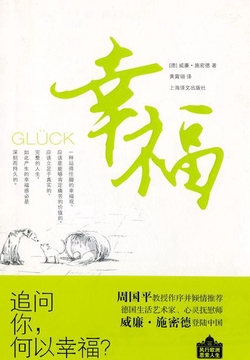
Happiness
Tags
Summary
Editor's review
Who it's for
A good fit for
- Readers confused by mainstream views of happiness and seeking philosophical reflection
- Modern readers who feel anxious and weary in life and hope for inner calm
- Readers interested in Continental philosophy, philosophy of life, and critique of modernity
- Readers who enjoy concise but intellectually dense nonfiction
Not a good fit for
- Readers expecting concrete steps, techniques, or an immediately effective happiness action plan
- Readers who prefer highly plot-driven, story-based books
Reading tips
- Slow down while reading; use notes to sort out the author's core arguments and conceptual distinctions.
- Pause often during reading to compare the ideas with your own lived experience and reflect on them.
- Read alongside Alain de Botton's The Consolations of Philosophy or related works by Byung-Chul Han to extend the philosophical inquiry into the predicaments of modern life.
About the publisher
Shanghai Translation Publishing House is a Chinese publisher oriented mainly toward translation and publishing. Its publications cover foreign literature, world classics and classic works, as well as social culture, folk literature and classical poetry. The database contains 2,618 titles, including Never Let Me Go, Les Misérables (2 volumes), Don Quixote (illustrated collector's edition), The Complete Comedies of Molière (4 volumes), The Complete Novels of Kafka (3 volumes), The Collected Works of Dostoevsky (9-volume set), Reason and Persons, and Oedipus Rex (Translation Classics). Its author resources include foreign writers such as Kazuo Ishiguro, Victor Hugo, Cervantes and Molière, as well as translators such as Zheng Kelu, Sun Jiameng, Li Jianwu and Zhang Kun. The publisher has brands such as "Translation Classics Selections" and "Translation Documentary," and emphasizes translated works in foreign literature and the humanities and social sciences, while also publishing bilingual dictionaries and foreign-language educational books. Public information is limited; the above is based on the book information in the database.
Contents
- 版权信息
- 什么是幸福?
- 动手制作“幸福”
- 序
- 01 好运
- 02 快乐
- 03 充实
- 04 悲哀
- 05 为何幸福并非人生第一要务:寻找意义的几种结果
- 06 身体察觉的意义
- 07 心灵感受的意义
- 08 精神思考的意义
- 09 思考和感受的超我意义
- 10 从寻找意义到创造意义
FAQ
Is this book about positive psychology?
Is the book difficult or obscure?
Can this book help me become happier?
Related on WeRead



Comments
Find this book
This site is an index: you start “Search all sources” in your browser, and the entries it lists all point to third-party sites; please judge their availability yourself.
About the author
William Schmid is an author about whom limited public information is available; his nationality, dates of birth and death, and original English name have not been clearly recorded. Judging from the two works held in the collection, The New Discovery of Love and Happiness, his writing revolves around themes such as emotion, happiness, and the meaning of life, and is commonly categorized as philosophical reading and inspirational growth. Works of this kind often take everyday experience as their starting point and use philosophical reflection to respond to the spiritual confusion of modern people; the language is plain yet reflective, making it suitable for general readers who wish to understand life's problems from a philosophical perspective. Because verifiable biographical information is very limited, it is difficult at present to say more about his academic background or writing career, and readers may instead gain a direct sense of his way of thinking and style of expression through these two works.
Huang Xiaoling is an author about whom limited public information is available. Her work centers on foreign literature and humanistic essays. Four of her titles are included in the collection: the correspondence between Hermann Hesse and Thomas Mann, Heidi, Hesse's Fairy Tales (from the Hesse collection), and Happiness. These span essay collections, foreign literature, and inspirational writing. Her work combines literary translation with essay writing: she has taken part in translating important German-language texts by writers such as Hesse and Thomas Mann, while also engaging with classic coming-of-age stories like Heidi and with reflections on happiness. Her style tends toward the plain and delicate, building bridges between classic works and everyday reading. Because biographical details remain incomplete, this profile can only sketch her general direction from the available works, with more background to be added later.
