

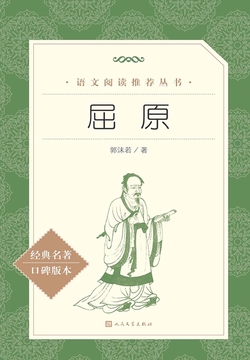
Qu Yuan
Tags
Summary
Editor's review
Who it's for
A good fit for
- History enthusiasts interested in Qu Yuan's life and his era
- Beginners in classical literature who want to understand the literary value and creative background of the Songs of Chu
- Readers seeking models of the scholar's spirit and character in traditional Chinese culture
- Teachers or students in need of biographical material on the figure
Not a good fit for
- Professional historians seeking rigorous textual research and the latest archaeological findings
- Readers expecting a fully fictionalized, highly dramatic adaptation
Reading tips
- Read alongside selected passages from the Songs of Chu to enter Qu Yuan's literary world
- Note where the text distinguishes historical record from the author's reasonable inference
- Compare Qu Yuan with thinkers of his own and other cultures to appreciate his uniqueness
About the publisher
International Culture Publishing Corporation is a publisher known for introducing foreign literature and world classics, with about 283 relevant titles in the database. Its representative books include Goethe's The Sorrows of Young Werther, Hesse's Siddhartha, Jiménez's Platero and I, and Gibran's The Prophet, as well as cultural readings such as Zhu Guangqian's Twelve Letters to Youth and Common Talk on Classics. In psychology, it offers the nine-volume Collector's Edition of C. G. Jung's Works, covering social psychology and applied psychology. Its author resources include Goethe, Hesse, Jiménez, Jung, and Zhu Guangqian, along with Chinese authors involved in translation and compilation. Its publishing focus is on foreign literature, classic works, psychology, and culture, serving both academic and general readers. Public information is limited, and the above is based mainly on the books in the database.
Contents
- 版权信息
- “中小学课本里的名人传记丛书”前言
- 少年时光
- 出身于贵族家庭
- 少年崭露头角
- 博闻强识小辩才
- 橘林会友论政
- 游历觅得好姻缘
- 登上仕途
- 获得帝王的赏识
- 初次入朝面君
- 彻夜畅谈变法之事
- 被楚怀王委以重任
- 出色的外交才能
- 变法图强
- 潜心草拟新法
- 制定新法令震惊朝野
- 潜心制定新《宪令》
- 改革受到重重阻碍
- 遭到他人的陷害
- 忧国忧民
- 与张仪激烈辩论
- 再次出使齐国
- 对楚怀王充满愤慨
- 在动荡的时局中
- 流放汉北作《离骚》
- 多舛命运
- 教训学生子兰
- 放逐江南荒僻之地
- 时刻心系楚国
- 未曾忘国之忧
- 独醒的忧国之士
- 山河破碎的痛苦
- 一颗巨星的陨落
FAQ
Is this book a novel or a historical biography?
What is distinctive about the book's interpretation of Qu Yuan's suicide by drowning?
Is this book suitable for middle school students?
Related on WeRead



Comments
Find this book
This site is an index: you start “Search all sources” in your browser, and the entries it lists all point to third-party sites; please judge their availability yourself.
About the author
Liang Yanfang is a Chinese-language book author about whom little public information is currently available. Only one work by her is held in the collection: a biographical title, Qu Yuan. Based on the available information, her writing concerns figures from Chinese history and literature, taking as its subject the poet Qu Yuan of the state of Chu during the Warring States period. Qu Yuan is an important poet and statesman in the history of Chinese literature, and his life and the works of the Chu Ci have long been common subjects for biographical writing. Liang Yanfang's book is classified under general biography, suggesting an approach that focuses on presenting the subject's life rather than on specialized scholarly inquiry. Because there is no record of the author's life, education, or other works, it is difficult at present to judge her overall writing style or the development of her work, or to assess the book's specific influence among works on similar themes. Readers who wish to understand her writing may do so by considering the narrative approach and the angle from which Qu Yuan is presented.
