

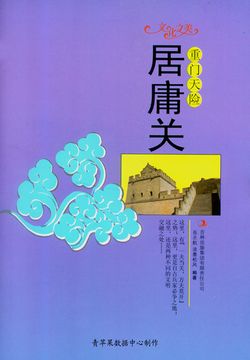
Juyong Pass
Tags
Summary
Editor's review
Who it's for
A good fit for
- History enthusiasts with a strong interest in ancient Chinese military history, Great Wall culture, and frontier historical geography.
- Readers living in or traveling to Beijing who wish to gain an in-depth understanding of Juyongguan and its surrounding cultural and historical background.
- Students and professionals engaged in the study and research of history, geography, archaeology, or cultural heritage.
- Readers who enjoy exploring macro-historical threads through specific historical sites.
Not a good fit for
- Casual readers seeking light travel guides or purely scenic photography.
- Readers expecting strongly plotted stories or fictional historical novels.
Reading tips
- Reading alongside a map of Beijing and northern Hebei is recommended to better understand Juyongguan's geographical location and strategic significance.
- Pay attention to how different historical periods (such as the Han, Tang, and Ming) positioned and managed Juyongguan, and compare the evolution of its functions.
- If possible, visit the Juyongguan Great Wall before or after reading to combine the book's knowledge with on-site experience for a deeper gain.
About the publisher
Jilin Literature and History Publishing House is a professional publisher specializing in literature, history, and social science titles, with publishing areas covering culture, theory, historical reading, military affairs, classical poetry, and medicine. Its list includes historical and military works such as National History 001: The Tragedy of the Southern Ming and Naval Battles 006: The Russian Navy before and after the Russo-Japanese War, as well as the "Chinese Culture Knowledge Reader" series, which covers Sun Tzu and military thought, ancient tea ware and Zisha art, Song Huizong Zhao Ji's contributions to painting, the Book of Songs, and Hai Rui. Medical works such as How a Famous Doctor Diagnoses Patients are also represented. Authors include Jin Kaicheng, Yang Liang, Zha Youyin, Luo Dalun, Zhiwen Fenghuo Studio, and Theodore Dodge. The press combines the popularization of literary and historical knowledge with focused research, forming a publishing profile centered on traditional culture readers and balancing academic and general reading.
Contents
- 版权信息
- 《中国文化知识读本》编委会
- 关于《中国文化知识读本》
- 一 居庸关概述
- 二 居庸关的演变
- 三 居庸关的作用
- 四 居庸关的气候
- 五 居庸关的景点
- 六 居庸关的文化
FAQ
What is the book's Douban rating?
What is the author Wang Zhongqiang's academic background?
Is this book a purely academic work or a popular history read?
Related on WeRead


Comments
Find this book
This site is an index: you start “Search all sources” in your browser, and the entries it lists all point to third-party sites; please judge their availability yourself.
About the author
Wang Zhongqiang is an author about whom limited public information is available. Eight of his works are currently held in the library, with topics centering on two threads: architectural heritage and traditional culture. His subjects are mostly specific historic sites and folk-culture carriers, such as Jiayuguan Pass, Juyongguan Pass, the Zhaozhou Bridge, tulou earthen buildings and siheyuan courtyard houses, as well as linear cultural heritage like the Beijing-Hangzhou Grand Canal and the ancient Tea Horse Road, along with themes in science and culture such as the armillary sphere and the seismograph. Judging from the existing titles, he tends to take a single building or cultural symbol as his starting point and introduces its historical development, formal characteristics and cultural meaning, writing accessible popular knowledge for general readers while balancing design perspectives with cultural context. The number of works is modest, but the topics are interrelated, showing sustained attention to traditional construction and cultural heritage and offering readers a useful reference for related general knowledge.
