

Changes of a Family
Tags
Summary
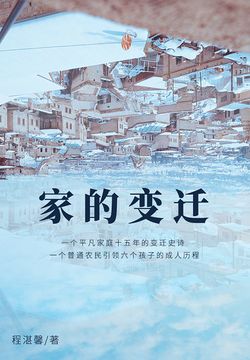
Centered on the eldest son, Hao Zhanren, the most ordinary grassroots literature enthusiast and worker, it tells of the “changes” of “home” over some fifteen years, reflecting rural transformation, military reform and conditions in the cultural and arts world, with deep attention to the protagonist “Ren’s” life trajectory over more than a decade and his longing for and pursuit of a “spiritual homeland.” Hao Zhanren and the others carry forward family virtues; their gratitude, diligence, kindness and down-to-earth loyalty are distinctly drawn.
A “family precept” passed from grandfather Hao Chunqiu to grandson Hao Fei’s generation—“If we study, we study good books”—is plain, profound and worth savoring. This is a novel worth reading.
Editor's review
Who it's for
A good fit for
- Readers interested in family tradition and family education who want to feel the power of inheritance through story
- General readers interested in realistic themes such as rural change and military reform
- Readers of long novels with a family thread and clear character development
- Grassroots literature enthusiasts and workers seeking to see the spiritual pursuits of people like themselves
Not a good fit for
- Readers who prefer strong plots, fast-paced suspense, or fantasy may find the pacing gentle
- Readers hoping for sharp social critique or intense conflict may find the tone warm and gentle
Reading tips
- First note how the "family precepts" are phrased differently across three generations, then revisit the characters' choices to perceive the layers of inheritance.
- When reading with Hao Zhanren as the main thread, jot down the years at his turning points to better understand the fifteen-year arc.
- When reading scenes of rural areas, the military, and the cultural and arts circles, compare them with changes in the characters' personalities to appreciate how the author writes the relationship between "family" and "the times".
Contents
- 版权信息
- 序
- 行进在筑梦的大路上
- 小说
- 第一节
- 第二节
- 第三节
- 第四节
- 第五节
- 第六节
- 第七节
- 第八节
- 第九节
- 第十节
- 第十一节
- 第十二节
- 第十三节
- 第十四节
- 第十五节
- 第十六节
- 第十七节
- 第十八节
- 第十九节
- 第二十节
- 第二十一节
- 第二十二节
- 第二十三节
- 第二十四节
- 第二十五节
- 第二十六节
- 第二十七节
- 第二十八节
- 第二十九节
- 第三十节
- 第三十一节
- 第三十二节
- 第三十三节
- 第三十四节
- 第三十五节
- 第三十六节
- 第三十七节
- 第三十八节
- 第三十九节
- 第四十节
- 第四十一节
- 第四十二节
- 第四十三节
- 第四十四节
- 第四十五节
- 第四十六节
- 第四十七节
- 第四十八节
- 第四十九节
- 第五十节
- 第五十一节
- 第五十二节
- 第五十三节
- 第五十四节
- 第五十五节
- 第五十六节
- 第五十七节
- 第五十八节
- 第五十九节
- 第六十节
- 第六十一节
- 第六十二节
- 第六十三节
- 第六十四节
- 第六十五节
- 第六十六节
- 第六十七节
- 第六十八节
- 作家书鉴
- 不忘初心 坚定前行
- 童心未泯文常青
FAQ
What kind of family does this book mainly portray?
Will readers without rural or military experience feel alienated?
Are the "family precepts" in the book very preachy?
Related on WeRead



Comments
Find this book
This site is an index: you start “Search all sources” in your browser, and the entries it lists all point to third-party sites; please judge their availability yourself.
About the author
Cheng Zhanxin is an author about whom relatively limited information is publicly available. Her confirmed works are The Changes of a Family and its sequel, The Changes of a Family (II), both classified as social novels. Judging from the titles and the category, her writing draws on family life and social change, focusing on how ordinary people live and feel amid social transformation, and using the everyday shifts within a family to reflect a broader social landscape. The family serves as the narrative core, linking individual fates with changes in the living environment, which gives the writing a realistic orientation and a strong sense of lived experience. Because public information is limited, details of her life, nationality, and writing career remain unclear, and the available information comes mainly from the two works recorded in the library. Readers who wish to understand her writing may begin with these two social novels: they are focused in scope and consistent in theme, making them a suitable starting point for getting to know this author and for observing how contemporary social fiction addresses family themes.
