

Family Harmony
Tags
Summary
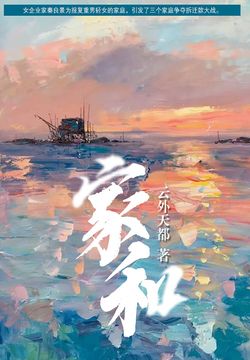
Qin Fugui made his fortune in property speculation and became a member of the city's wealthy elite, living in a villa in an upscale neighborhood. He has three sons and a daughter: Qin Keli, Qin Kewei, Qin Liangjing, and the youngest, Qin Keshen.
Qin Fugui is a patriarchal figure who wants his children firmly under his control. His three sons and the two elders all live in the villa, each son married with children and occupying his own floor—outwardly a picture of prosperity.
The three sons have inherited their father's temperament, seeking a family dynamic in which women are meek and compliant. Each married a wife from a far less privileged background. To outsiders they seem enlightened, indifferent to social station, but in truth they are satisfying their own needs, seeking to control every aspect of their wives' lives—economic and otherwise—and demanding wives who are obedient, dutiful, and family-centered.
Though handsome, the three brothers rely on their parents for everything and have achieved little in their careers.
The daughter, Qin Liangjing, grew up in this family, suppressed and lectured by Qin Fugui, who demanded she yield to her three brothers in all things. Yet with her mother's help she broke free of the family and, through her own efforts, became a renowned woman entrepreneur.
The Qin family's ancestral home is slated for demolition. When it comes to dividing the compensation, Qin Fugui demands that Qin Liangjing give her share to her three brothers. This is the backdrop against which the story unfolds.
To teach her father a lesson, Qin Liangjing uses her connections to have the Qin ancestral home designated a historic heritage building that cannot be demolished. The three brothers get no money, and relations with Qin Liangjing grow even more strained...
Editor's review
Who it's for
A good fit for
- Readers who enjoy novels about family ethics and generational conflict
- Readers who want to reflect on family of origin and family power structures
- Readers interested in observing resource allocation in multi-child families through fiction
- General fiction readers who prefer slice-of-life narration and densely woven relationships
Not a good fit for
- Readers seeking strong suspense or fast-paced plotting; this book is slice-of-life
- Readers hoping for professional legal or demolition-policy analysis
- Readers who prefer lighthearted romance or pure comedy; the conflicts here are realistic
Reading tips
- As you read, pay attention to how Qin Fugui talks to his three sons and his daughter, and notice how control hides in everyday language
- Read Qin Liangjing's breakout storyline alongside the three brothers' dependency to reflect on family resources and personal choice
- After finishing, try mapping out each Qin family member's position and demands; this helps explain why the conflicts are so hard to resolve
- For book clubs, consider discussion topics around "where do family boundaries lie"
Contents
- 版权信息
- 第一章 拆迁和生病
- 第二章 秦家家风
- 第三章 秦家女儿
- 第四章 医院里的明争暗斗
- 第五章 突发事件
- 第六章 照顾与表演
- 第七章 再接再励
- 第八章 各怀心思
- 第九章 工作方式
- 第十章 言辞与行动
- 第十一章 有趣的人
- 第十二章 突如其来
- 第十三章 危机处理
- 第十四章 仇人与恩人
- 第十五章 改变与进取
- 第十六章 升职烦恼
- 第十七章 挑拨的效果
- 第十八章 出色的老三
- 第十九章 生意经
- 第二十章 孩子也争
- 第二十一章 工作成效
- 第二十二章 生熟之间
- 第二十三章 小公司大老板
- 第二十四章 不可调和
- 第二十五章 化解调和
- 第二十六章 信任渐崩
- 第二十七章 不同的人
- 第二十八章 再起风云
- 第二十九章 不能成事
- 第三十章 诱惑再起
- 第三十一章 原谅和美好
- 第三十二章 再次失望
- 第三十三章 追求的烦恼
- 第三十四章 公司机密
- 第三十五章 员工的禀性
- 第三十六章 晚归的疑云
- 第三十七章 职场悲欢
- 第三十八章 顾客及上帝
- 第三十九章 富二代
- 第四十章 家庭危机
- 第四十一章 收购风波
- 第四十二章 理念不合
- 第四十三章 知已难求
- 第四十四章 再提离婚
- 第四十五章 闪闪发亮的灯泡
- 第四十六章 如此防范
- 第四十七章 不同的儿子
- 第四十八章 幸福落差
- 第四十九章 家务事
- 第五十章 父母之间
- 第五十一章 各安天命
- 第五十二章 别人家的女儿
- 第五十三章 合适女友
- 第五十四章 公婆异心
- 第五十五章 婚姻真相
- 第五十六章 退居二线
- 第五十七章 恶念顿起
- 第五十八章 时移境迁
- 第五十九章 暴力与软弱
- 第六十章 皆大欢喜
- 第六十一章 人各不同
- 第六十二章 各安天命
FAQ
What is this book mainly about?
What kind of figures are the three sons in the book?
Why is Qin Liangjing able to turn the ancestral home into a protected residence that cannot be demolished?
Related on WeRead

Comments
Find this book
This site is an index: you start “Search all sources” in your browser, and the entries it lists all point to third-party sites; please judge their availability yourself.
About the author
Yunwaitiandu is an author in the field of Chinese online literature, though public information about her is limited: her real name, place of origin, and life story are not clearly recorded. The library currently holds six of her works, including Shang Gong, Crossing the Starry River to Love You, Peach Blossoms Smile at a Good Match, Family Harmony, Fallen Flowers, Do Not Mean It, and The Chaos of the Concubine. These titles span categories such as time-travel and alternate history, modern romance, social fiction, and otherworldly fantasy. From these works, it is evident that her writing moves across ancient court settings, otherworldly adventure, and contemporary romance, combining the unfolding of characters' fates in imagined worlds with attention to family and social relationships in real life; her style tends to emphasize plot momentum and emotional expression. Because the author discloses very little about herself, readers chiefly come to know her through her works, and her creative profile awaits further material.
