

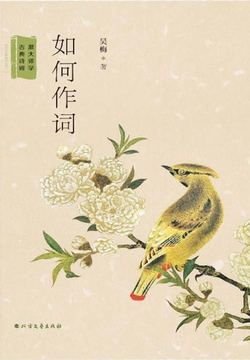
How to Compose Ci Poetry
Tags
Summary
Editor's review
Who it's for
A good fit for
- Enthusiasts of classical poetry who wish to systematically study traditional ci metrics and compositional norms
- Lyricists seeking to incorporate classical elements into pop music composition
- Teachers and scholars engaged in literary education or research
- Cultural workers with an interest in exploring traditional art forms
Not a good fit for
- Readers seeking only quick writing formulas and unwilling to build foundational knowledge
- Poets focused exclusively on modern free verse who reject metrical constraints
Reading tips
- Read the theoretical sections of the book in full first, then analyze the appended ci examples in comparison
- Keep a copy of Bai Xiang Ci Pu or Tang-Song Ci Ge Lü on hand as a companion reference
- Try applying the book's techniques to actual composition and revise repeatedly from the perspective of phonology
About the publisher
Northern Literature and Art Publishing House focuses on contemporary and modern literary and artistic works, literary theory, and translations of foreign literature, while also covering categories such as history, popular science, Eastern philosophy, and world classics. Its collection includes 737 titles, with representative publications ranging from traditional Chinese classics such as Records of the Grand Historian, The Exploitation of the Works of Nature, and The Analects to foreign literary works including the complete classic plays of Shakespeare, Balzac's Old Goriot and Eugénie Grandet (in celebrated translations by Fu Lei), and The Complete Sherlock Holmes. Its author resources span classical figures such as Sima Qian, Song Yingxing, and Confucius, foreign writers such as Shakespeare and Balzac, and translators such as Zhu Shenghao and Fu Lei. The press combines the transmission of classics with an orientation toward general reading, developing a distinctive profile in both the editing of traditional texts and the translation of foreign literature. Public information is limited, so the above emphasizes the publishing profile reflected in the books held in the collection.
Contents
- 版权信息
- 出版说明
- 第一章 绪论
- 第二章 论平仄四声
- 第三章 论韵
- 第四章 论音律
- 第五章 作法
- 第六章 概论一 唐五代
- 第一 唐人词略
- 第二 五代十国人词略
- 第七章 概论二 两宋
- 第一 北宋人词略
- 第二 南宋人词略
- 第八章 概论三 金元
- 第一 金人词略
- 第二 元人词略
- 第九章 概论四 明清
- 第一 明人词略
- 第二 清人词略
FAQ
Can I understand this book without a foundation in classical literature?
Is this book helpful for modern songwriting?
Are all the examples in the book classical ci?
Related on WeRead




Comments
Find this book
This site is an index: you start “Search all sources” in your browser, and the entries it lists all point to third-party sites; please judge their availability yourself.
About the author
Wu Mei was a modern Chinese scholar of classical ci poetry and traditional opera, though publicly available information about him is limited and biographical details remain to be verified. Judging from the seven works held in the collection, his writing spans two main fields: ci studies and opera. He produced systematic treatments of ci prosody and composition, such as General Principles of Ci Studies, How to Write Ci, and Wu Mei on Ci Studies, as well as a specialized study of opera's origins and theory, Random Talks on Opera: An Introduction to Chinese Opera. The collection also includes Three Kinds of Early Peking University Lectures on Literary History and The Shuangya Ci Collection. His writing is marked by clear scholarship and orderly exposition, with attention to prosody and close textual analysis; he often blends his own creative experience into theoretical discussion, making the works accessible to beginners while useful to specialists. These books remain important references for understanding traditional ci and opera and continue to influence literary appreciation and teaching.
