

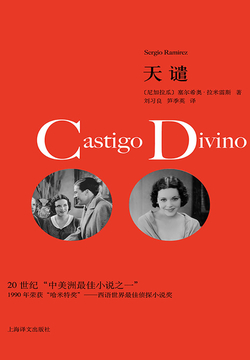
Divine Retribution
Tags
Summary
Editor's review
As a former revolutionary participant and vice president, Ramírez brings an insider's insight into Latin American political reality that gives the work a distinctive authenticity and historical depth. The novel is not only a literary re-creation of a particular history but also a universal reflection on the nature of power, the cost of idealism, and the individual's struggle within grand narratives. Its intricate structure advances along multiple threads, building a suffocating atmosphere in the interplay of fact and fiction; readers need a degree of concentration and historical awareness.
In literary terms, "The Fall" continues the tradition of political fiction after Latin America's "Boom," yet its narrative technique is more modern, with finely wrought psychological portraiture and dialogue rich in dramatic tension. It is not for readers seeking light diversion, but a serious literary work for those willing to think deeply about historical complexity, the dark side of human nature, and the boundaries of political ethics.
Who it's for
A good fit for
- Readers interested in Latin American history and politics who wish to understand the background of the Nicaraguan Revolution
- Serious literature lovers who value both literary craft and intellectual substance and are undaunted by complex narrative structures
- Readers concerned with power, violence, revolution, and human nature who enjoy deep reflection while reading
- Literary researchers who collect or study Cervantes Prize–winning works
Not a good fit for
- Readers of popular fiction seeking light entertainment or fast-paced plots
- Readers with no interest in or background knowledge of political history
Reading tips
- Before reading, a brief acquaintance with the history of the Somoza dynasty in Nicaragua and the Sandinista Revolution will help in understanding the novel's context
- Note the intricate relationships among characters; jotting down key names and identities as you go can prevent confusion
- The novel's pace is slow and taut; read immersively in a quiet setting to appreciate its atmosphere and psychological detail
About the publisher
Shanghai Translation Publishing House is a Chinese publisher oriented mainly toward translation and publishing. Its publications cover foreign literature, world classics and classic works, as well as social culture, folk literature and classical poetry. The database contains 2,618 titles, including Never Let Me Go, Les Misérables (2 volumes), Don Quixote (illustrated collector's edition), The Complete Comedies of Molière (4 volumes), The Complete Novels of Kafka (3 volumes), The Collected Works of Dostoevsky (9-volume set), Reason and Persons, and Oedipus Rex (Translation Classics). Its author resources include foreign writers such as Kazuo Ishiguro, Victor Hugo, Cervantes and Molière, as well as translators such as Zheng Kelu, Sun Jiameng, Li Jianwu and Zhang Kun. The publisher has brands such as "Translation Classics Selections" and "Translation Documentary," and emphasizes translated works in foreign literature and the humanities and social sciences, while also publishing bilingual dictionaries and foreign-language educational books. Public information is limited; the above is based on the book information in the database.
Contents
- 版权信息
- 代前言 一部成功的“反类型小说”
- 第一章 既然条件具备,就立案审理
- 1. 夤夜群犬狂吠
- 2. 寻找致命的毒药
- 3. 他从监狱里大声疾呼:我是无辜的!
- 4. 人生只有一次爱
- 5. 跳狐步舞的戴孝青年
- 6. 布拉格圣婴像不见了
- 7. 一月的醋海波澜
- 8. 愿大家同样光彩照人
- 9. 几张被人遗忘的照片
- 10. 奥利,奥利,你给了我什么呀?
- 11. 在朋友的怀抱里哭了一场
- 12. 情人再次相会
- 13. 是电影故事情节吗?
- 第二章 确立罪证
- 14. 舞鱼人在事主家门前跳舞
- 15. 尊贵的夫人外出游山玩水做生意
- 16. 警钟敲响,无人肯听
- 17. 一封安慰信
- 18. 《大自然的奥秘》
- 19. 她的手指最后一次滑过琴键
- 20. 在后店里的秘密谈话
- 21. 无益的内疚
- 22. 守灵期间的奇怪举动
- 23. 寻找法官未遇
- 第三章 积累证据
- 24. 公众传言说有一只犯罪的手
- 25. 别发抖,也别哭泣
- 26. 来得突然,又不是时候
- 27. 新手法官出场
- 28. 狗对萨尔梅龙大夫不大友好
- 29. 乱哄哄的一天,净是操心事
- 30. 大学里引起轰动的化验
- 31. 萨尔梅龙大夫要恢复事物的本来面目
- 32. 黑花公主
- 33. 两口棺材被偷偷运到国民警卫队总部
- 34. 毒死鹦鹉用的马钱子碱
- 35. ¡Cave ne cadas, doctus magister!
- 36. 开棺验尸推迟了一天
- 第四章 经审理,结果是
- 37. 意料不到的小事震动了首都社交界
- 38. 无风不起浪
- 39. 关键作证失败
- 40. 证人承认受到过一些特殊照顾
- 41. 黑色帕卡德汽车来到荒废的乡间别墅
- 42. 秘密档案放在茅坑底部
- 43. 风流骑士干了些什么?
- 44. 狱中邂逅
- 45. 制订冒险的越狱计划
- 46. 致一位女士的充满憧憬的便笺·女士的回信
- 47. 圣诞节前夜发生在莱昂的悲惨事件
- 48. 你我穿的是同样的衣服
- 尾声 抄下来,告诉大家,发表出去
- 天谴
FAQ
Is this novel pure historical reportage?
Does reading this book require strong knowledge of Latin American politics?
What is the novel's narrative style?
Related on WeRead


Comments
Find this book
This site is an index: you start “Search all sources” in your browser, and the entries it lists all point to third-party sites; please judge their availability yourself.
About the author
Sergio Ramírez is a foreign author still little known in Chinese publishing circles, and publicly available information about him is limited: his nationality, dates of birth and death, and English name are not clearly recorded. Only one of his works is held in the database, the novel The Wrath of God, classified under world classics. Judging from the work itself, he tends to use fiction to carry weighty social and human themes, with a narrative that has an allegorical and critical flavor; the title The Wrath of God itself suggests a concern with sin and punishment, fate and retribution. Although the translator and publication details are not enough to reconstruct his full creative trajectory, the fact that The Wrath of God has been placed in the world classics category indicates that it carries some weight in its original context, and Chinese readers would do well to note the historical and moral questions behind the text.
Liu Xiliang is an author about whom very little public information is available. What can be confirmed is concentrated in the foreign literary works he has helped translate and introduce. The library holds three of his works, including Corn Men (Translation Classics), Corn Men, and The Wrath of Heaven, all categorized under foreign literature and world classics, which suggests that his focus lies in bringing overseas fiction into the view of Chinese readers. The appearance of Corn Men in multiple editions indicates that this work occupies a relatively prominent place among his translations and reflects a certain continuity of the related versions among readers. Because his dates of birth and death, nationality, and educational background cannot be verified, little more can be said about his life. Judging only from the available bibliographic information, his translations serve the dissemination of classic works, with a tendency toward foreign fiction marked by regional color and narrative tension. For readers who encounter the originals through these translations, the language style and presentation of plot they find there are the most direct way to understand this translator.
Sun Jiyeng is an author about whom only limited public information is available. The only work currently confirmed is The Scourge, which is classified as a world classic in the book catalogue, suggesting that it possesses a certain classic status in theme or literary positioning rather than being ordinary popular reading. Since details such as birth and death dates, nationality, and English name have not been clearly recorded, this introduction cannot infer the author's educational background, creative experience, or literary school, and can only discuss the existing work. Judging from the title The Scourge, the work may deal with serious themes such as fate, punishment, or moral retribution, carrying a strong speculative tone and narrative tension; this also echoes its classification as a world classic. Overall, Sun Jiyeng's creative profile awaits further disclosure, but the fact that the work has been included in a classics series indicates that it carries some weight among certain readers and editorial perspectives, and is worth further examination in reading for its writing style and intellectual content.
