

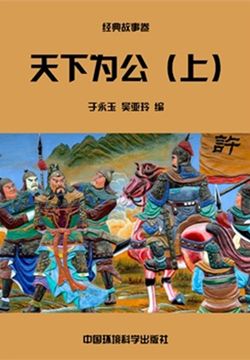
All Under Heaven Is for the Common Good (Part 1)
Tags
Summary
Editor's review
Who it's for
A good fit for
- Teachers running thematic class meetings or moral education activities who need "public good" story material
- Book club members looking for entry points into discussions of public spirit
- General readers interested in how traditional virtues translate into the present, who prefer short pieces
- Students who need writing material on public-mindedness and responsibility
Not a good fit for
- Readers seeking systematic theoretical argument or institutional analysis
- Readers who expect a continuous long-form narrative and dislike fragmentary compilations
- Readers looking for a practical guide to contemporary public welfare work
Reading tips
- Pick entries related to "public affairs" and "responsibility" from the table of contents first, form a thematic impression, then expand.
- While reading, compare the actions in the stories with present-day public life and note one or two questions worth discussing.
- For book clubs, assign entries from different historical periods to different members, then gather to exchange findings.
- You need not finish it; it works better as a source collection to return to.
About the publisher
Founded in 1980, China Environmental Science Press is a professional publisher directly under the Ministry of Ecology and Environment. It mainly publishes academic works, textbooks and popular science books in fields such as environmental management, environmental engineering, environmental law and environmental monitoring, and has released more than 10,000 titles over the years. The library contains 102 of its books, which, in addition to environmental subjects, also cover categories including general biography, education, inspirational growth and parenting. Representative titles include 100 Outstanding Artists of the World, 100 Outstanding Writers of the World, Respecting Teachers and Valuing Education, Management Maxims, Unity and Mutual Assistance, Maturity and Self-Confidence, and Honor, Disgrace, Benefit and Harm, while representative authors include Feng Hua, Bi Shang, Wu Yaling, Yu Yongyu and Li Ming. Overall, while maintaining its professional environmental publishing, the press also offers general-interest biography, education and personal-growth titles; public information on its specific environmental book series and author roster is limited.
Contents
- 版权信息
- 1
- 2
- 3
- 4
- 5
- 6
- 7
FAQ
How is "All Under Heaven Is for the Public Good" presented in the book?
What is the difference between the first and second volumes?
Has the ancient content in the book been screened and evaluated?
Is it suitable for direct use as a school moral education textbook?
Related on WeRead


Comments
Find this book
This site is an index: you start “Search all sources” in your browser, and the entries it lists all point to third-party sites; please judge their availability yourself.
About the author
Yu Yongyu is an author about whom limited public information is available. It is known that the author mainly works on Chinese books in the fields of education, philosophical reading, and inspirational personal growth, with fifty-one titles held in the collection. The writing centers on moral cultivation and character development, as seen in representative works such as Respecting Teachers and Valuing Education, On Traditional Chinese Morality, Unity and Mutual Help, Maturity and Self-Confidence, Honor, Shame, Benefit and Harm, Love, Hatred, Gain and Loss, Patriotism and Serving the Country, and Being Worthy of the Name. These works often take traditional moral concepts as their starting point and connect them with everyday topics of conduct. Written in plain language, they are aimed at young readers and general readers interested in parenting and self-improvement, emphasizing value guidance rather than scholarly inquiry, and are therefore commonly classified under education, philosophical reading, and inspirational growth.
Wu Yaling has served as principal of Yucai Yikang Primary School in Wuhan since 2008. Recognized as one of China's top one hundred outstanding principals and as an advanced principal in national moral education, she is also a backbone teacher in Hubei Province, a Wuhan subject leader, and an outstanding teacher in the city. She has edited textbooks such as Role Models for national distribution, published numerous papers on education, and in 2023 released the monograph The Splendor of Intangible Cultural Heritage in Education with Central China Normal University Press. Her works address themes including respect for teachers, solidarity and mutual help, patriotism, and mature self-confidence, and are commonly classified under education, philosophy readings, parenting, and inspirational growth. They focus on character development for young people and on teachers' educational practice, combining traditional virtues with everyday teaching in plain, accessible language.
