

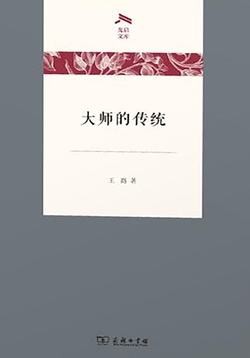
The Tradition of the Masters
Tags
Summary
Editor's review
Wang Lu's style combines academic rigor with readability. He is not content merely to restate commonplaces of philosophical history; rather, he strives to show how the masters confronted the fundamental questions posed by their times and how they responded with creative thought, thereby forming an enduring intellectual tradition. His understanding of "tradition" is especially profound: tradition is not a dead legacy but a living resource of thought, continually reinterpreted and reactivated. Readers will see that every major breakthrough in the history of philosophy tends not to discard predecessors outright but to achieve creative transformation on the basis of a deep understanding of tradition.
What is particularly commendable is the book's problem-oriented approach. Each chapter revolves around a core philosophical question—such as "how is metaphysics possible," "what is the foundation of knowledge," "the relation between freedom and necessity"—and through the masters' differing answers, readers directly sense the depth of philosophical thinking and its logic of development. For readers who want a systematic grasp of the Western philosophical tradition without drowning in dry stacks of historical material, this book offers an excellent entry point. It helps readers build a basic framework of philosophical history while also prompting independent thought about philosophical questions themselves.
Who it's for
A good fit for
- Humanities enthusiasts interested in the history of Western philosophy but unsure where to begin
- University students seeking to understand the core ideas of great philosophers and their lines of transmission
- Knowledge-oriented readers who enjoy intellectual history and problem analysis
- Readers looking for clearly written, logically rigorous academic essays
Not a good fit for
- Readers expecting fast-food philosophical summaries or inspirational life advice
- Professionals seeking cutting-edge specialized research or technical analysis
Reading tips
- Read in chapter order; each chapter focuses on one philosopher or a group, so first grasp the core question, then the transmission of ideas
- While reading, consult the original passages or classic discussions mentioned in the book to deepen understanding
- Don't rush abstract passages; slow down and savor them—philosophical thinking itself takes time to settle
About the publisher
The Commercial Press is a publisher known for classic works and academic publishing, with titles spanning Eastern philosophy, foreign literature, world history, social culture, and applied psychology. Its list includes classical commentaries such as Zhu Xi's Collected Commentaries on the Analects and Wang Bi's Commentary on the Zhouyi, as well as modern annotated translations like Zhuangzi with Modern Notes and Translation. In foreign literature it offers War and Peace and Crime and Punishment, while in world history it carries Braudel's The Mediterranean and the Mediterranean World in the Age of Philip II. Applied psychology is represented by Irvin D. Yalom's Existential Psychotherapy, and ethical texts include a Greek-Chinese-English edition of the Nicomachean Ethics. Its authors and translators include Zhu Xi, Wang Bi, Yalom, Braudel, and translators such as Huang Zheng, Zhang Yiling, Shen Dongyu, and Tang Jialong, balancing the editing of original texts with academic translation.
Contents
- 版权信息
- 出版前言
- 序言
- 哲学家
- 永远的柏拉图
- 思想巨人亚里士多德
- 康德的意义
- 从《小逻辑》到《逻辑学》
- 没有保留下来的文字
- 感受“胡塞尔档案馆”
- 在哲学史的主线上
- 我喜欢的哲学家
- 走近哲学家
- 哲学与学术传统
- 哲学家的理解
- 为学术而学术
- 大学者的大学问
- 不聪明的哲学家
- 大师的传统
- 哲学所的学术传统
- 世纪之交话逻辑
- 历史源头话哲学
- 前辈与老师
- 金岳霖先生与清华大学哲学系
- 陈康先生的学术理念
- 追思汪子嵩先生
- 天真奇特——回忆沈有鼎先生
- 周礼全先生的四本书
- 童真童趣——我眼中的苏天辅先生
- 如今,他真的走了
- 追思梁存秀先生
- 叶秀山先生的哲学追求
- 一生只为哲学想
- 怀念敬爱的李赋宁先生
- 怀念王炳文先生
- 没齿不忘是师情
- 同学和朋友
- 怀念老苏
- 怀念吴元梁学兄
- 纪念刘奔学兄
- 怀念翁绍军学兄
- 怀念杨成凯学兄
- 怀念老毕
- 怀念徐奕春
- 悼好友小邵
- 外国前辈、老师和朋友
- 感受奎因
- 走访达米特教授
- 向往戴维森
- 逻辑的创新与应用——辛迪卡教授访谈录
- 怀念辛迪卡
- 怀念Bob
- 怀念谢波斯教授
- 怀念尼尔斯
- 德雷本教授
- 继承与超越
- 逻辑的观念
- “是”与“真”——形而上学的基石
- 一“是”到底论
- 逻辑与哲学
- 逻辑的视野
- 求真不辞漫漫修行——王路教授访谈
FAQ
Does this book require a philosophical background?
How does this book differ from general textbooks on the history of philosophy?
What range of philosophers does the book cover?
Related on WeRead




Comments
Find this book
This site is an index: you start “Search all sources” in your browser, and the entries it lists all point to third-party sites; please judge their availability yourself.
About the author
Wang Lu (born 1955) is a professor and doctoral supervisor in the Department of Philosophy at the School of Humanities, Tsinghua University. He previously served as a researcher at the Institute of Philosophy, Chinese Academy of Social Sciences, and as vice president of the Chinese Logical Society. His research focuses on logic, analytic philosophy, and metaphysics. He has long worked on Aristotelian logic, Frege's thought, and the history of analytic philosophy, and is the author of works including Aristotelian Doctrine of Logic, A Study of Frege's Thought, Stepping into Analytic Philosophy, The Concept of Logic, and "Is" and "True". He has also translated several Western philosophical classics, such as The Foundations of Arithmetic and The Origins of Analytic Philosophy, and has had wide influence in introducing and discussing issues related to analytic philosophy. Six of his works are included in the collection; besides books on Western and Eastern philosophy, they also cover essays, education, and inspirational growth, showing a side of his writing beyond academic research.
