

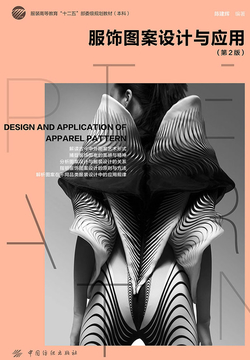
Pattern Design (2nd Edition)
Tags
Summary
This book can be used as a textbook for pattern design courses in industrial design, graphic (packaging) design, environmental art design, jewelry design and fashion accessory design, and as a reference for practitioners in these fields.
Editor's review
The value of this book lies in its systematicity and practicality. It not only sorts out the cultural connotations and aesthetic characteristics of traditional patterns, but also explores innovative applications of patterns in visual communication, product design, environmental art and other fields. The book includes numerous illustrations and analyses, helping readers intuitively understand design principles. Compared with the first edition, the second edition has updated cases and is closer to current design trends.
As an editor, I believe this book is suitable as an introductory guide for design beginners or as a supplementary textbook for students in related majors. Its advantage lies in its complete knowledge structure and step-by-step explanations; however, readers expecting to see a large number of cutting-edge, experimental pattern creations may find the content focused on foundations and classics. Overall, this is a solid practical book that can help readers build a systematic understanding of pattern design and master basic design methods.
Who it's for
A good fit for
- Students majoring in visual communication, art design and related fields
- Beginners new to pattern design who want to systematically learn basic theories and methods
- Practicing designers in graphic, textile, decorative and other industries who need to consolidate foundational knowledge
- Art enthusiasts interested in traditional pattern culture and modern design applications
Not a good fit for
- Senior designers seeking highly creative, avant-garde pattern design cases
- Readers who only want to quickly master software operations or specific techniques and are not interested in theoretical frameworks
Reading tips
- Read the chapters in order, focusing on the chapters on principles of formal beauty and design methods
- Copy or recreate the illustrations to deepen theoretical understanding through practice
- Observe pattern applications in daily life while reading and consider how tradition and modernity can be combined
About the publisher
Posts & Telecom Press is known for its strengths in science and technology, computing, and information and communications titles, and has extended its publishing into photography, art, software learning, and inspirational growth, giving it a fairly diverse range. Its catalog includes computing and communications works such as Refactoring and Patterns (Revised Edition) and Huawei Switch Learning Guide (Second Edition), alongside bilingual collector's editions such as The Little Prince (Chinese-English-French illustrated collector's edition), The Great Gatsby, and Three Days to See. Beijing Ten Years: 1980-1990 and Ghost Blade: WLOP Personal Illustration Collection reflect its presence in photography and art. Its authors include Antoine de Saint-Exupéry, Helen Keller, Joshua Kerievsky, Wang Da, Zhang Zhaozeng, and WLOP.
Contents
- 版权信息
- 内容提要
- 第2版 前言
- 图案设计理论基础篇
- 01 概述
- 第一节 图案的概念与功能
- 第二节 图案的起源
- 第三节 图案的分类
- 习题
- 02 中外经典图案简介
- 第一节 中国经典图案
- 第二节 外国经典图案
- 习题
- 03 图案在其他设计领域中的应用
- 第一节 珠宝饰品中的图案设计
- 第二节 工业产品中的图案设计
- 第三节 服饰中的图案设计
- 第四节 包装中的图案设计
- 第五节 环境艺术中的图案设计
- 习题
- 图案设计方法篇
- 04 图案设计的方法
- 第一节 图案的形式美规律
- 第二节 图案的骨式
- 第三节 图案的构成元素
- 第四节 图案的色彩
- 第五节 图案设计的步骤
- 习题
- 图案设计项目实训篇
- 05 图案设计项目实例
- 第一节 导入项目——花卉题材的图案设计与应用
- 第二节 拓展项目——动物题材的图案设计与应用
- 第三节 深化项目——人物题材的图案设计与应用
- ★附图——图案应用
- 习题
- 附录1 图案设计应用实训
- 附录2 图案设计案例赏析
- 参考文献
FAQ
Is this book suitable for people with no art background at all?
Does the book include software operations or digital design content?
What are the main differences between the second edition and the first edition?
Related on WeRead



Comments
Find this book
This site is an index: you start “Search all sources” in your browser, and the entries it lists all point to third-party sites; please judge their availability yourself.
About the author
Geng Guangke is an author in the field of Chinese book publishing. Public information about this author is limited, and the only known representative work is Pattern Design (2nd Edition). The book is often classified under the examination category, suggesting that it may be used for design course study, exam preparation, or teaching reference. Judging from the title, the content likely covers the basics of pattern design, principles of composition, and modeling methods, making it a practical textbook for learners. The author combines basic training with practical application, and the writing is concise and clearly organized, allowing readers to gradually master the fundamentals of pattern design chapter by chapter. As no public records are available regarding the author's life, education, positions, or awards, this introduction describes the writing direction only on the basis of the work information available, and readers may use the book as an introductory aid in light of its examination-category classification.
