

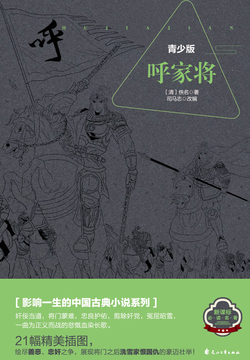
The Hu Family Generals
Tags
Summary
Editor's review
As an editor, I believe the book's value lies in the deep popular feeling and plain sense of justice it carries. It is not a strict historical romance but a typical "heroic legend," whose core appeal lies in its twisty, suspenseful plotting and the stark reversals of its characters' fortunes. Its depiction of the opposition between loyalty and treachery, blood vengeance, and karmic retribution profoundly reflects the ethical values of traditional society and the common people's longing for fairness and justice. The Hu descendants' wanderings and tribulations are full of dramatic tension and can grip readers tightly.
From a literary standpoint, the book's language is plain and lively, and its plot units are clear (episodes such as "Hu Yanqing Challenges the Arena" and "Gathering of Heroes at Qiping Mountain" are well known and much loved), making it well suited to oral storytelling—which is also why it has endured through the years. This edition, prepared by Huashan Literature and Art Publishing House, helps modern readers encounter this classic story. In reading it, we can not only feel the narrative rhythm of the traditional chapter novel but also savor a family spirit and love of home and country that are rooted in the people and unyieldingly tenacious. It is a vivid reader for understanding China's popular narrative tradition and mass psychology.
Who it's for
A good fit for
- Readers interested in classical Chinese chivalric novels and folk tales
- Readers who enjoy traditional heroic legends such as The Generals of the Yang Family and The Complete Story of Yue Fei
- Literary enthusiasts who want to understand the traditional narrative pattern of the struggle between loyalty and treachery and its ethical ideas
- Readers looking for light reading with twisty plots and rich dramatic conflict
Not a good fit for
- Historians who demand strict historical verification and factual accuracy
- Readers who prefer modern literary language and complex psychological portrayal
Reading tips
- Read this book alongside The Generals of the Yang Family to appreciate the narrative features and spiritual core of different "generals' family" stories
- While reading, pay attention to the classic "injustice–flight–revenge–redress" narrative structure and its influence on later literature and art
- The book has many characters and complex relationships; readers may find it helpful to sketch a simple genealogy of the main Hu family members in order to follow the plot more easily
About the publisher
Huashan Literature and Art Publishing House is a local literature and art publisher whose main publishing focus is literary and artistic works, covering categories such as classic works, philosophical readings, social sciences, foreign literature, Eastern philosophy, and applied psychology. Judging from the books in the database, the house publishes modern literary classics such as Xiao Hong's The Story of Hulan River, as well as Aisin Gioro Yu Yun's "Yu Laoshi Speaks" series and titles from the "People and Classics" series, including The Great Learning and The Commentary on the Xici of the I Ching, with an emphasis on interpreting traditional classics. In foreign literature, it offers Michael Cunningham's The Hours, Hemingway's The Snows of Kilimanjaro, and Dave Pilkey's Dog Man series. Its authors include Xiao Hong, Aisin Gioro Yu Yun, Chen Jiong, Dave Pilkey, Michael Cunningham, and Wang Jiaxiang. Its publishing character lies in balancing literary classics, interpretations of traditional culture, and translations of foreign literature, forming a diverse reading structure for general readers. Public information is limited, and the above focuses on the publishing directions reflected by the books in the database.
Contents
- 版权信息
- 呼家将主要人物表
- 第一回 呼家将游春戏猎庞黑虎思美丧命
- 第二回 庞丞相忍气吞声宋仁宗嘱托访美
- 第三回 庞丞相请驾游园多花女花园献媚
- 第四回 庞贵妃欺僭正宫呼得模遭奸设计
- 第五回 庞丞相父女弄权呼家将一门受戮
- 第六回 王金莲奇缘巧遇包文正力救呼郎
- 第七回 包文正计退庞兵呼守勇病倒王园
- 第八回 王员外巧选东床婿牛夫人劝嫂联姻眷
- 第九回 钦天监观占星象庞贵妃计触龙情
- 第十回 庞丞相乘机进剿包文正奉旨入觐
- 第十一回 牛夫人怒打庞奸赵凤奴山前大战
- 第十二回 赵大郎与妹完婚庞丞相高山大败
- 第十三回 庞总兵钦召进京赵大郎演习兵法
- 第十四回 庞四虎四路追赶杨令公显圣惊庞
- 第十五回 五霸山大郎遇寇王金莲喜产麟儿
- 第十六回 太行山守信拜别杨家将保送甥儿
- 第十七回 齐国宝大演阵法老夫人擂台选婿
- 第十八回 石头陀打下擂台呼守信访兄别丈
- 第十九回 桃花潭守信收妖新唐国公主招亲
- 第二十回 花公主许配东床呼延庆书房讲武
- 第二十一回 骑石虎延庆逍遥庞贵妃奸谋渐露
- 第二十二回 万花谷呼郎受法飞石关王环相遇
- 第二十三回 呼延庆辞师归里王金莲新唐访夫
- 第二十四回 齐月娥出猎遇美忠孝王显圣嘱儿
- 第二十五回 呼延庆擒妖得偶守信偷祭铁丘坟
- 第二十六回 牛夫人计救呼郎包文正法场放绑
- 第二十七回 呼家将兄妹相遇铁丘坟兄妹盗祭
- 第二十八回 呼延庆力救太子赵文姬梦仙指引
- 第二十九回 仙岩洞延龙遇美庞飞虎割耳逃回
- 第三十回 庞四虎火烧祝家庄祝素娟飞马往西凉
- 第三十一回 花瑞莲雄关计放四虎将兵遭迷雾
- 第三十二回 庞东海领兵助虐天定山金莲剖诉
- 第三十三回 呼延庆新唐见父仙山洞公主成亲
- 第三十四回 天定山庞琦大战小道童大作妖法
- 第三十五回 岳鸣皋逞术大战天定山国宝受困
- 第三十六回 呼家将大破五行阵金牛岗杀死庞东海
- 第三十七回 老八王硬指奏妃呼家将奉旨除奸
- 第三十八回 三家村女将交兵呼延庆出关提兵
- 第三十九回 庞牛虎戏美亡身呼家将领兵过关
- 第四十回 呼家将力歼庞奸宋仁宗封赠团圆
FAQ
Is The Generals of the Hu Family real history?
Is this book the same as the Hu Family Generals stories in storytelling and opera?
Is there anything to keep in mind when reading this edition?
Related on WeRead



Comments
Find this book
This site is an index: you start “Search all sources” in your browser, and the entries it lists all point to third-party sites; please judge their availability yourself.
About the author
Anonymous is not a real personal name but a general Chinese designation for authors whose names are unknown, lost, or unsigned. Neither nationality nor dates of birth and death can be verified, and available public information is limited, so the works attributed to this name are the only basis for description. The collection holds 2,078 works under Anonymous, spanning medicine, classics, historical readings, ancient poetry, classical literature, and philosophy. Representative works include The Yellow Emperor's Inner Canon: Lingshu, Mencius, The Book of Documents, Nineteen Old Poems, Complete Song Ci, and The Peacock Flies Southeast. Most of these works took shape through long transmission and editing, emerging either from collective folk creation or from authors whose names were lost over time. In ancient China, the Book of Songs, the Great Learning, and many popular storybooks and plays were signed Anonymous because their authors could not be traced. Anonymous works cross the classics, histories, philosophical writings, medical texts, and poetry; their subjects are broad, and their styles vary from archaic simplicity to clear naturalness, making them important and influential sources for understanding ancient Chinese thought, medicine, and literature.
