

Announcing a Death
Tags
Summary
Editor's review
Who it's for
A good fit for
- Readers who enjoy quiet, careful reading and prefer lyrical, reflective literature
- People going through farewells, partings, or life transitions who hope reading will help sort out emotions
- Book-club members who want to discuss life and memory
- Readers in the habit of taking reading notes and extracting images and themes from texts
Not a good fit for
- Readers seeking strong plots, fast pacing, and密集 twists
- Readers hoping for clear practical methods or popular knowledge
- Readers unwilling to accept open-ended themes and needing the author to give direct conclusions
Reading tips
- Read through once without rushing to interpret themes; just note sentences and scenes that move you.
- On a second pass, map character relationships and timelines, marking key passages related to "announcing" and "departing."
- After reading, write a short reflection of about 300 words from one angle—parting or memory.
- If joining a book club, prepare two or three questions about the meaning of the title for discussion.
About the publisher
Nanhai Publication Company is a comprehensive publisher known for its literature and arts titles, covering fields such as classical poetry, martial arts fiction, and folk literature. Judging from the more than 1,600 books in the database, the company has released classical poetic works including the Nineteen Old Poems and the Nine Songs, as well as multiple volumes of Huanzhulouzhu's series The Swordsmen of Mount Shu, along with related writings by authors such as Guan Hanqing, Qu Yuan, Zuo Si, and Wang Zhihuan. Its publishing character lies in balancing the organization of classic texts with the dissemination of popular literature, placing poetry anthologies alongside long martial arts novels and presenting a relatively diverse literary profile. Public information is limited, and further details about its editorial practices and series planning remain to be supplemented.
Contents
- 版权信息
- 告逝
FAQ
Is this book suitable for reading in one sitting?
Do I need to know the author's other works before reading?
How should the title "Gaoshi" be understood?
Related on WeRead
 日本悬疑榜高分畅销小说作品集(套装共2册)(六个说谎的大学生+无人逝去 日本本格推理获奖小说重磅引进,豆瓣高分推荐作品,谁是告发者,谁是凶手?)
 另一种童年的告别(消逝的人文世界最后回眸)
 戴建业作品集(套装共9册)
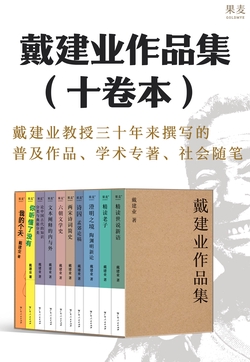 戴建业作品集(十卷本)
 澄明之境:陶渊明新论
 茅山志
 新修科分六学僧传
Comments
Find this book
This site is an index: you start “Search all sources” in your browser, and the entries it lists all point to third-party sites; please judge their availability yourself.
About the author
Chen Hengqing (1844–1920), courtesy name Zijiu, was a native of Weixian in Shandong (present-day Weicheng District, Weifang). A late Qing official and scholar, he passed the provincial examination in 1873 and the metropolitan examination in 1886. He served successively as a secretary in the Ministry of Works, rising through the Waterways, Construction, and Colonization Departments, and later held posts as Supervising Censor of the Ministry of War, Investigating Censor of the Henan Circuit, and Chief Supervising Censor. In 1908 he was appointed prefect of Jinzhou. He retired at sixty and wrote works including Jianshu Xian Notes (also known as Jili Qingtan) and Unofficial Gleanings of the Late Qing. His extant writings are considerable, with 154 titles held in our collection, many drawing on folk literature and Eastern philosophy. They touch on modern upheavals such as the militia conflicts, the Boxer movement, and the Nian rebels, as well as rural tales and social types like foxes and swindlers, and social issues such as Manchu-Han differences, bearing the documentary flavor of note-style historiography. Public information is limited, and his literary standing and influence await further study.
